






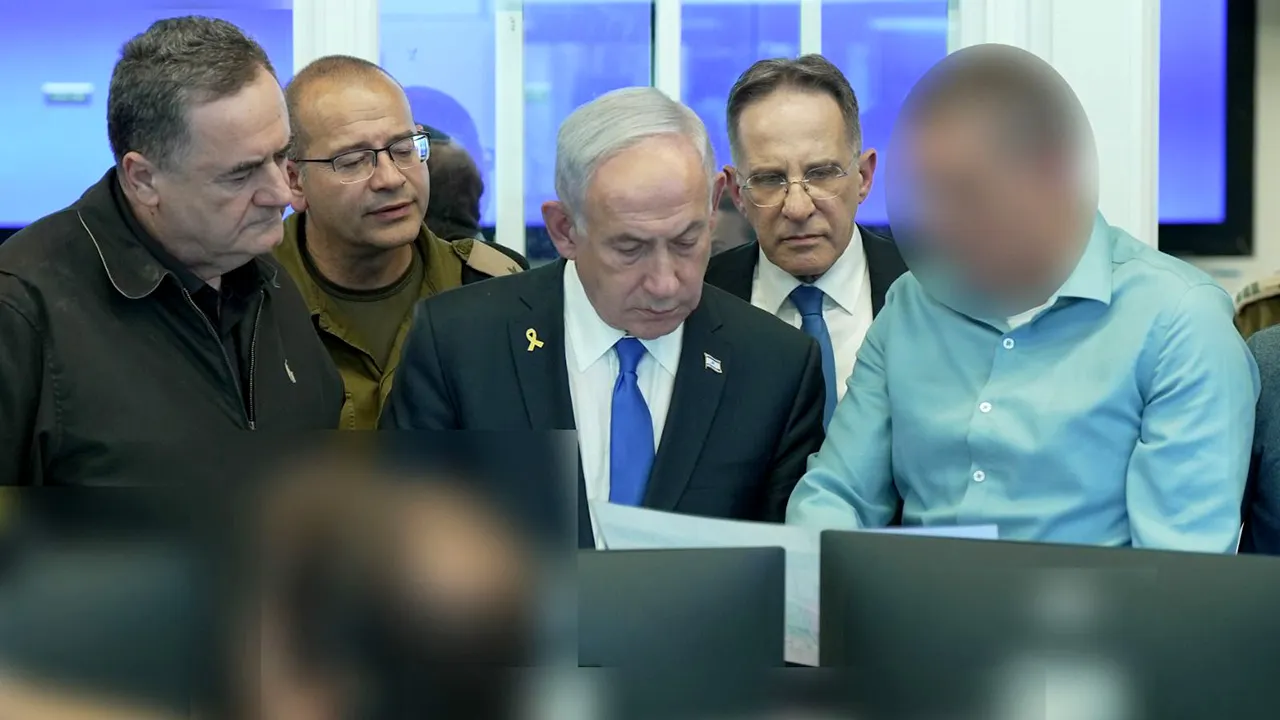
For Israeli Prime Minister Benjamin Netanyahu, the threat from Iran has always been a matter of national security, played out on the world stage through shadowy intelligence operations, military standoffs, and diplomatic showdowns. But this week, the danger hit uncomfortably close to home, in the most personal way imaginable. In an interview with Israel’s Channel 14, Netanyahu revealed that Iran had allegedly attempted to assassinate one of his sons, a disclosure that turned an already tense political landscape into something far more raw and intimate. “This is an unbelievable case. Iran targeted one of my sons. Iran tried to murder him, tried to murder one of my sons,” he told the reporter, as relayed by the Jerusalem Post. He did not specify which of his two sons—Yair or Avner—was the intended target, and he offered no details about how the plot was uncovered or how close it came to being carried out. The absence of specifics only deepened the gravity of the moment. It suggested a threat so sensitive, so close, that even a prime minister, a man accustomed to revealing the darkest secrets of state, chose to hold back.
The revelation was not merely a confession of personal vulnerability; it was a political statement, deliberately woven into the fabric of an election campaign. When the reporter asked whether the assassination attempt was part of the intelligence provided to him, Netanyahu pivoted to a broader promise: that he would ensure protective measures are extended to all prime ministerial candidates, not just himself. “Iran tried to murder one of my sons. And this is why this promise [I am making] is more than a luxury – without it, they could succeed [in killing my son]. People need to show some restraint, especially during an election campaign,” he said. The words carried a double weight. On one level, they were a father’s plea, a recognition that the violence he has long confronted as a leader had somehow found its way to his own family. On another, they were a calculated reminder to the Israeli public that the Iranian threat is not abstract, not distant, not a matter for think tanks and war rooms alone. It is a threat that reaches into the private lives of public figures, into the homes of those who dare to stand against Tehran. By tying the assassination attempt to the election campaign, Netanyahu framed his own political survival and the safety of his family as inseparable from the fate of the nation.
The Israeli security establishment has clearly been taking the threat seriously for some time. According to reports, the Shin Bet, Israel’s internal security agency, granted extended protection services to Netanyahu’s wife, Sara, and their sons, Yair and Avner, starting in July. That kind of around-the-clock security detail is not handed out lightly. It comes after intelligence assessments indicated that high-ranking Israeli officials and their families had become targets for Iranian operatives, whether through direct action, cyber infiltration, or the recruitment of local agents. The fact that the protective umbrella was already in place months before the prime minister went public suggests that Israeli intelligence had been tracking the plot for a while, watching it develop, perhaps intercepting communications or monitoring suspects, waiting for the right moment to reveal what they knew. For the family, that must have been an unbearable period—knowing that one of their own was in the crosshairs, yet unable to speak openly about it, forced to live under the weight of a silent, ever-present fear. For the sons, especially the younger ones who have grown up in the glaring spotlight of their father’s career, the news transforms their reality. They are no longer just names in a political dynasty; they are symbols of the lengths to which Iran will go to strike at Israel’s leadership.
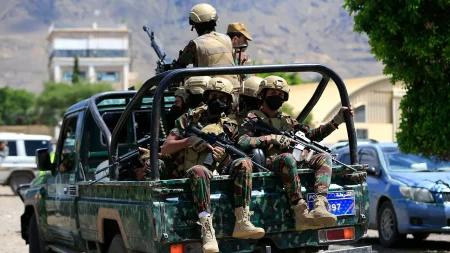
Netanyahu’s accusation lands at a uniquely volatile moment in the Middle East. Israel is currently locked in negotiations for a withdrawal of its forces from Lebanon, where it has been battling Hezbollah, the Iranian-backed militant group that has long served as Tehran’s most formidable proxy on Israel’s northern border. The fighting there has been fierce, with Israel targeting Hezbollah strongholds and the group firing rockets into Israeli territory. But the conflict has never been confined to a single front. Since Hamas’s devastating attack on southern Israel on October 7, 2023, Israel has found itself fighting a multifront war against Iran and its network of proxies—Hamas in Gaza, Hezbollah in Lebanon, the Houthis in Yemen, and various militias in Syria and Iraq. The accusation that Iran tried to assassinate a member of Netanyahu’s family fits into this broader pattern. Tehran has long sought to extend its reach beyond the battlefield, using espionage, sabotage, and targeted killings to pursue its goals. The Israeli public has grown accustomed to news of Iranian plots, but there is something deeply chilling about a threat aimed at a leader’s child. It crosses a line that even in the brutal calculus of Middle Eastern conflict feels profoundly transgressive. It suggests that the war is no longer being fought entirely by soldiers and missiles, but also by covert teams dispatched to hunt down family members of the nation’s most visible leader.
Adding to the gravity of the moment is the staggering display of weaponry that Israel has recently showcased to the world. At a storage facility in Tzrifin, journalists were invited to inspect a massive collection of confiscated arms—rockets, grenades, drones, sniper rifles, automated weapons, anti-tank rocket launchers, mortars, and more—that Israeli forces had seized from Hezbollah and Hamas over the past months. The cache reads like a grim museum of modern warfare: weapons manufactured in Iran, Russia, China, and Lebanon, along with locally produced arms from Gaza, and even a Nazi-era gun. Each piece of hardware tells a story of supply chains stretching across continents, of state sponsorship and regional smuggling networks, of a war effort that has been years in the making. The rockets scattered outside the facility, many of them Iranian-made, serve as a stark reminder of the threat Israel faces from a regime that has repeatedly vowed to destroy it. Iran’s proxies, Hezbollah and Hamas, according to reports, have killed over 300 American citizens, and the weapons on display were part of the machinery used against Israeli civilians and soldiers since October 7. For those who inspected the arsenal, the message was undeniable: Iran is not merely a funding source for terrorism; it is an industrial-scale enabler of violence, supplying the tools of death to groups that have made it their mission to attack Israelis, Americans, and anyone else they see as enemies.
Yet amid the weapons displays, the intelligence briefings, and the political posturing, the most enduring image from this week is not a pile of rockets or a map of war fronts. It is a father, standing before a camera, speaking about the fear that one of his children might have been killed. Netanyahu is a polarizing figure, a man who has spent decades at the center of controversy, corruption allegations, political battles, and military decisions that have shaped the fate of a nation. But his words on Channel 14 cut through the noise. They revealed a universal truth: even for a prime minister, even for a man who has faced down enemies on every side, the safety of a child is the deepest vulnerability. The plot, if proven, would be a major escalation in Iran’s ongoing war against Israel—a move that transforms the conflict from a clash of armies and ideologies into something more sinister and intimate. It would also serve as a rallying cry for Netanyahu, who has long argued that Israel must take an uncompromising stance against Tehran. As the nation enters an election season, with all its ugliness and division, this revelation might remind Israelis that some threats are bigger than politics. For now, the details remain shrouded in secrecy, the plot unsuccessful, the family protected. But the shadow of the threat lingers, a reminder that in this corner of the world, even the most private moments are never truly private. And the promise to protect all candidates for prime minister, made in the shadow of an attempt on his own son’s life, may be the most human thing Netanyahu has ever said.