





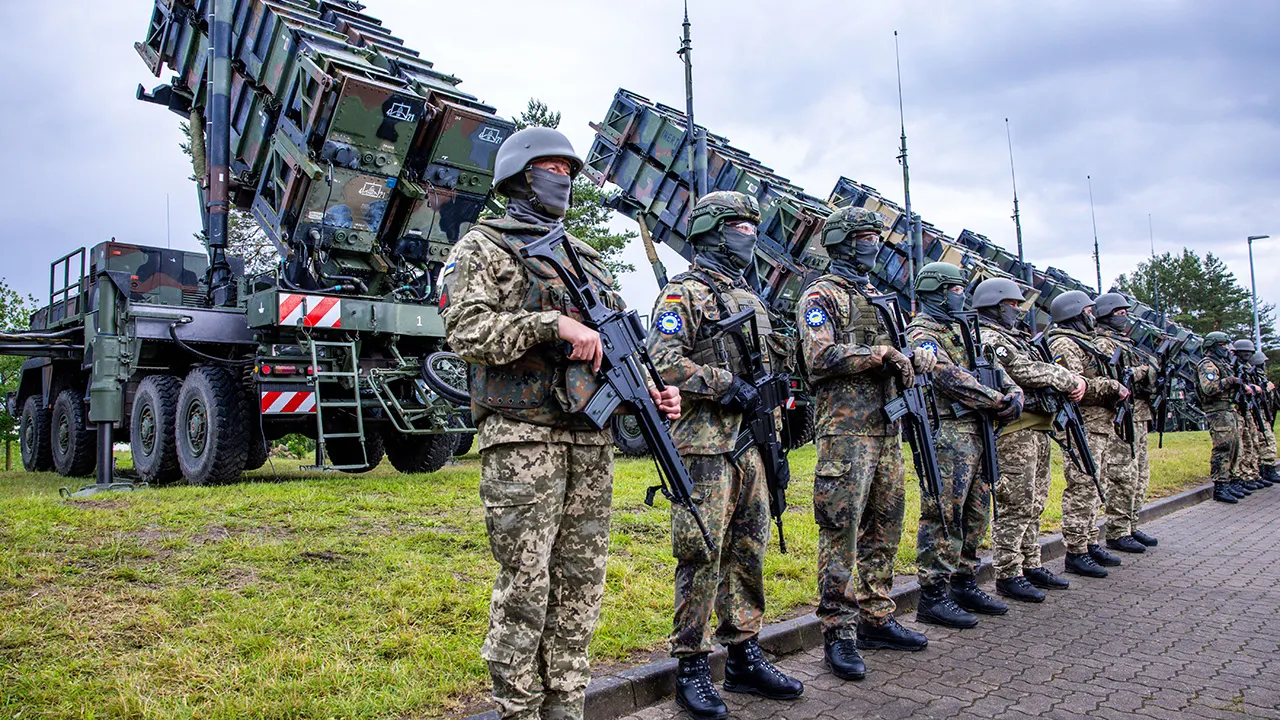
For decades, Europe’s largest economy quietly operated under the secure protection of the American military umbrella, a post-World War II status quo characterized by deliberate defense restraint. However, Russia’s brutal invasion of Ukraine shattered those old certainties, driving Germany to make a historic pivot. Berlin is now actively embracing a dramatic military resurgence, aiming to build the strongest conventional army in Europe. German Ambassador to the United States Jens Hanefeld made it clear that Germany is answering the call to step up, adopting a new military strategy to assume major responsibility for continental security. This monumental shift, known inside the country as the Zeitenwende or turning point, marks a profound departure from a past defined by caution, signaling a future where Europe takes charge of its own defense.
This transformation is as much cultural as it is strategic. Following the devastation of World War II, West Germany’s military—the Bundeswehr—was carefully designed to function strictly within the collective framework of NATO, preventing any independent display of German military might. Decades of low defense spending drew persistent criticism from Washington, with successive U.S. administrations complaining that Berlin was not pulling its weight. Today, that narrative is being rewritten. Germany is now Ukraine’s most significant European supporter, channeling billions into aid, and its current leadership is committed to anchoring a heavily upgraded, potent German military directly at the heart of NATO’s modern defense network.
This defense evolution is unfolding against a backdrop of complex and occasionally turbulent diplomacy. Recent friction between President Donald Trump and German Chancellor Friedrich Merz has introduced some political static into the alliance. The tension flared when Merz criticized U.S. foreign policy regarding Iran, prompting a sharp counter from Trump, who accused Merz of being soft on nuclear ambitions and suggested a reevaluation of U.S. troop presence in Germany. The rhetorical sparring intensified when Merz expressed growing skepticism about the social climate in the United States, telling a young audience he would hesitate to recommend his own children live there today. These candid exchanges have raised concerns among defense analysts who worry that personal and political disagreements could cast a shadow over critical security cooperation.
Military experts warn that such geopolitical friction can have tangible consequences on the ground. Retired Rear Admiral Mark Montgomery pointed out that public diplomatic spats are counterproductive when deterrence is on the line, highlighting the critical importance of maintaining a united front against adversaries like Russia. Concerns have emerged over potential delays or changes regarding the rotational deployment of advanced U.S. long-range strike systems in Germany—including Tomahawk and SM-6 missiles. Analysts emphasize that these weapon systems are not meant to fight a war on Allied territory, but to act as a powerful deterrent to prevent a conflict from starting in the first place, making seamless bilateral cooperation between Berlin and Washington vital.
Despite the political noise, Germany is backing its ambitious promises with unprecedented financial commitments. At the recent NATO summit in The Hague, allies agreed to elevate defense spending to 5% of GDP annually by 2035, a benchmark Berlin plans to achieve well ahead of schedule while actively recruiting 100,000 new active-duty soldiers. To counter critics who claim Europe remains a free rider, Ambassador Hanefeld highlighted that Germany has already signed over $33 billion in contracts with American defense firms. Purchasing state-of-the-art fighter jets, transport helicopters, and advanced missile defense systems from U.S. companies showcases Germany’s willingness to make a massive, tangible down payment on the future of transatlantic security.
Beyond checkbook diplomacy, Germany is putting boots on the ground where they are needed most. One of the nation’s most significant endeavors is the permanent deployment of a 5,000-strong military brigade to Lithuania, designed to secure NATO’s vulnerable eastern flank in the Baltic region. This forward presence represents a profound political and psychological departure from Germany’s modern pacifist traditions, serving as concrete proof of Berlin’s pledge to defend every inch of allied territory. Ultimately, the ongoing transformation of the Bundeswehr signals a new era for NATO—one that remains deeply transatlantic at its core, but is increasingly driven by a capable, self-reliant European backbone.