


Nestled gently against the Polish border, hundreds of miles from the mud-clogged, blood-soaked trenches of eastern Ukraine, the ancient city of Lviv stands as the ultimate test of human adaptability: an architectural masterpiece of Austro-Hungarian elegance acting as a sanctuary while simultaneously carrying the crushing weight of a nation’s grief. To walk through Lviv’s central plaza as the morning sun hits the historic pastel facades is to traverse a landscape of surreal paradoxes where cobblestone streets, steeped in centuries of European culture, are flanked by vibrant cafes, historic cathedrals, and bustling markets that attempt to project absolute normality. Yet, this illusion of peace is systematically shattered every single day at exactly 11:30 a.m., when the entire metropolis grinds to a collective, heart-wrenching halt. Cars freeze mid-route, engines idling in silence; pedestrians pause mid-stride on the sidewalks; and under the shadow of the tall, historic clock tower rising above city hall, a sea of humanity bows its head as a solemn military funeral convoy slowly snakes through the old town. This devastating ritual plays out up to five times a day, serving as an agonizing reminder that though the front lines are distant, the casualties are local, personal, and constant. For its nearly one million residents, survival has become a masterclass in psychological compartmentalization. Air raid sirens regularly tear through the laughter of children playing soccer in public parks or interrupt romantic coffee dates, turning casual Tuesday afternoons into rapid calculations of survival. In this fragile habitat, public squares host both the joyous, tearful laughter of newly wedded couples and the earth-shattering wails of mothers burying their children. This daily dance between beauty and tragedy has forged a community that refuses to let the specter of death dictate the terms of their existence, deciding instead to embrace every fleeting moment of peace as an act of quiet, defiant rebellion.
At the administrative heart of Lviv is Mayor Andriy Sadovyi, a leader who has guided the city through nearly two decades of peace and now faces the monumental task of steering his people through the darkest chapter in their modern history. Inside his city hall office, which looks out over the bustling market square, the atmosphere is a strange mix of high-stakes wartime diplomacy and persistent domestic warmth. He proudly points to the terrace where he has hosted legendary world leaders and Hollywood celebrities alike, including actor Tom Cruise, during times of peace. Today, however, the space is dominated by the physical realities of survival, though still punctuated by a large, well-fed domestic cat named “deputy” who confidently struts across the mayor’s desk. Sadovyi jokes that the feline mascot is “tough like a Ukrainian,” but behind his warm, hospitable demeanor lies the profound exhaustion of a leader who must account for the loss of over two thousand of his own citizens to the conflict. Early in the invasion, Sadovyi realized that Lviv held a unique geographical and moral position—it was close enough to Western Europe to remain operational, yet close enough to the fighting to truly understand the existential threat facing the country. In response to this realization, he spearheaded the “Unbroken” project, a sprawling, multi-million-dollar health, rehabilitation, and innovation ecosystem designed to heal both the physical and psychological wounds of a fractured nation. The municipal-backed initiative has built world-class recovery facilities that treat complex burn victims, fit cutting-edge prosthetics on amputees, and offer comprehensive psychological therapy to civilians and soldiers arriving from the front lines. Furthermore, Sadovyi relocated twenty percent of the city’s entire municipal budget to fund local defense technology start-ups, ensuring that Lviv is not only a sanctuary for the wounded but also a vital engine for military innovation. For the mayor, this massive systemic overhaul is not about political posturing; it is a basic matter of community survival, a structural realization that every single family in Lviv has been irrevocably altered by the war, requiring the city to build the physical and mental infrastructure necessary to keep going.
The determination to survive is not confined within the walls of city halls or state-of-the-art hospitals; it has saturated the grassroots level of Lviv’s civil society, manifesting in new, unconventional spaces designed to prepare everyday citizens for a deeply militarized future. One of the city’s newest and most striking community projects is a hybrid facility that functions simultaneously as a school, a target-shooting range, and a civic training center, designed specifically to demystify the grim realities of modern combat for ordinary civilians. Within these classrooms, rows of teenage girls sit in quiet concentration, their youthful countenances contrasting with the heavy subject matter as instructors teach them specialized battlefield triage, tourniquet application, and basic survival techniques. Upstairs in the echoing target range, a veteran instructor named Vitaliy patiently guides young trainees through the mechanics of American-made firearms, infusing the high-stress environment with a characteristically dry, dark Ukrainian humor. The targets hanging on the range walls tell their own visceral story: shredded, bullet-riddled images of Soviet founder Vladimir Lenin swing from the ceiling, while Vitaliy jokes about the lack of Vladimir Putin targets, explaining that they are simply too popular to keep in stock. Just zone out onto the adjoining terrace, and the concept of rehabilitation through focused action is vividly realized as wounded veterans practice the silent, meditative art of archery. One man, sitting upright in his wheelchair after losing both of his legs to an explosive device, draws back his bowstring with steady, deliberate grace, while another veteran, leaning heavily on a cane, watches the target with intense focus. For these men, who have gone on to win prestigious medals in international adaptive sports championships, archery is not just recreation; it is a vital, transformative therapy where they can reclaim their agency, discipline, and physical strength, channeling their trauma into a silent pursuit of excellence that looks forward rather than backward.
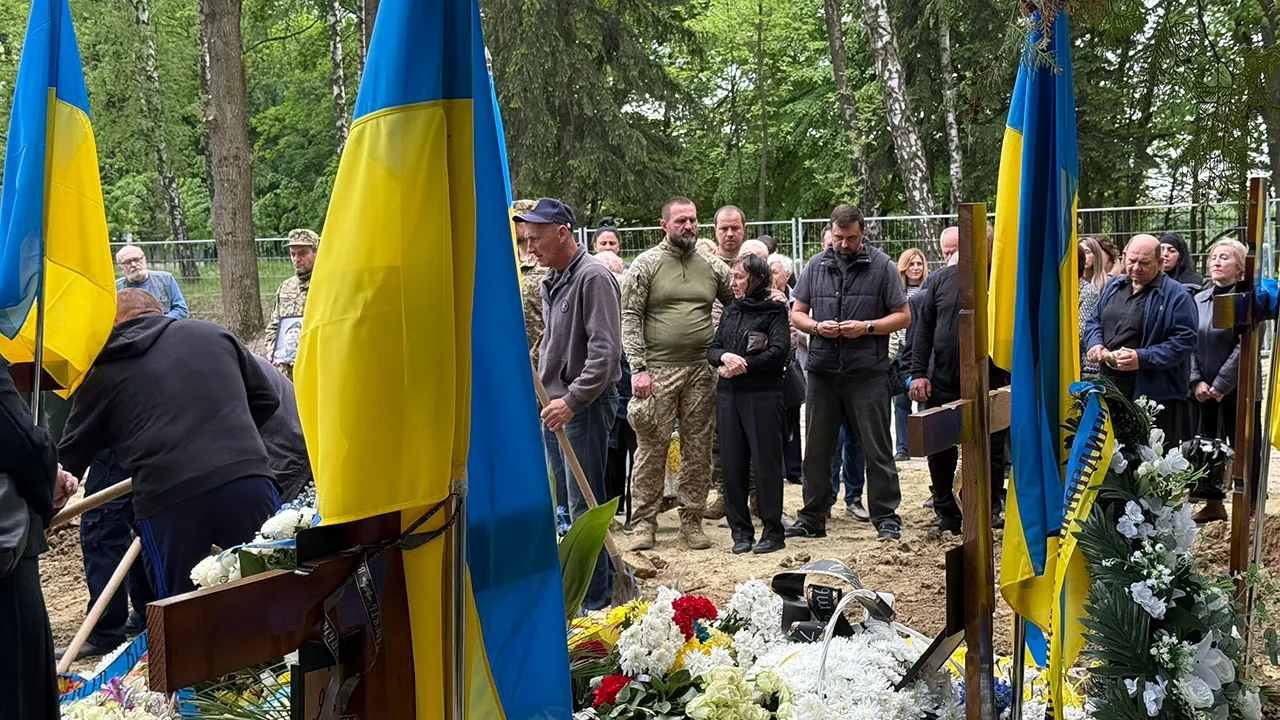
Despite these inspiring displays of resilience, the relentless, compounding math of war continues to take its toll, demanding more land for the dead even as the living struggle to keep moving forward. Lviv’s primary military cemetery became saturated so rapidly that municipal authorities had to open an entirely new burial ground on a nearby hillside to accommodate the ceaseless flow of wooden coffins. This once-empty hillside is now a sprawling forest of freshly dug earth, decorated with wooden crosses, vibrant floral wreaths, and the iconic yellow-and-blue flags of Ukraine snapping sharply in the cold western wind alongside framed photographs of young, smiling soldiers captured in happier times before the invasion. At a recent service for a thirty-two-year-old soldier, his grieving brother openly wept, sharing with the small crowd of mourners that the young man had never had the chance to start a family of his own before his life was abruptly cut short. Yet, in a display of structural contrast that feels almost surreal to an outside observer, just hours after this somber burial and only a short distance away, hundreds of people gathered inside the opulent, gilded halls of the Lviv Theater of Opera and Ballet for the annual “Miss Lviv” beauty pageant. Beneath the dazzling stage lights, young women wore glittering evening gowns and smiles, seeking to project poise and confidence to an audience consisting mostly of women, as many of the men remaining in the city are locked into essential wartime labor or military service. To the contestants and attendees, this pageant was not a frivolous distraction or an insensitive ignoring of reality; it was an act of profound psychological resistance. By dressing up, celebrating beauty, and refusing to cancel their cultural traditions, they were collectively declaring that the invading forces had not succeeded in crushing their spirit, their joy, or their right to live a life defined by something more than fear and loss.
This delicate balance of survival is further complicated by the fluctuating tides of international geopolitics and the harsh realities of global diplomacy, which often feel disconnected from the immediate danger faced by civilians on the ground. The reality was driven home during a massive, coordinated overnight Russian air assault that targeted multiple cities across Ukraine, including the capital of Kyiv, which Ambassador to the United Nations Andriy Melnyk described as the most devastating aerial bombardment since the start of the full-scale invasion. Melnyk, a proud native of Lviv, noted that the violence has reached such an unbearable threshold that even his own family members in the capital are now actively contemplating fleeing their homes just to find temporary safety. Speaking with an edge of deep frustration, the ambassador expressed a sentiment shared by many locals: that the international community, particularly the United Nations, has faltered in its foundational mission, paralyzed by Russia’s veto power on the Security Council which renders the organization structurally incapable of stopping the bloodshed. Consequently, there is an intense, anxious focus in Lviv on the shifting political winds of the United States, with many residents and local leaders harboring a cautious hope that the administration of Donald Trump might wield American influence to swiftly broker a just and lasting peace. Until such geopolitical breakthroughs occur, however, the direct physical threat remains absolute, requiring Western allies to step up and provide the advanced, long-range air defense systems necessary to intercept the barrage of ballistic missiles and explosive drones that regularly rain down on defenseless urban populations. When the air raid sirens sound in Lviv, cutting through the nighttime air, the city’s residents initially try to maintain their composure, waiting at outdoor cafe tables to assess whether the threat is “only” slow-moving drones or high-speed missiles before moving toward one of the city’s hundreds of crowded basement shelters.
As the evening hours deepen and the daily drama of Lviv temporarily subsides, the quiet departure of the overnight train toward the European border offers a visual summary of the war’s deep societal divisions and the heavy human toll on families. On the dimly lit station platforms, the crowds consist almost entirely of women, young children, and the elderly, while border officials spend long, tense minutes carefully examining the travel documents of the few men attempting to board, verifying that they are legally exempt from mandatory conscription before allowing them to pass. The exhaustion on the faces of these travelers is palpable, reflecting years of sleep deprivation, persistent worry for loved ones on the front lines, and the agonizing uncertainty of what the next day will bring. Yet, despite this heavy atmosphere of transition and loss, Mayor Sadovyi remains fiercely, stubbornly optimistic about the ultimate trajectory of his beloved city, envisioning a future where Lviv becomes more than just a historical relic of Eastern Europe. He firmly believes that when this conflict finally concludes, the international community will flock to Lviv not to offer charity or pity, but to learn the invaluable, hard-won lessons of survival, innovation, and psychological endurance that the city has forged in the fires of crisis. By transforming their trauma into a model of active resistance through initiative projects like “Unbroken,” the citizens of Lviv are demonstrating that the true measure of a society is not its ability to avoid suffering, but its capacity to maintain its humanity, its dignity, and its forward momentum in the face of absolute destruction. In a deeply fragile world where peace can no longer be taken for granted, Lviv stands as a beacon of hope and a reminder that the capacity to remain unbroken is not a passive trait, but a quality that must be actively built, practiced, and passed on to future generations.