





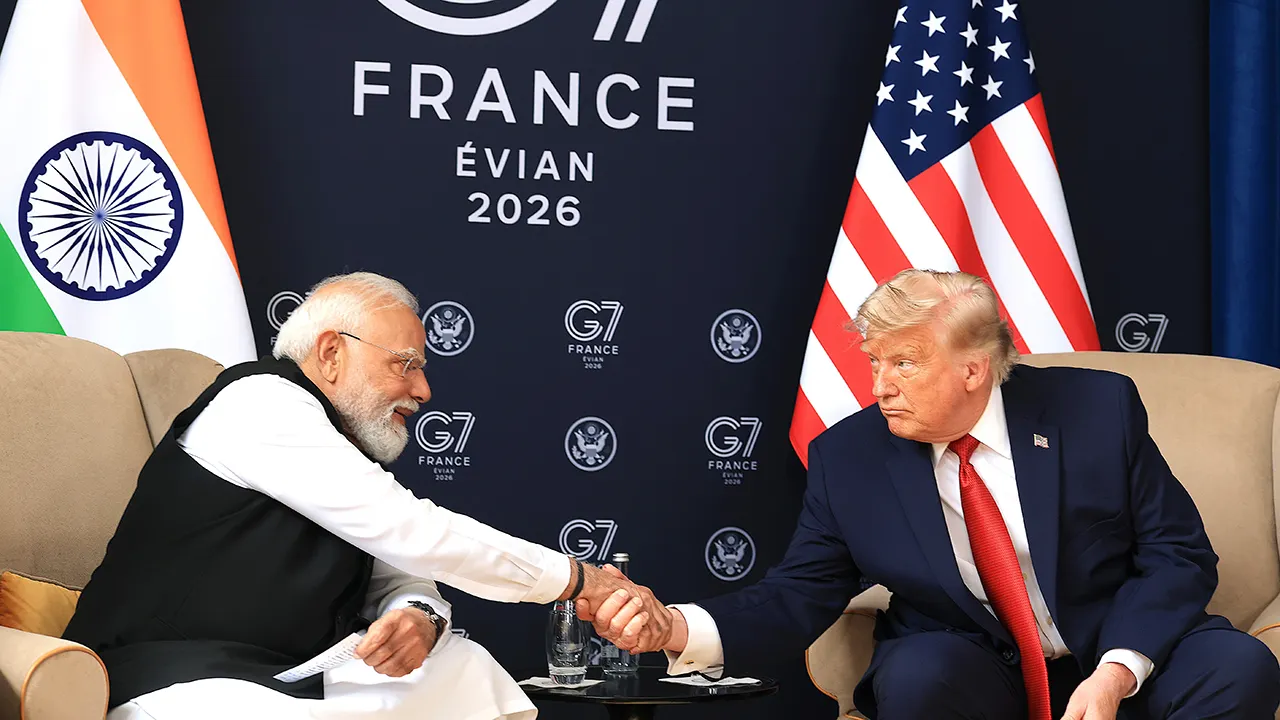
The global stage has a way of stripping away former certainties, replacing the warm theatricality of personal camaraderie with the cold, hard mathematics of contemporary realpolitik. This fundamental truth was on full display at the G7 summit in France, where President Donald Trump and Indian Prime Minister Narendra Modi stood face-to-face for the first time since the winter of 2025. Gone was the famous, tight-gripped “bear hug” that had come to symbolize their early diplomatic courtship; in its place was a polite, measured handshake accompanied by cordial smiles. While their subsequent bilateral meeting was undeniably friendly, it could not fully obscure the dense cloud of compounding geopolitical tensions that has slowly settled between Washington and New Delhi. For years, India had navigated its foreign policy with supreme confidence, operating under the assumption that its strategic partnership with the United States was an unshakeable pillar of modern international relations. This confidence allowed New Delhi to wage a relentless, highly successful global campaign aimed at painting its historic arch-rival, Pakistan, as an isolated, destabilizing state. Prime Minister Modi had once proudly proclaimed to his domestic audience that India had successfully cornered Pakistan on the international stage, pledging to redouble these aggressive diplomatic maneuvers. Yet, in the volatile arena of global affairs, fortunes can shift with dizzying speed. Today, India finds itself in the uncomfortable position of watching its carefully constructed policy of isolating Pakistan unravel, as Islamabad orchestrates a remarkable and highly pragmatic diplomatic comeback. This rapid realignment has introduced a complex, unpredictable variable into the traditional South Asian security paradigm, forcing Indian policymakers to urgently re-examine their diplomatic machinery. As New Delhi endeavors to restore its damaged relationship with Washington, it does so against the backdrop of a resurrected Pakistani diplomatic profile that threatens to dilute India’s influence in the halls of American power, transforming what was once a clear-cut partnership into a highly contested three-way diplomatic balancing act that demands the utmost level of strategic focus from both nations.
The dramatic restructuring of South Asian diplomacy highlights a major miscalculation by Indian leadership regarding the changing nature of American foreign policy. Historically, Washington maintained a highly favorable posture toward India, with successive administrations—from George W. Bush and Barack Obama to Joe Biden and Donald Trump’s first term—making high-profile state visits to New Delhi, cementing a bipartisan consensus that viewed India as the ultimate democratic counterweight to China’s expanding influence in the Indo-Pacific. During Trump’s initial tenure, Modi went to great lengths to cultivate an intense personal rapport with the American president, earning the distinction of being among the first global leaders welcomed to the White House following Trump’s inauguration. Relying heavily on this legacy of warmth, Indian policymakers seemingly believed that these established bonds would seamlessly carry over into Trump’s second term. However, this belief underestimated the transactional, “America First” doctrine that defines the current administration’s global outlook. While India rested on its laurels, confident in its indispensable strategic status, Pakistan quietly and methodically went to work, clawing its way back from diplomatic irrelevance to global credibility. Experts point out that New Delhi severely misjudged the dynamics of Trump’s second term, erroneously banking on past personal friendships rather than adapting to a hyper-pragmatic Washington that values immediate, tangible transactional benefits over strategic sentimentality. Consequently, India’s rigid foreign policy stance, neatly summarized by its uncompromising mantra that “terror and talks cannot coexist,” has struggled to find traction in a rapidly evolving geopolitical environment where American decision-makers actively look for agile partners who can deliver quick economic and diplomatic victories. By failing to appreciate this systemic shift in Washington’s strategic calculus, India left an inviting geopolitical vacuum that its nuclear-armed neighbor was all too eager to fill, thereby reversing years of painstaking diplomatic efforts to keep Islamabad safely isolated from the center of international power networks, proving that in contemporary global diplomacy, geopolitical complacency can always be an incredibly costly and damaging strategic mistake for any major nation seeking to maintain its regional dominance.
The cracks in this relationship first widened in May 2025, when President Trump announced that he had personally brokered a ceasefire between India and Pakistan following their worst military clash over Jammu and Kashmir in decades. The announcement sent shockwaves through diplomatic corridors, triggering contrasting reactions that illuminated the deep ideological divide. Islamabad immediately seized the moment, showering the American president with praise for his intervention and going so far as to nominate him for the Nobel Peace Prize, a public relations maneuver that found immediate favor in Washington. Conversely, New Delhi flatly rejected Trump’s grand narrative of personal mediation, fiercely maintaining that the fragile ceasefire was strictly the result of direct, bilateral negotiations between Indian and Pakistani military officials. This sharp, public rebuttal highlighted India’s intense, long-standing sensitivity to third-party mediation in what it considers an exclusively bilateral dispute. Instantly, the relationship entered a period of rapid cooling, exacerbated by aggressive economic maneuvers from the Trump administration. In rapid succession, the United States hit India with some of the most punitive trade tariffs ever imposed on a major global economic partner, directly targeting India’s export sectors. Simultaneously, Washington’s unrelenting economic sanctions pressure on Russian oil imports rattled India, an energy-deficient nation heavily dependent on imported crude to fuel its massive economy. Coupled with growing bilateral disputes over H-1B visas for highly skilled Indian tech professionals, these economic broadsides made it painfully clear to New Delhi that personal relationships and shared strategic visions were easily overshadowed by Trump’s unyielding economic nationalism, leaving Indian diplomats scrambling to counter what they perceived as unprovoked slaps to the face from a trusted western ally. This sudden downturn shattered the long-held domestic illusion that shared democratic values alone could protect sovereign India’s vital economic interests from the aggressive, transactional policies of a resurgent ‘America First’ American policy toward New Delhi and South Asia. This uncomfortable economic reality has forced the Indian foreign policy establishment to rethink its global alignments and prepare for an era where friendships are judged entirely by severe trade and tariff balances.
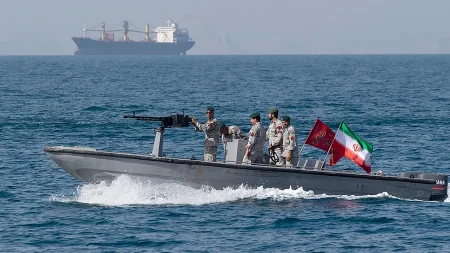
The geopolitical friction intensified significantly as the fallout from the military conflict involving Iran began to ripple across Asia, testing India’s economic resilience. As a nation vulnerable to energy disruptions, India was caught in the crossfire of this Middle Eastern war, suffering severe economic strain and anxiety over its fuel security. The situation escalated to national tragedy when a United States strike killed three Indian seafarers, who became collateral damage during a naval blockade. These individuals represented the first civilian casualties, igniting outrage across the Indian public. New Delhi reacted sharply, summoning American Chargé d’Affaires, Jason Meeks, to express deep concern, arguing its citizens were paying the price in a war not their own. Yet, while India was bogged down by crises, Pakistan demonstrated extraordinary diplomatic agility. Operating with nimbleness, Islamabad performed a delicate high-wire act, currying favor in Washington while maintaining deep ties with Beijing, Tehran, and the Gulf states. This display of diplomacy allowed Pakistan to position itself as a vital, stabilizing conduit of communication in a fractured world, contrasting with India’s passivity and reluctance to mediate. Many key observers noted that New Delhi unfortunately missed a major geopolitical opportunity by not seeking to act as an active peacemaker between the United States and Iran, especially given India’s historically warm relations with Tehran. Instead, the Modi government took a step back, focusing primarily on domestic economic concerns and issuing cautious, calculated diplomatic statements that failed to register on the world stage. By contrast, Pakistan’s aggressive mediation efforts allowed it to substantially rewrite its international narrative. By stepping into this high-stakes security role, Islamabad successfully distracted global attention away from its internal economic struggles and political instability, presenting itself instead as a constructive, highly responsible global player. For New Delhi, the realization was incredibly bitter: their long-term campaign to isolate Pakistan had been completely outmaneuvered not by military force, but by a flexible and sophisticated masterclass in modern diplomatic balancing and transactional strategy, which successfully and permanently redefined the entire regional power balance.
Nowhere was Pakistan’s stunning diplomatic resurgence more vividly illustrated than in the warm embrace President Trump bestowed upon Pakistan’s military leadership, a massive reversal from his first administration when he accused Islamabad of “deceit and lies.” Under this administration, the atmosphere transformed, culminating in a historic invitation extended to Pakistan’s army chief, General Asim Munir, for a high-profile luncheon at the White House. General Munir, who had led conflicts against India earlier that year, became the first Pakistani military chief who was not president to be hosted by a US president. During this meeting, Trump praised Munir, calling him his “favorite Field Marshal” and an “exceptional human being,” public endorsements that alarmed New Delhi. This personal chemistry was translated into concrete geopolitical currency, yielding trade deals and highlighting Pakistan’s role as a principal mediator between the US and Iran. By leveraging concrete cooperation and strategic flattery, Pakistan successfully transformed its international image from a suspected sponsor of terror to a responsible peacemaker. Indeed, India’s traditional approach—which focused on maintaining deep ties with Israel while offering cautious, measured statements regarding global conflicts—suddenly appeared dry and overly bureaucratic compared to Islamabad’s high-energy charm offensive. While New Delhi remained committed to standard diplomatic protocol and formal multilateral institutions, Pakistan played a far more direct, highly personalized game that perfectly aligned with Trump’s unique political style. Under the leadership of Prime Minister Shehbaz Sharif and General Munir, Islamabad proved that it understood how to appeal directly to the transactional nature of the modern American presidency. They offered concrete security solutions, leveraged key geopolitical intelligence, and showered the American leader with the exact kind of public adulation that he famously appreciates. Meanwhile, India’s diplomats found themselves constrained by their own rigid, long-standing policies, unable to pivot quickly enough to match Pakistan’s diplomatic agility. The resulting imbalance has temporarily upended the regional status quo, leaving India in the unusual position of playing catch-up in a Washington where it was once unchallenged by its traditional nuclear-armed South Asian rival state.
Despite Pakistan’s current diplomatic triumph, seasoned geopolitical analysts are quick to caution that in the shifting sands of global politics, no victory is permanent, and the ultimate trajectory of South Asian diplomacy remains highly fluid and unpredictable. Whether Pakistan can sustain this remarkable momentum depends entirely on its ability to maintain its prized position in Trump’s favor while demonstrating to a skeptical international community that it has truly reformed its internal behavior and abandoned its historic reliance on destabilizing regional proxies. Meanwhile, India is refusing to concede the field, quietly initiating a sophisticated strategic counteroffensive designed to rebuild its fractured bridges with Washington and demonstrate its irreplaceable value as a democratic security partner. This delicate rebuilding process began in earnest with a high-profile visit to New Delhi by Secretary of State Marco Rubio, a diplomatic mission widely interpreted as a concerted effort to reset frayed ties and explore deeper energy and security cooperation in a post-conflict world. This crucial groundwork set the stage for the highly anticipated G7 encounter, where President Trump sought to reassure Prime Minister Modi, praising him in characteristically colorful terms as “calm, cool, and totally killer,” while publicly promising to defend India against any foreign aggression with the ultimate guarantee of American military might. However, even this grand promise carried a telling caveat, with Trump noting that his ironclad commitment was tied specifically to Modi’s personal leadership, highlighting the highly personalized and volatile nature of contemporary American foreign policy. As both nuclear-armed rivals continue to navigate this incredibly complex and high-stakes diplomatic landscape, the traditional boundaries of South Asian geopolitics are being completely redrawn. This forces Washington, Islamabad, and New Delhi to continuously adapt to an evolving environment where old loyalties are no longer guaranteed, and where diplomatic survival demands a relentless pursuit of pragmatic utility. Only time will tell which nation can better secure its long-term future in an increasingly transactional international order that prioritizes immediate, tangible strategic assets over historical alliance, shared regional ties, and old personal warmth.