






The sky has always held an irresistible and almost mystical allure for those seeking to break free from the bounds of earthly gravity, offering a vast, open canvas of pure freedom, adrenaline, and perspective. On a beautiful, crisp Sunday morning in northeastern France, eleven individuals gathered at the Nancy-Essey Airport, united by this shared passion for adventure and the eternal human desire to touch the heavens. Among them were five novice jumpers, their hearts undoubtedly pounding with a chaotic mixture of nervous anticipation, sheer courage, and childlike excitement as they prepared to experience their very first tandem skydives. These beginners were paired with five highly experienced, certified parachuting instructors—mentors who had dedicated hundreds of hours to mastering the invisible currents of the sky, trained to guide others safely back to the solid embrace of the earth. Together with their pilot, a trusted aviator responsible for steering their journey into the clouds, they boarded the aircraft amidst the hum of preparation, clear blue skies, and the bright, hopeful chatter that always precedes a jump. Under normal circumstances, this flight would have ended with high-fives and the euphoric rush of a safe landing on the airfield’s grassy drop zone. Instead, in an agonizingly brief moment, this journey of joy and self-discovery evaporated into an unfathomable tragedy. Shortly after takeoff, the aircraft suffered a sudden and devastating malfunction, plummeting back to earth and claiming the lives of everyone on board, leaving behind a profound wave of grief that has shattered families, silenced the airfield, and stunned the local community.
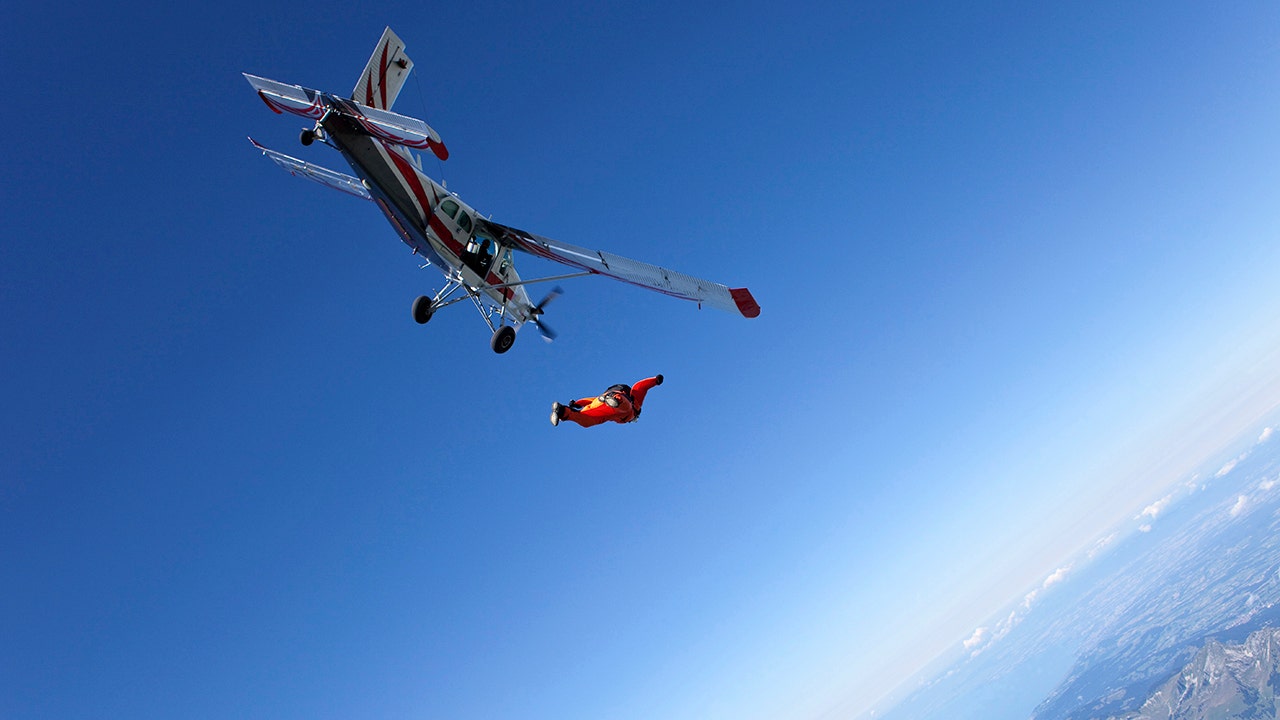
The aircraft at the center of this tragedy was a Pilatus PC-6, a legendary single-engine turboprop utility aircraft widely celebrated in the global aviation world for its rugged design, Short Takeoff and Landing (STOL) capabilities, and reliable service in skydiving clubs. Affectionately known as the “Porter,” it is a plane built to climb steeply and perform reliably under demanding conditions, making it a staple of the global skydiving industry. However, on this tragic Sunday, the aircraft’s legendary reliability was cut short in a flight that lasted less than sixty seconds. Flight tracking data retrieved from Flightradar24 paints a terrifying picture of the aircraft’s final, frantic moments: almost immediately after lifting off the runway at Nancy-Essey Airport, the plane made an abrupt, unnatural bank to the left, struggling desperately to find lift in the cool morning air. Instead of climbing to the safe altitude required for skydiving operations, the plane suffered an immediate, critical mechanical failure and began a rapid, near-vertical descent, plunging toward the ground about 300 yards from the runway. Meurthe-et-Moselle Prefect Yves Séguy later described the terrifying close call to reporters, noting that the aircraft missed a highly populated residential area by a mere few dozen meters. Had the struggling plane drifted only slightly further off its course, it would have plowed directly into nearby homes, transforming an already horrific aviation accident into a historic catastrophe filled with extensive collateral casualties on the ground, leaving an even larger scar on the local neighborhood.
For those living near the airport and the families waiting on the tarmac, the sheer horror of the sudden crash unfolded in an agonizing sequence of sights and sounds that will haunt them for the rest of their lives. A local resident, speaking with French broadcaster BFM-TV, recalled the chilling moment he heard the aircraft’s engine sputter, lose power, and suddenly go dead, followed instantly by a deafening, metallic impact that shook the surrounding neighborhood’s quiet streets. When he rushed to the crash site in a desperate, hopeful bid to offer assistance, he was met instead with a scene of absolute silence, smoking wreckage, and catastrophic ruin, with no signs of life left to save amidst the debris. Even more heartbreaking was the plight of the victims’ families, several of whom had gathered at Nancy-Essey Airport to watch their loved ones take flight, holding cameras and waiting to capture their joyful jumps on video. Instead of seeing colorful parachutes blossoming against the sky, they had to watch in sheer, helpless terror as the plane carrying their children, spouses, and siblings fell straight from the sky, collapsing into a heap of twisted metal. Recognizing the immense, immediate trauma inflicted upon these onlookers, French authorities quickly mobilized and activated a specialized medico-psychological emergency unit, bringing in trauma counselors to provide support to those who had just witnessed their entire worlds collapse in a matter of seconds.
As the magnitude of the disaster became clear, the French government responded with urgency and deep solemnity, sending Interior Minister Laurent Nunez and Transport Minister Philippe Tabarot directly to the scene to oversee the response and offer solidarity to the grieving community. Walking through the cordoned-off crash site, the ministers met with the local emergency dispatchers, firefighters, police officers, gendarmerie, and civil security teams who had been thrust into the grim and heartbreaking task of recovery. Taking to social media, Minister Nunez expressed a sense of “immense emotion” after standing on the ground where so many lives were lost, praising the exceptional and coordinated response of the first responders who acted under such intense emotional strain. Minister Tabarot echoed this profound grief, describing the incident as an absolute “terrible tragedy” and extending the nation’s deepest condolences to the families of the victims. He also noted a chilling historical fact that highlighted the rarity and weight of the event, revealing that this crash marks France’s deadliest aviation accident involving a skydiving flight in approximately thirty years, casting a somber, historic shadow over the nation’s aviation history and prompting a reevaluation of recreational flight safety on a national scale.
To piece together the mystery of how a routine flight could end so abruptly and violently, multiple rigorous investigations were launched immediately, headed by the Paris prosecutor’s office and the Air Transport Gendarmerie’s specialized investigative unit. Simultaneously, investigators from France’s Bureau d’Enquêtes et d’Analyses (BEA)—the state agency responsible for civil aviation safety investigations—arrived at the wreckage site to dissect the debris, looking for mechanical anomalies, fuel contamination, or structural failures that could explain the sudden loss of engine power. At the heart of these investigations lies the deeply human dynamic of tandem skydiving, an activity built entirely on the concept of absolute, unquestioned trust. In a tandem jump, an inexperienced novice is physically harnessed to a master instructor, relying on their expertise, calm under pressure, and equipment to survive the fall. The five novices who boarded that plane had placed their trust not only in their instructors but in the safety of the aircraft and the systems supporting it, a trust that was tragically shattered by forces beyond anyone’s control. As the BEA works to reconstruct the plane’s final seconds, their mission is not just technical; it is a search for answers on behalf of families desperate to understand how such a joyful pursuit of freedom could end in such a swift and merciless tragedy.
This devastating loss in northeastern France carries a hauntingly familiar echo, occurring just weeks after another nearly identical skydiving plane crash in the United States that sent shockwaves through the global aviation community. In that American accident, which occurred about 65 miles outside of Kansas City, Missouri, a plane carrying eleven skydivers and a pilot crashed shortly after takeoff, killing all twelve people on board in a tragedy characterized by the exact same devastating details: inexperienced first-time jumpers, dedicated instructors, and families watching in horror from the ground. The striking similarities between these two catastrophes serve as a poignant reminder of the fragile thread that connects life and death in the pursuit of high-altitude adventure, showing that the grief felt in France is shared by families across the Atlantic. As both nations mourn their lost adventurers and seek answers to prevent such failures from happening again, these tragedies highlight the profound vulnerability inherent in flight. The memory of those eleven souls in Nancy-Essey, like those in Missouri, will endure as a testament to the brave human spirit that dares to look upward, even as the global skydiving community is left to reckon with the heavy cost of conquering the safe boundaries of the earth.