


As the high-stakes chess match of Middle Eastern diplomacy intensifies, foreign policy experts are urging the Trump administration to keep a vigilant, unblinking eye on Iran’s behavior, particularly concerning its deadliest proxy, Hezbollah—a group with a long and bloody history of targeting American citizens. At the heart of this geopolitical tension is the newly drafted, comprehensive U.S.-Iran memorandum of understanding (MOU). While this 14-point framework does not explicitly name Hezbollah, its crucial first clause demands a permanent termination of military operations across all fronts, which inherently includes ending the devastating conflict in Lebanon. Highlighting the supreme importance of this group to the regime in Tehran, Lisa Daftari, the editor-in-chief of Foreign Desk, notes that Hezbollah is far more than just a typical proxy; it serves as the absolute “crown jewel” of the Islamic Republic’s forward defense strategy. For nearly fifty years, Iran’s mullahs have poured billions of dollars into transforming the militant group into a forward-deployed missile arsenal situated right on Israel’s northern border. To the Iranian leadership, losing control over Hezbollah would be a catastrophic strategic blow, one far more damaging than losing command of the Strait of Hormuz or any other conventional military asset in their arsenal. Consequently, neutralizing this threat remains the absolute prerequisite for any meaningful, lasting peace in the region, exposing the geopolitical reality that Hezbollah and the Islamic Revolutionary Guard Corps (IRGC) Quds Force are structurally inseparable entities holding the state of Lebanon hostage.
This intricate web of proxy warfare and diplomatic double-speak has triggered intense scrutiny over how the U.S. administration intends to hold Iran accountable under the new agreement. While critics question whether the administration is being tough enough on the terrorist group, Secretary of State Marco Rubio recently adopted an uncompromising stance during diplomatic travels in the United Arab Emirates. Addressing the press on why Iran’s ballistic missile program and specific proxy groups were not explicitly detailed in the recent Islamabad MOU, Rubio explained that regional proxy threats are fundamentally subsumed within the broader framework of the agreement. He argued that a genuine, regional end to hostilities is structurally impossible as long as Iranian-backed proxies continue to launch drones and missiles from locations like Iraq, or perpetrate horrific acts of terror as Hamas and Hezbollah have done. By framing the “termination of hostilities” clause as an all-encompassing mandate, Rubio signaling that the administration intends to confront the proxy issue head-on at the negotiating table when the timing is right. This stance reflects a calculated diplomatic strategy that seeks to bind Iran’s hands globally while systematically addressing individual regional threats, acknowledging that Hezbollah—which was officially designated as a Foreign Terrorist Organization by the United States back in 1997—must ultimately be dismantled if the region is to transition away from perpetual warfare.
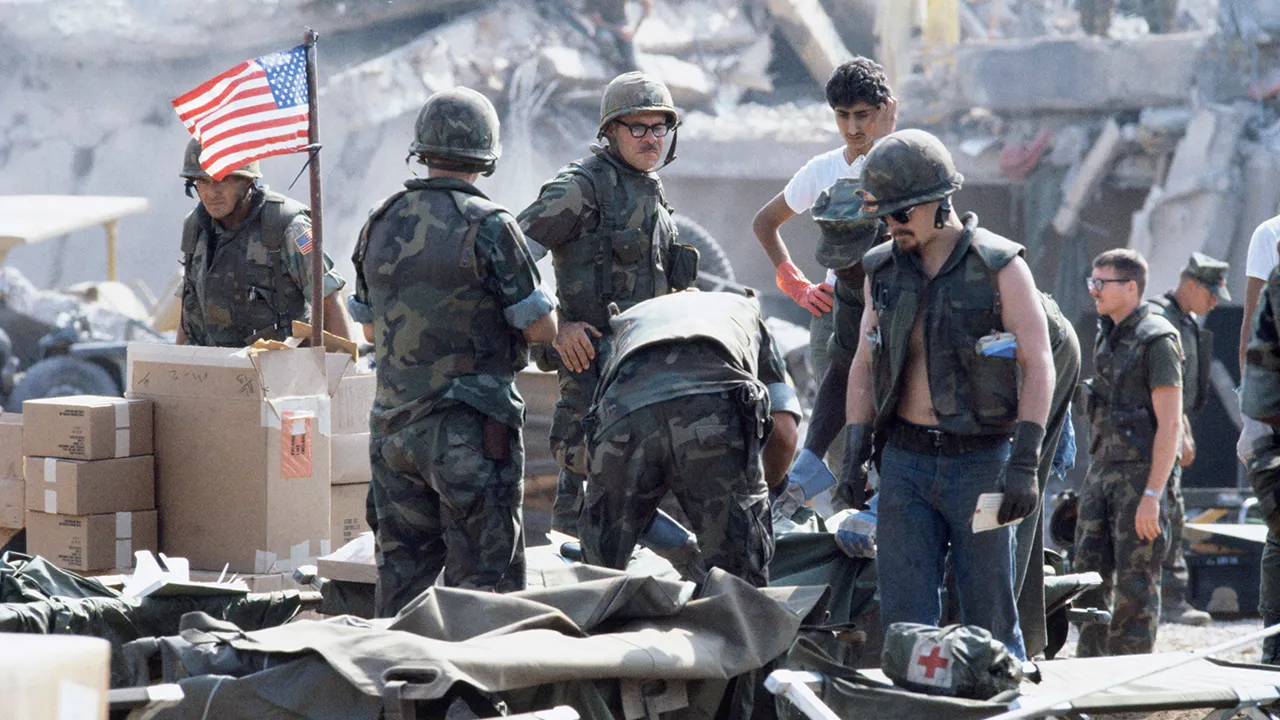
To understand the profound urgency of this diplomatic mission, one must look closely at the devastating trail of American blood and shattered lives that Hezbollah has left in its wake over the last five decades. Bill Roggio, a senior fellow at the Foundation for Defense of Democracies (FDD) and editor of its Long War Journal, points out that the group’s campaign of violence against Americans spans from the infamous 1983 Marine barracks bombing in Beirut to embassy attacks, aircraft hijackings, and ongoing regional instability. He notes that Hezbollah’s destructive reach extends into Iraq, where they played a pivotal role in training, advising, and funding extremist militias responsible for the deaths of more than 600 American soldiers. Furthermore, the group’s expertise in terror tactics has had global repercussions; Hezbollah trained al-Qaeda operates on the deadly mechanics of suicide car bombings, which were later unleashed in the horrific 1998 U.S. embassy attacks in Kenya and Tanzania, and subsequently deployed across warzones in Iraq, Afghanistan, and Somalia. This decades-long history of terror is not just an abstract policy issue but a deeply felt national trauma that continues to demand justice, proving that the threat posed by Tehran’s proxy network is both historic and actively ongoing.
The profound human cost of this state-sponsored terror is painfully illustrated by the tragic story of Amer Fakhoury, a Lebanese-American citizen whose family won a landmark lawsuit against Iran in May 2025. A U.S. District Court officially ruled that Iran, acting through its proxy Hezbollah, was directly responsible for the brutal kidnapping and severe torture of Fakhoury, who lost sixty pounds during a harrowing six-month captivity in Lebanon in 2019. Though he was eventually returned to his family in the United States, the physical toll of his torment was fatal, and he succumbed to cancer diagnosed during his imprisonment just six months after returning home. In the wake of this unimaginable loss, his daughters, Zoya and Guila Fakhoury, who co-founded the Amer Foundation, continue to champion the cause of regional stability, emphasizing that a truly sovereign and peaceful Lebanon cannot be built by sacrificing justice. They argue that lasting peace requires stripping heavily armed terrorist groups like Hezbollah of their power to intimidate, detain, and violently silence innocent civilians. Moreover, they have voiced sharp disappointment over the relative lack of public focus on the American citizens who remain wrongfully imprisoned by the Iranian regime, asserting that any legitimate diplomatic agreement with Tehran must prioritize bringing home every single American currently held hostage in Iranian prisons.
In response to these deeply personal pleas for justice, the U.S. government has reiterated its unwavering commitment to securing the immediate and unconditional release of all Americans wrongfully detained in Iran and around the world. A U.S. official emphasized that the Iranian regime has used the unjust detention of foreign nationals as a shameful political tool for decades, a practice that must end immediately. At the same time, delicate diplomatic maneuvers are unfolding behind the scenes as Washington-brokered talks between Lebanese and Israeli officials continue to progress. Lebanese President Joseph Aoun publicly expressed his gratitude via social media to the U.S. administration, thanking American leaders for their focused efforts to bring an end to the devastating war in Lebanon. Aoun emphasized that these diplomatic efforts are vital for re-establishing the absolute sovereignty of the Lebanese state, ensuring that its legitimate government remains solely responsible for protecting the national dignity, security, and safety of the Lebanese people. However, this diplomatic path is fraught with internal disagreement, as foreign policy expert Walid Phares, author of “Iran: An Imperialist Republic and U.S. Policy,” warns that allowing Tehran any say over Lebanon’s future in international talks is a major strategic error that could ultimately collapse the entire Washington-brokered peace initiative.
As negotiations reach a critical juncture, the administration’s ultimate objective remains focused on restoring regional balance by empowering legitimate state actors over lawless militant factions. During a subsequent diplomatic stop in Kuwait, Secretary of State Rubio clearly articulated this vision, stating that the United States firmly believes the legitimate Lebanese Armed Forces and a sovereign Lebanese government must reclaim full control over their national territory, displacing Hezbollah’s parallel state-within-a-state. This sentiment aligns closely with the Israeli perspective; Jonathan Conricus, a former international spokesman for the Israel Defense Forces and fellow at the FDD, argues that Hezbollah’s extremist jihadi ideology makes any diplomatic compromise impossible, as their foundational mission centers on waging holy war against Western and non-Islamic societies. Conricus suggests that the current geopolitical climate offers a historic, unprecedented opportunity to push back against Iranian regional aggression by dismantling Hezbollah through a combination of intense political, informational, and economic pressure. To ensure these complex diplomatic efforts translate into verifiable security on the ground, the U.S. has established a real-time monitoring mechanism managed by U.S. Central Command (CENTCOM), providing policymakers with precise reporting on the active fighting in Lebanon as Washington talks continue.