

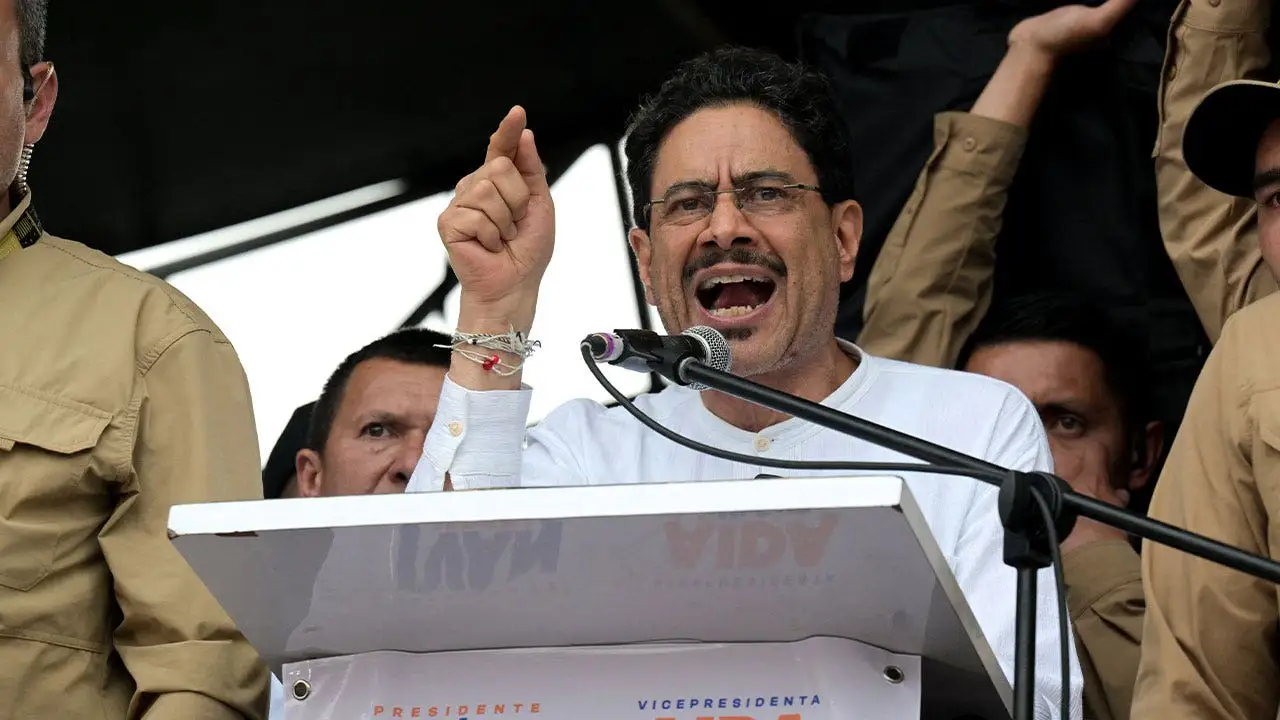
In the high-altitude chill of Bogotá, where the political atmosphere has long been as volatile as the mountain weather, Colombia has reached a momentous and profoundly tense crossroads. After days of anxious uncertainty that brought the nation to a virtual standstill, progressive candidate Iván Cepeda officially conceded the presidential election to his conservative rival, Abelardo de la Espriella. The concession came as a relief to a public weary of civil unrest, following Cepeda’s initial refusal to accept the preliminary results of a historically tight race. Addressing a divided country through a televised broadcast, Cepeda expressed that his decision to accept the authority of the electoral council was not a quiet retreat, but a vital sacrifice made in the name of “democratic responsibility.” The razor-thin margin of victory—amounting to less than a single percentage point—has exposed a nation fractured deeply down the middle, leaving citizens on both sides of the political spectrum grappling with what this transition means for their daily lives, their safety, and the fragile stability of their communities.
The man stepping into the presidency is a figure who represents a radical departure from the traditional Colombian political establishment. Abelardo de la Espriella, affectionately and fiercely dubbed “El Tigre” by his rapidly mobilized base, is a flamboyant businessman and high-profile defense attorney who had never previously run for public office. Holding dual citizenship in both Colombia and the United States, de la Espriella managed to capture the imaginations of millions of voters who felt alienated by the conventional political class and exhausted by rising rates of urban crime. Backed by a powerful and highly vocal endorsement from former U.S. President Donald Trump, “El Tigre” positioned himself as a disruptive, strongman leader capable of restoring order through sheer force of will. His rise to power reflects a broader, global trend of political outsiders using populist rhetoric, media savvy, and promises of economic liberalization to dismantle the influence of established left-wing movements, promising a return to national pride and security at any cost.
However, the path to this victory was marred by intense controversy, leaving a trail of bitterness that will likely complicate de la Espriella’s ability to govern a polarized populace. In his concession speech, Cepeda did not mince words, launching serious allegations of electoral malpractice, systematic vote-buying, and high-tech disenfranchisement targeting vulnerable rural communities. More provocatively, Cepeda denounced what he termed “open and improper foreign interference” by the United States government, pointing specifically to Donald Trump’s public interventions as an unfair tipping of the scales in a sovereign election. The progressive campaign also raised alarms over the sophisticated use of artificial intelligence to manipulate public opinion and spread targeted misinformation across social media platforms, transforming the democratic process into a digital battleground. For many everyday Colombians, these allegations have cast a shadow of doubt over the legitimacy of the outcome, fostering a deep sense of unease about the vulnerability of their democratic institutions to foreign influence and modern technological manipulation.
This political shift effectively sounds the death knell for the sweeping progressive agenda championed by outgoing President Gustavo Petro, whose administration had attempted to fundamentally restructure Colombia’s social and economic fabric. Central to Petro’s presidency was his highly controversial “Total Peace” initiative, a compassionate yet deeply flawed strategy aimed at ending decades of bloodshed by negotiating directly with leftist guerrilla factions, powerful drug cartels, and right-wing paramilitary groups. While this approach was born out of a genuine desire to heal historical wounds and reduce violence in rural territories, critics argued it allowed criminal organizations to expand their reach unchecked, leaving local populations at the mercy of lawlessness. By rejecting Cepeda, who had sworn to continue Petro’s peaceful dialogue and social reforms, the Colombian electorate signaled a profound fatigue with compromise, choosing instead to close the chapter on left-wing experimentation in favor of a return to uncompromising state authority.
In stark contrast to the previous administration’s olive branch, President-elect de la Espriella has promised an iron-fisted doctrine designed to dismantle criminal enterprises through aggressive militarization. Among his most polarizing campaign promises is the construction of massive mega-prisons, modeled after El Salvador’s highly publicized counter-gang crackdowns, to house thousands of suspected lawbreakers. He has also advocated for the resumption of aerial glyphosate spraying to eradicate illegal coca crops—a practice banned in the past due to severe health concerns for rural farmers and devastating environmental impacts on delicate ecosystems. Furthermore, “El Tigre” plans to jumpstart the nation’s economy by expanding fossil fuel extraction and reviving controversial fracking projects, a move that has deeply alarmed environmental groups but energized business leaders desperate for foreign investment. This hardline agenda highlights the stark human cost of the election, pitting the desperate yearning of urban families for basic physical security against the profound anxieties of rural peasants and activists who fear ecological degradation and state violence.
As the August inauguration approaches, the geopolitical landscape of Latin America is poised for a dramatic realignment. De la Espriella has already expressed his enthusiasm for integrating Colombia into the “Shield of the Americas,” a regional security coalition proposed by Donald Trump to coordinate efforts against transnational organized crime and counter authoritarian influences in the hemisphere. This partnership signals a robust return to Washington’s traditional sphere of influence, positioning Colombia once again as the United States’ premier strategic ally in South America. For the people of Colombia, the transition of power on August 7 represents a leap into an uncertain future, marked by the promise of economic regeneration and safer streets, but shadowed by the potential for renewed social conflict, environmental devastation, and a deepening of domestic divisions. Whether “El Tigre” can successfully unite his fractured nation or if his uncompromising vision will further tear at the country’s delicate social fabric remains the defining question of Colombia’s next chapter.