


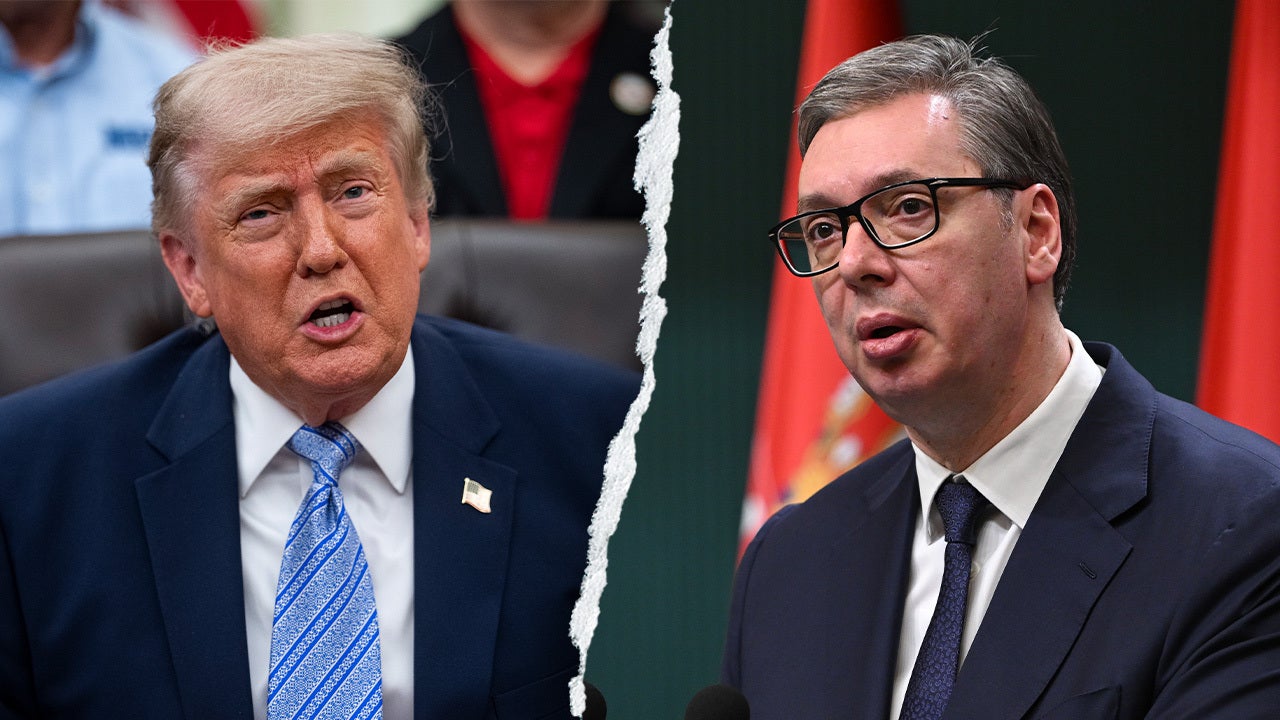
The relationship between Serbia and the United States is undergoing a profound and highly emotional transformation, shifting away from the painful memories of late-twentieth-century conflict toward a future defined by economic vitality and mutual respect. For many Serbians, the memories of the 1999 NATO bombing campaign remain an open wound—a defining, tragic era that long colored how the nation viewed Washington’s foreign policy. However, Serbian President Aleksandar Vučić notes that under the leadership of Donald Trump, the psychological landscape of this relationship has experienced a dramatic paradigm shift. By moving away from years of lecturing and political pressure, the Trump administration’s engagement with the Western Balkans has fostered deep appreciation among the Serbian public. Vučić paints a striking picture of this turnabout, revealing that public sentiment in Serbia overwhelmingly favors the pragmatic Republican approach over traditional Democratic administrations by a staggering margin of ninety percent to ten. This massive shift in public perception is why Vučić recently extended a warm, personal invitation to Trump to visit Belgrade, predicting that the American president would receive an unprecedented, wildly enthusiastic welcome from hundreds of thousands of citizens eager to celebrate a new chapter of bilateral friendship.
This newfound diplomatic warmth is grounded in a shared vision for robust economic development, technological innovation, and conservative values. Rather than allowing past disputes to paralyze future progress, Belgrade and Washington are actively constructing a comprehensive strategic dialogue designed to elevate Serbia into a premier regional economic hub. The initiative targets several high-tech and industrial sectors, including advanced data centers, artificial intelligence research, liquefied natural gas infrastructure, and enhanced defense cooperation. This rapid modernization coincides with a remarkable domestic economic turnaround under Vučić’s leadership, during which Serbia’s Gross Domestic Product has surged from 32 billion euros to an estimated 100 billion euros (approximately $120 billion USD). By positioning the nation as an ambitious, forward-looking economic powerhouse, Vučić aims to solidify Serbia’s candidate status for the European Union while preparing to host Expo 2027 in Belgrade—an international showcase that will welcome nearly 150 nations and signal Serbia’s definitive return to the center stage of global commerce and innovation.
A central element of this diplomatic evolution is the pragmatic, business-first approach to the complex and deeply historical regional disputes that have long plagued the Balkans. Reflecting on Trump’s first term, Vučić highlights the historic economic normalization agreements brokered at the White House in September 2020 between Serbia and Kosovo. Rather than demanding immediate, emotionally charged concessions on the highly volatile issue of Kosovo’s political sovereignty, the Trump administration intelligently prioritized tangible, human-centric improvements like expanding critical railway systems, rebuilding highway connections, and stimulating local job creation. When questioned on whether he would ever formally recognize Kosovo’s 2008 declaration of independence in exchange for fast-tracked European Union membership, Vučić remains steadfast in his commitment to the Serbian constitution, refusing to cross that fundamental sovereignty threshold. However, he passionately advocates for a peaceful, pragmatic path forward, arguing that building bridges, expanding trade routes, and fostering robust financial collaboration must always precede complex political debates, keeping the door wide open for compromising solutions that directly benefit everyday citizens on both sides.
In a global landscape that is increasingly fractured and polarized, Vučić continues to masterfully navigate a delicate geopolitical tightrope, rejecting the rigid binary choices often demanded by major global powers. While Serbia maintains its steady path toward European Union membership, the nation also preserves its historically close relationships with both China and Russia—a balancing act that has frequently drawn intense scrutiny from Western critics in the wake of the war in Ukraine. Vučić rejects the premise that small nations must blindly choose sides in global rivalries, advocating instead for a highly rational, interest-driven approach to foreign policy. He humanizes this strategy by pointing to Trump’s own historical engagements with Beijing, arguing that the American president did not visit China out of vanity, but rather accompanied by top business leaders to secure profitable deals and benefit the American workforce. Applying this same logical framework to Belgrade, Vučić asserts that a leader’s primary moral and political duty is to champion the livelihood, security, and financial prosperity of their own citizens, rather than adhering to rigid ideological blocks that stifle national growth.
This philosophy of pragmatism over ideology also guides Vučić’s broader perspective on global conflict resolution and human rights. Confronted with the ongoing catastrophes in Eastern Europe and the Middle East, the Serbian leader champions a simple but profound truth: it is infinitely better to endure thousands of days of challenging, tedious diplomatic negotiations than to suffer through a single day of devastating warfare. In a European diplomatic landscape that is often divided or hesitant, Serbia has emerged as a distinct and highly vocal supporter of Israel. Vučić takes immense pride in this open collaboration, positioning Belgrade as a principled ally during times of deep international distress. Furthermore, the Serbian president voices deep concern regarding the alarming rise of antisemitic slogans, banners, and hostile sentiments sweeping through various western societies. He firmly declares that such hatred has absolutely no home in Serbia, pledging that under his leadership, the country will remain a safe, respectful, and protected sanctuary for the Jewish community, standing strong against the toxic currents of modern prejudice.
Ultimately, Aleksandar Vučić’s leadership represents a highly ambitious effort to rewrite the narrative of modern Serbia, transforming it from a nation once defined by conflict, isolation, and historical trauma into a sovereign, prosperous, and indispensable global partner. By balancing the pursuit of European Union integration with solid partnerships in both the East and the West, Serbia is demonstrating how a smaller nation can successfully assert its independence on the world stage. The evolving partnership with the United States—driven by a shared emphasis on economic realism, safety, and mutual respect rather than political coercion—stands as a powerful testament to this historic shift. As Belgrade prepares for the world stage at Expo 2027 and continues to expand its technological and energetic horizons, the nation is proving that honoring one’s heritage does not mean being chained to the past. Through pragmatic diplomacy, domestic economic triumph, and a steadfast commitment to peaceful co-existence, Serbia is confidently charting a bright, self-determined course toward a future of shared prosperity and global respect.