





In a diplomatic move that is being widely embraced by religious communities and political watchdogs alike, the Israeli government under Prime Minister Benjamin Netanyahu has taken a historic step by creating a brand-new diplomatic portfolio: a dedicated special envoy to the Christian world. Stepping into this unprecedented role is Ambassador George Deek, an experienced and highly respected diplomat who recently completed a six-year tenure representing Israel in Azerbaijan. For Deek, this appointment is far more than a routine bureaucratic assignment; it is an deeply personal and essential mission to build authentic, empathetic human connections that transcend simple geopolitics. In an exclusive conversation in Jerusalem, Deek emphasized that the modern world often views Israel through a narrow, highly politicized lens, completely missing the vibrant, complex, and deeply diverse reality of its internal society. By establishing this dedicated channel, the Israeli government hopes to challenge sweeping generalizations and share a richer, more complete narrative of Jewish-Christian relations, creating a space where mutual respect can flourish despite a backdrop of rising global tensions and cultural fragmentation.
This new diplomatic bridge comes at a critical historical moment characterized by a devastating decline of Christian communities across the wider Middle East. To understand the urgency of Deek’s mission, one must look at the tragic demographic shift of the region: over the last century, the Christian population in the Middle East has collapsed from representing twenty percent of the total population to less than two percent today. Across areas where Christian communities once thrived for millennia, ancient traditions and cultural heritages have been systematically uprooted by conflict, persecution, and political instability. In stark and hopeful contrast, Israel remains the only nation in the entire Middle East where the Christian community is not only safe but actively growing and integrating into the broader culture. Demographic records show that since Israel’s founding in 1948, its Christian population has climbed from 34,000 to more than 184,200 today, accounting for nearly two percent of the nation’s citizenry and supporting over three hundred active churches. This growth represents a quiet triumph of survival and community stability in a region where, as Deek points out, extremist groups like Hamas have hollowed out historical minority communities, leaving places like the Gaza Strip virtually devoid of its ancient Christian presence.
The reasoning behind this new diplomatic post is anchored in three profound pillars of shared history, culture, and theological heritage. First, there is an indelible, sacred connection to the physical land of Israel as the literal cradle of the Christian faith, making the geography itself a living sanctuary for millions of believers worldwide. Second, this relationship is rooted in a shared Judeo-Christian ethic that has shaped the moral architecture of the modern democratic world, fostering foundational societal principles such as individual liberty, freedom of conscious thought, and the inherent dignity of the human soul. Finally, the Israeli government recognizes that safeguarding the spiritual and physical well-being of all religious denominations is a vital test of its democratic identity. Deek notes that this special envoy role serves as an official acknowledgment of the deep appreciation Israel holds for its global Christian supporters, positioning the state as an active partner in defending religious freedom. In a world increasingly suspicious of institutional faith, this cooperative bridge offers a rare example of two distinct faith traditions uniting under a shared umbrella of mutual defense and philosophical alignment.
This growing alliance is particularly crucial as both faith communities confront a terrifying rise in global antisemitism and religious intolerance, especially in the wake of the devastating October 7 attacks. Organizations like the International Christian Embassy Jerusalem (ICEJ), led by Dr. Jürgen Bühler, have worked tirelessly for decades to mobilize international support, establishing a presence in nearly 185 countries to counter the spread of hate. The urgency of this work was recently highlighted during an emergency summit in Jerusalem that united hundreds of theologians, pastors, and global ministry leaders to address the wildfire-like spread of antisemitic vitriol in poorly regulated digital spaces. Ambassador Deek passionately argues that history has shown that hatred targeting Jewish communities never stops with them; the very same extremist forces that drove Jewish populations out of Arab countries in the twentieth century have, over the last two decades, turned their sights on other vulnerable religious minorities. By joining hands, Christian and Jewish leaders are recognizing that their security and their legacy are deeply interconnected, requiring a unified, global defense against the rising tide of digital and physical extremism.
Despite these strong bonds, Ambassador Deek is clear-eyed about the domestic challenges and occasionally painful frictions that occur within Israel’s borders, refusing to ignore recent isolated incidents of intolerance. In recent months, there have been deeply unsettling reports of vandals targeting Christian symbols in Jerusalem, including a highly publicized assault on a Christian nun, as well as an incident involving an Israeli soldier who desecrated a Christian cross in southern Lebanon. Rather than dismissing these events, Deek condemns them as direct attacks on the very core values of tolerance, diversity, and mutual respect upon which the State of Israel was founded. He points out that the Israeli government and judicial system have responded with swift, unequivocal condemnation and concrete legal action, ensuring that those responsible—including the soldier in Lebanon and the attacker in Jerusalem—were arrested and prosecuted. By demonstrating that no individual is above the law when it comes to violating the sanctity of another’s faith, Israel hopes to prove that its commitment to protecting its minority populations is not merely rhetorical but is backed by a robust and impartial system of justice.
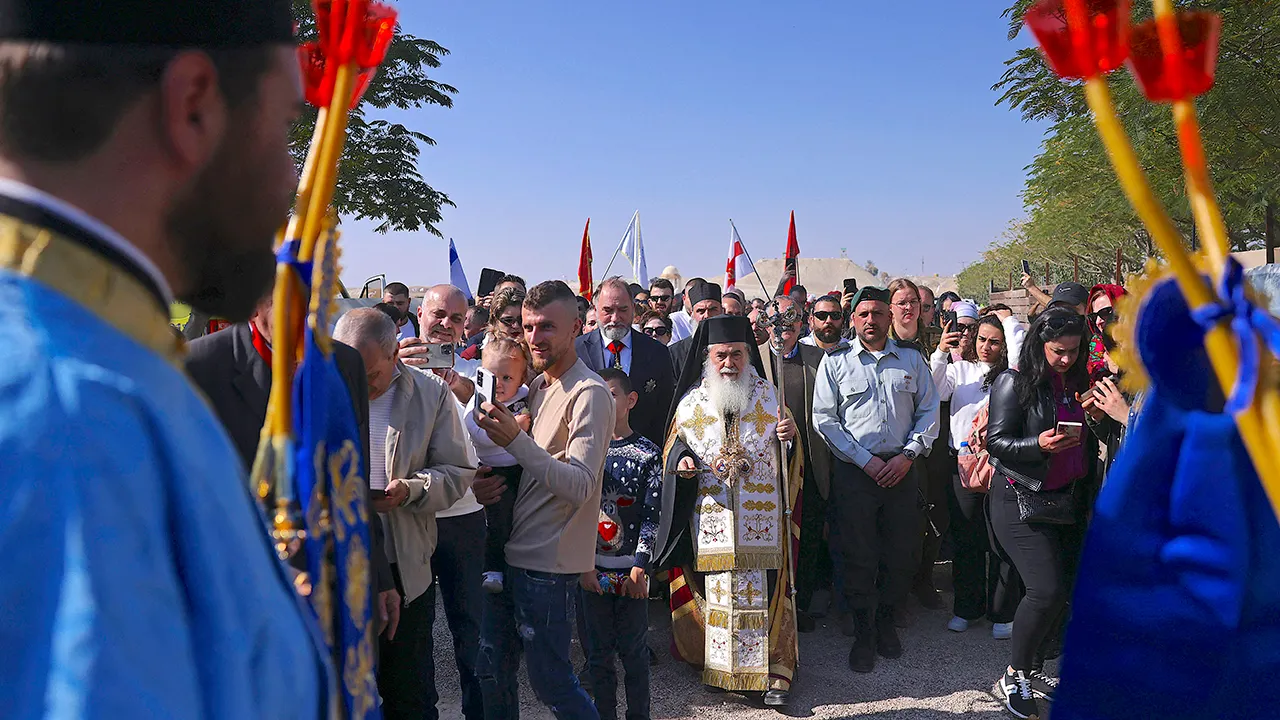
Looking toward the future, Ambassador Deek’s ultimate vision is to transform how people of faith experience and understand the Holy Land, moving away from sterile political debates and toward meaningful, transformative discovery. He envisions his role as a personal mission to invite Christians from all corners of the globe to walk the pathways of the Bible, encouraging them to connect directly with the geography of their scriptures rather than viewing the region through the distorted lens of modern political campaigns. By visiting the ancient holy sites under the protective stewardship of the Israeli state, visitors can witness firsthand a society where diverse religious groups co-exist, worship, and build lives together. Ultimately, this pioneering diplomatic endeavor is an open invitation to rediscover the common roots that unite the “People of the Book,” fostering a spirit of enduring friendship, mutual protection, and hope in a world that is deeply in need of reconciliation and light.