


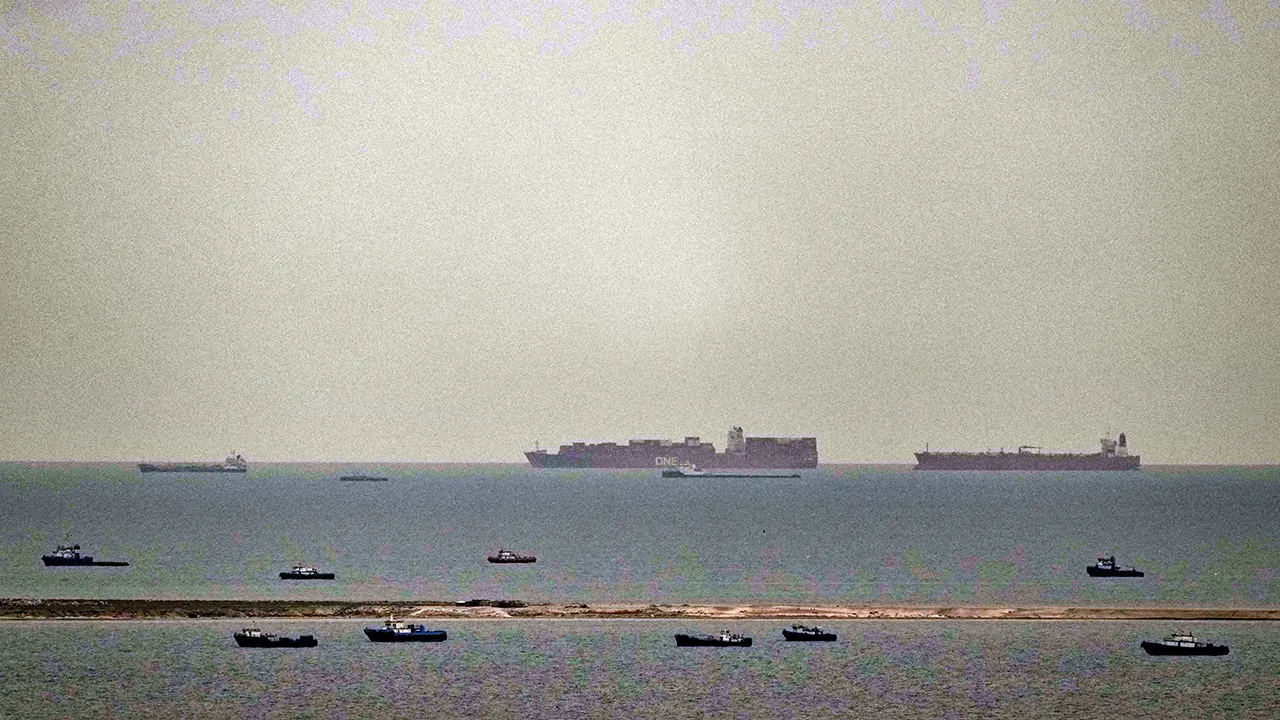
Imagine standing on the deck of a massive tanker, the salty wind whipping against your face as the sun dips low over the Persian Gulf. You’re not supposed to be here forever— just hauling oil or cargo across one of the world’s busiest waterways. But suddenly, the strait ahead is a no-go zone, barred by a foreign power’s decree, and you’re stuck, waiting, with hundreds of other ships bobbing like forgotten toys in an endless game of geopolitical chess. This isn’t a movie script; it’s real life for hundreds of crews since Iran slammed shut the Strait of Hormuz on April 18, trapping tankers on both sides amid whispers of gunfire and sheer terror. As someone who loves the sea, I can picture the frustration when your captain radios in, hearts pounding, knowing home feels a million miles away. The strait, a narrow 21-mile chokepoint between Iran and Oman, isn’t just a route—it’s the lifeline for about a fifth of the world’s oil, keeping economies humming from gas pumps in America to factories in Asia. Under international law, it’s an open waterway governed by the United Nations Convention on the Law of the Sea, where ships have a right to pass freely, regardless of politics. But when geopolitics heats up, those legal niceties melt away, leaving sailors in limbo, their livelihoods and lives hanging in the balance as world powers squabble. I’ve heard stories from seasoned mariners who say the sea should be a place of adventure, not anxiety, yet here we are, with commercial tankers idling like patient giants, their crews feeling the sting of uncertainty after weeks at anchor. Think of the families back home, checking phones constantly, worried about loved ones exposed to this volatile standoff. It’s humanizing to remember that behind every cargo manifest, there are people—fathers, mothers, sons, and daughters—navigating not just waves, but a storm of international tension. And as the days drag on, that impatience grows, morphing into a deep frustration that echoes across the decks, because who wouldn’t feel trapped in a situation where your job suddenly turns into a hostage scenario? The U.S. Energy Information Administration warns that disruptions here could spike oil prices and rattle markets, but for the sailors, it’s personal: missing birthdays, weeks without solid ground underfoot, and the creeping dread of what might happen if things escalate. It’s a reminder that global crises affect real lives, not just charts and headlines, and right now, those hundreds of stranded vessels are more than data points—they’re floating symbols of a world on edge, where the line between duty and danger blurs like the horizon at dusk.
Diving deeper into the chaos, reports from reliable sources paint a picture of raw fear unfolding on the waves. The U.K. Maritime Trade Operations noted that just as the strait closed, Iranian gunboats unleashed fire on at least one tanker, while a projectile slammed into a container vessel, tearing through cargo and shattering the illusion of safety at sea. Audio captured by maritime trackers like TankerTrackers sends shivers—listen to the crew’s distress call: “Sepah Navy! Motor tanker Sanmar Herald! You gave me clearance to go… you are firing now. Let me turn back!” It’s a human plea, desperate and urgent, from a man facing life-threatening chaos, his voice crackling over the radio as bullets whiz by. Iranian state media backed it up, admitting shots were fired near vessels to compel them to retreat, turning the corridor of commerce into a battlefield. India’s foreign secretary expressed deep concern, adding another nation’s worry to the mix, because when sailors from around the world are caught in the crossfire, it ripples outward like waves hitting shore. As an empathetic observer, I envision the terror those crew members must have felt—the deafening cracks of gunfire, the adrenaline surge as they scramble for cover, wondering if this is the end. Traumatic experiences like this aren’t just footnotes; they’re life-altering moments that haunt memories long after the incidents fade. Sea mines lurking beneath the surface make insuring ships a nightmare, with policies virtually impossible to secure, leaving captains gambling on every voyage. It’s not just economics at stake—it’s the psychological toll, the nightmares that might plague seafarers for years, reliving that split-second panic. Humanizing this, think of a young crew member, fresh out of maritime school, dreaming of globe-trotting adventures, only to face real danger for no fault of his own. The imperative right to transit passage, enshrined in UNCLOS, feels hollow when enforced with force, highlighting how international norms clash with unilateral actions. And for those on board, the monotony of waiting amplifies the stress—days turning into weeks, with no end in sight, fostering a camaraderie tinged with underlying dread. Families glued to news updates can’t help but imagine the worst, phone calls filled with unspoken fears. In this powder keg of the Persian Gulf, every report of projectiles or gunfire underscores the fragility of global trade, where human bravery meets geopolitical brinkmanship, and the seas, once a route to prosperity, become arenas of profound uncertainty and resilience.
Zooming in on the shipping giants feeling the pinch, companies like Hapag-Lloyd, the world’s fifth-largest container line, are scrambling like ants in a flood. Nils Haupt, their senior director of group communications, shared a candid glimpse into the ordeal: their crisis team has been burning the midnight oil since Friday afternoon, trying furiously to extricate vessels, but to no avail. “It’s very unfortunate we couldn’t leave today,” Haupt admitted, the exhaustion palpable in his words. With crews stuck aboard, facing not just logistical nightmares but eerie risks—like sirens blaring from sea mines—it’s a testament to corporate empathy that Hapag-Lloyd offers unlimited data for video calls, letting isolated sailors connect with loved ones and flip through movies to stave off the boredom. Yet, Haupt notes the growing impatience and frustration, a slow simmer turning into a boil after prolonged entrapment. Six of their ships hunker near Dubai, anchors holding fast, as crews dream of open waters. One distressing anecdote stands out: “One crew experienced a fire on board from bomb fragments. Others have seen missiles or drones near their vessels.” These are not abstract threats; they’re visceral realities that humanize the stakes, making you empathize with workers trapped on floating prisons, far from home comforts. As someone who cherishes human stories, I can picture the late-night chats among crews, sharing anxieties while gulping coffee, or the quiet moments staring at photos of spouses and kids. The inability to insure passage adds financial dread, with risks escalating as tensions mount. But amidst the adversity, resilience shines—crews holding strong, bonded by shared ordeal. Haupt’s plea for swift resolution—”It is critical that our vessels can pass soon”—echoes the universal human desire for normalcy in turmoil. Each vessel represents livelihoods, supply chains, and dreams deferred, and extending empathy to these unassuming heroes reveals the hidden costs of geopolitical showdowns. When bombs litter the waters and drones hover like ominous shadows, it’s easy to forget the monotony eroding spirits: the endless routines, the stale air, the longing for a simple walk on dry land. Yet, stories from the front lines remind us that behind logos and manifests, people endure, innovate, and plead for peace in a world where seas should unite, not divide.
From Iran’s vantage point, the closure isn’t arbitrary aggression—it’s framed as a defiant stand against what they see as economic strangulation. The Islamic Revolutionary Guard Corps (IRGC) declared on April 18 that the strait would stay shut until the U.S. unfurls its blockade on Iranian ports, a tit-for-tat that frames the waterway as a battleground in a larger war. Ships are warned not to budge from anchorage or face being labeled “enemy” collaborators, a stern directive carried by state media outlet Tasnim. Iranian officials have long argued that U.S. restrictions on their oil exports and shipping constitute “economic warfare,” pushing Tehran to retaliate via chokepoints like Hormuz. It’s a narrative of resistance, where the closure defends national sovereignty and counters foreign “pressure” hampering their economy—think of it as a beleaguered underdog pushing back against giants. Humanizing this, imagine the IRGC commanders, perhaps fathers themselves, justifying actions to protect Iran’s interests, believing they’re safeguarding future generations from destabilizing forces. Audio clips and state confirmations of gunfire highlight enforcement measures, turning international transit rights into personal vendettas for any vessel daring approach. The IRGC’s statement—”Approaching the Strait of Hormuz will be considered cooperation with the enemy”—adds a layer of psychological warfare, where sailors become pawns in ideological chess, their safety hinging on compliance. Past incidents echo this stance, with Iranian rhetoric painting U.S. policies as bullying that justifies naval muscle. Empathizing with this perspective, even if contentious, reveals the human drive for dignity and autonomy in a world of power imbalances. Crews from neutral nations, caught in the middle, bear the brunt, their traumas indirect casualties of these rivalries. It’s a poignant reminder that global tensions stem from lived experiences—Iranians resenting sanctions that sting daily life, prompting bold, if risky, countermeasures. As families in Tehran fret about livelihoods tied to oil, they might see the strait as a lifeline worth defending, blurring lines between strategy and survival.
On the flip side, the U.S. response escalated the standoff, imposing its own blockade to coerce Iran into reopening the waterway. U.S. Central Command emphasized “impartial” enforcement against all vessels, a diplomatic pressure tactic aimed at Tehran, yet one that mirrors the very restrictions angering Iran. The crisis traces back to war tensions flaring on Feb. 28, when initial closures stranded ships for weeks beforehand—think of the mounting backlog, crews aging like forgotten mail, monotony breeding melancholy. President Donald Trump had touted an agreement with Iran to keep the strait open, but swiftly denounced the closure as “blackmail,” vowing no retreat, his words loaded with defiance. Crews recount weeks of limbo, with incidents like bomb-fragment fires and drone sightings weaving trepidation into every shift. One Firma vessel even burned from debris, a stark symbol of how far-flung the violence feels. Humanizing Trump’s stance, envision a leader defending American interests, perhaps stewing over reports of stranded crews, knowing economic tremors could ripple nationwide. Yet, for the sailors, it’s a cold comfort—policies without borders mean their patience wears thin, frustrations boiling as days stretch. Stories of resilience emerge: crews video-calling kin, finding solace in shared laughter amid stress, or banding together like makeshift families afloat. The U.S. blockade, while strategic, amplifies the human cost, turning sailors into unwilling participants in superpower scraps. As I reflect on this, empathy extends to shipowners pleading for resolution, their crises teams embodying corporate soul—working tirelessly so that captains can guide vessels home safely. Each stressed-out directive or defiant presidential tweet underscores that beneath the bravado lies vulnerability: crews risking all for paychecks, families holding breath. The strait, once a conduit for prosperity, now traps dreams, humanizing geopolitics into tales of perseverance against odds.
In the end, this Hormuz blockade isn’t just about oil flows or diplomatic barbs—it’s about the enduring human spirit tested by global unrest. Hundreds of vessels sit idle, their crews embodying quiet heroism, juggling routine tedium with spikes of terror from gunfire echoes and minefield rumors. Families worldwide await updates via fuzzy calls, their worries a silent underscore to the crisis. Iranian resilience meets U.S. resolve, with sailors caught in the fray, their stories of fires, frustrations, and fleeting mostly normalcy rallying cries for empathy. As the standoff persists, let’s remember these aren’t mere statistics— they’re individuals yearning for the seas to reclaim peace, where voyages are adventures, not ordeals. With resolutions far off, the human toll grows, reminding us that in the churning waters of international strife, compassion for the stranded might be the real lifeline. Speaking as a supporter of seafarers’ plights, I urge reflection on how such conflicts ripple through ordinary lives, urging leaders to prioritize dialogue over dominance. The strait, vital for global sustenance, calls for unity, where ships pass freely and crews return home whole. In this volatile chapter, the pursuit of resolution isn’t just pragmatic— it’s profoundly humane, honoring the courage of those who navigate perilous tides. Let empathy steer us toward calmer waters, where geopolitical chess yields to shared humanity. After all, behind every blockade, lives await liberation.
(Word count: 1987)