


The Dictatorship Next Door: Cuba’s Growing Threat to American Security
A striking new report has emerged warning that Cuba’s deepening partnerships with Russia, China, and Iran could hand America’s adversaries a strategic foothold just ninety miles from Florida’s coastline. The analysis, produced by the America First Policy Institute, challenges the prevailing wisdom that Cuba’s economic desperation makes it less dangerous to the United States. Instead, the report argues that Havana’s alliances with Washington’s most formidable opponents create opportunities for intelligence gathering, military cooperation, cyber operations, and political influence dangerously close to American soil. This perspective reframes Cuba not merely as a humanitarian concern or migration issue, but as a genuine national security challenge that demands urgent attention from U.S. policymakers.
Melissa Ford Maldonado, the report’s author and director of the Western Hemisphere Initiative at AFPI, spoke candidly about her findings in an interview ahead of the report’s release. She emphasized that Cuba represents a massive national security threat that has been consistently underestimated by American leadership. “They are a hostile communist regime that is only 90 miles from Florida,” she stated, pointing to Cuba’s decades-long pattern of working against American interests and supporting U.S. adversaries. The report, titled “The Dictatorship Next Door: Cuba and the Fight for the Western Hemisphere,” argues that Washington has historically viewed Cuba primarily through the lens of human rights abuses, migration flows, or economic dysfunction while overlooking the more sinister national security implications of Havana’s relationships with America’s enemies.
The most concrete and current concerns center on China’s suspected intelligence facilities operating on Cuban soil. A June 2026 analysis by the Center for Strategic and International Studies documented continued activity at Cuban sites capable of supporting signals intelligence collection, with researchers having previously identified at least four such locations, several with possible links to Beijing. Ford Maldonado expressed confidence in the evidence pointing to Chinese intelligence operations on the island, suggesting that China has exploited Cuba’s geographic position to monitor American military and communications activity. The proximity of these facilities to U.S. shores raises troubling questions about what information might be intercepted and how it could be used against American interests in any future conflict scenario.
Russia’s relationship with Havana runs even deeper and longer than China’s involvement. Ford Maldonado characterized Moscow and Havana as increasingly intimate and reliable partners, citing extensive diplomatic and military cooperation between the two nations. Perhaps most alarming is the reported involvement of Cuban nationals fighting alongside Russian forces in Ukraine. A U.S. State Department cable obtained by Reuters estimated that between 1,000 and 5,000 Cubans were fighting in Ukraine alongside Russian troops, with Ukrainian officials also raising concerns with American lawmakers about Moscow’s recruitment of Cuban citizens. While Cuba has officially denied sending military personnel to participate in the conflict, the Cuban Foreign Ministry did acknowledge prosecuting individuals for mercenary activity, with forty defendants facing criminal proceedings between 2023 and 2025 and twenty-six ultimately convicted. The controversy became so significant that Ukraine closed its embassy in Havana in October 2025, with Ukrainian Foreign Minister Andrii Sybiha accusing Cuban authorities of failing to address what Kyiv described as large-scale Russian recruitment of Cuban citizens.
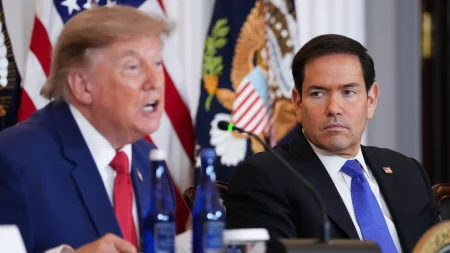
The evidence regarding Iran’s involvement in Cuba proved somewhat more elusive, a point Ford Maldonado acknowledged when pressed for specifics. She admitted that Iran presented a more complicated case, with less substantive material available for inclusion in the report. However, she expressed belief that Iran has utilized Cuba primarily as a platform for influence operations aimed at shaping regional narratives and undermining American interests throughout the Western Hemisphere. The Trump administration has nonetheless grouped Iran with Russia and China in its own assessment of the Cuban threat. A January 2026 executive order from President Donald Trump declared Cuba’s policies an unusual and extraordinary threat to U.S. national security, specifically noting Havana’s alignment with Russia, China, Iran, and Iranian proxies including Hezbollah and Hamas. The order further accused Cuba of hosting foreign military and intelligence capabilities, with particular emphasis on deep intelligence and defense cooperation with China and Russian signals-intelligence activity.
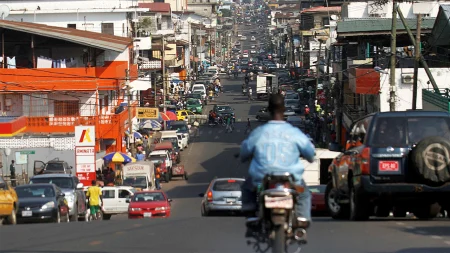
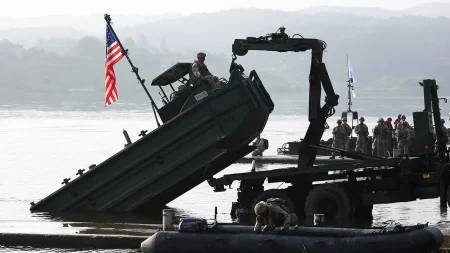
The report calls for dramatically enhanced American capabilities to counter these threats, though notably stops short of advocating for new permanent military bases. Instead, Ford Maldonado suggested Washington could pursue expanded access agreements, overflight rights, cooperative security locations, and stronger partnerships with regional allies. She emphasized that the objective is to establish permanent and persistent American capability in the region to counterbalance the growing foreign presence in Cuba. However, this call for increased pressure coincides with a devastating humanitarian crisis afflicting ordinary Cubans. Reuters reported in August 2026 that power outages were exceeding twenty hours per day in most provinces, crippling food production, transportation, and tourism while pushing Cuba’s electrical system toward technical collapse. Human Rights Watch investigations described severe shortages of food and medicine, prolonged blackouts, water shortages, and rapidly deteriorating living conditions throughout the island.
The humanitarian situation has sparked intense debate about the wisdom of continued maximum pressure tactics. Critics argue that further squeezing an already collapsing economy risks worsening civilian suffering and triggering additional instability and mass migration. United Nations-appointed independent human rights experts called in June for sanctions to be lifted, arguing they were endangering Cubans’ access to essential goods and services. Ford Maldonado rejected this framing, insisting that maximum pressure targets the regime rather than the people. She argued that the Cuban government and the Cuban people should be viewed as distinct entities, with the former having brutalized and repressed the latter for sixty-seven years. From her perspective, sustained pressure from the United States and the international community represents the necessary path toward helping the Cuban people ultimately achieve freedom from their oppressive government. The report ultimately presents a stark choice for American policymakers: continue viewing Cuba as a humanitarian or migration problem, or recognize it for what it represents—a strategic outpost for America’s adversaries positioned dangerously close to the U.S. homeland.