



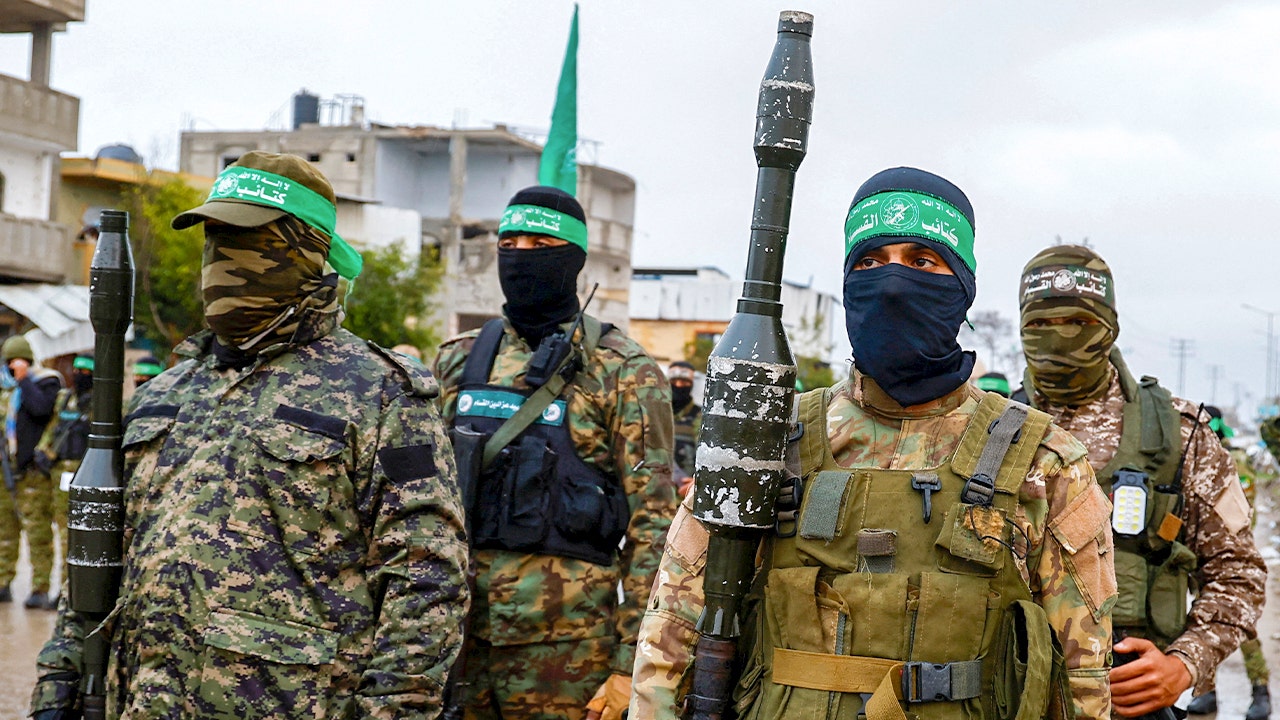
For years, American officials have voiced persistent worries that Hamas, the militant group that seized control of Gaza in 2007, has cleverly exploited civilian and humanitarian funding channels to construct and sustain its military apparatus. This long-standing concern has now become the central point of contention surrounding a new international plan for Gaza’s future governance. The debate hinges on a fundamental question: as a new, internationally-backed administration prepares to take over the territory, how can financial resources be injected to restore basic services without those very funds indirectly enriching or empowering the terrorist group that has ruled the region for nearly two decades? The Treasury Department has consistently targeted what it identifies as Hamas’s complex financing networks, which include covert investment portfolios, sham charities, and front organizations masquerading as humanitarian groups while funneling support to the group’s military wing. News of a specific financial provision in the internationally brokered “Board of Peace” roadmap has reignited these fears. Reports suggest this plan may allocate up to $400 million to settle unpaid debts—including salaries for public-sector workers and bills owed to suppliers and contractors—that accrued during Hamas’s extended rule, raising a complex dilemma: can a successor government settle legitimate financial obligations without inadvertently legitimizing or funding the very terror group it aims to replace?
The dispute is fundamentally about the nature of these financial settlements. Critics, including influential voices like Senator Ted Cruz, argue that paying off debts inherited from Hamas’s rule is a dangerous and misguided approach. Their concern rests on the principle that money is fungible; if international donors step in to clear Hamas’s financial slate, it not only relieves the group of economic burdens but could also be perceived as an international endorsement of its governance. Cruz, along with other skeptics, fears that reimbursing these debts could create new avenues for Hamas to siphon off resources, especially while the group still maintains significant influence and military capability on the ground. They contend that the only acceptable course of action is to ensure Hamas is completely eradicated before any substantial new resources are directed to Gaza. However, officials with the Board of Peace, the body overseeing the plan, strongly refute this interpretation. They emphasize that the provision is not at all a financial deal with Hamas. Nickolay Mladenov, the Board’s high representative for Gaza, forcefully dismissed the claims as false, stating that no such proposal has ever been discussed or considered. He clarifies that the intention is to create a mechanism for a future, legitimate government to review and potentially settle certain outstanding obligations to preserve crucial services and maintain necessary business relationships, with each claim being carefully vetted and any payment that might even remotely benefit Hamas categorically rejected.
The Board of Peace describes this process as a meticulous and rigorous analysis, far removed from the image of a “blank check” to a terrorist organization. A senior official, speaking on condition of anonymity, provided further insight, depicting the plan as a three-year review process with a financial cap. He stressed that there is no upfront commitment to fund anything; the plan merely involves analyzing financial records once a new administration gains access to them. The objective is practical and focuses on service continuity. For instance, if a European pharmaceutical company supplied medicine to Gaza’s hospitals during the Hamas period but was never paid, the new government might need to resolve that debt to ensure the company will continue to supply vital medicine in the future. This official believes that walking away from every obligation accumulated under the previous government is not feasible, even if that government was a terrorist entity. The goal is to preserve functional relationships that are essential for the health and well-being of the civilian population. This nuanced position maintains the plan is about addressing specific, vetted needs, not subsidizing Hamas’s legacy, and it categorically rejects the idea that the process will alleviate Hamas of a budget it was never realistically going to pay anyway.
The operational details of when and how payments might be made are crucial to understanding the Board’s safeguards. The official clarified that the process will not be contingent on Hamas disarming across the entire Gaza Strip at once. Instead, it will occur on a community-by-community basis, with the successor administration moving into and taking control of individual areas as Hamas disarms there. This means it’s possible that a financial claim could be settled in a certain area, like a hospital in Rafah, even if Hamas has not yet fully relinquished control in all other parts of the territory. The official explicitly stated that money will not be transferred into any zone where Hamas remains in control. He acknowledged that complications could arise with suppliers who operate in both Hamas-free and Hamas-controlled areas, in which case officials would have to decide how to reimburse the portion associated with the secured territory without undermining the overall goal. The primary directive is clear: if there is any identifiable risk that funds could end up in the hands of Hamas—whether through direct payments, taxes, or other coercive measures—the transaction will be shut down immediately. The vetting process is designed to trace the path of the money to its final destination, ensuring it serves the intended purpose of supporting the new governance structure and the population, not the remnants of the old terror regime.
Senator Cruz’s argument about the fungibility of money remains the core intellectual challenge to the plan. His premise is that by paying off debts incurred during Hamas’s rule, the international community frees up resources that Hamas could then theoretically use for its own purposes. The Board of Peace official directly countered this, arguing that it is a false premise because Hamas is financially insolvent, or “dead insolvent,” and was never going to pay most of the outstanding creditors in the first place. The process is not alleviating Hamas’s budget burden because Hamas had no intention or capability to cover these liabilities. Instead of worrying about this indirect benefit, the Board suggests it will make a deliberate, separate decision from Hamas on whether a particular debt is necessary to resolve to ensure the future stability and functionality of Gaza. The officials also emphasized their commitment to recovering assets believed to have been stolen by Hamas. They plan to make a real effort to track down and reclaim these illicitly acquired funds and use them, wherever possible, to satisfy the legitimate obligations, effectively making Hamas pay for its own debts. This asset recovery effort is another layer of the plan’s design to ensure that Hamas is not rewarded but is, in fact, held financially accountable.
Ultimately, the Board of Peace insists that the funding for these potential payments will not come from the United States Treasury. The officials stated that the money would come from regional partners in the Middle East, who have a direct stake in the stability of the region. This detail is presented as a further safeguard, underscoring that American taxpayer dollars are not being used to settle what could be perceived as Hamas’s debts. The more profound concern for the Board, however, isn’t just the source of immediate funds but the long-term strategic goal. The mission is to facilitate the complete disarmament of Hamas and support the establishment of a civilian governance structure, a transition overseen by an international security presence. The financial review process, as they describe it, is subordinated to this larger objective. The plan’s intent, they argue, is to build a viable alternative to Hamas that can provide for its people and break the cycle of conflict and extremism. The tests will come in the execution, in whether this financial review process can truly remain insulated from corruption and coercion. But the Board’s message is clear: they believe they have crafted a mechanism meant to build a better future from the ashes of a disastrous past, without giving the architects of that disaster any financial reprieve or future leverage.