



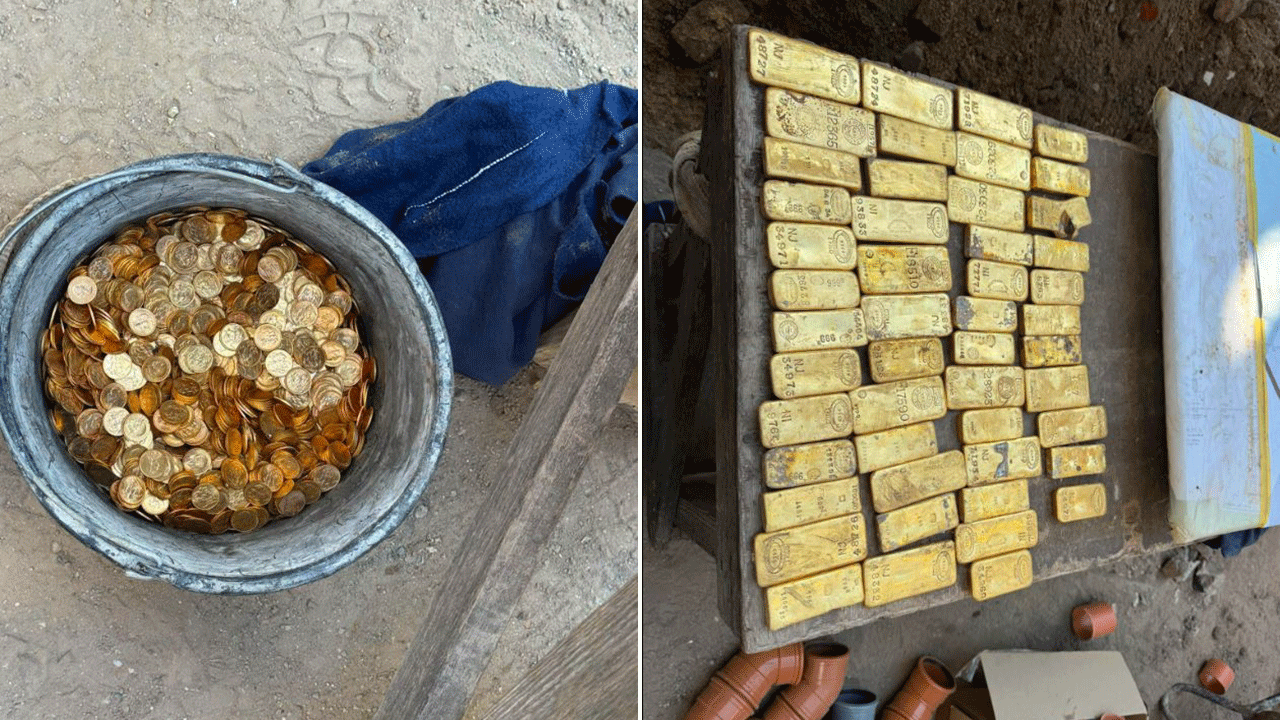
In the quiet Flemish community of Sint-Gillis-Dendermonde, a routine infrastructure project transformed into an extraordinary scene of discovery this week. What began as a standard excavation to lay new sewer pipes beneath an old brewery site quickly became the setting for a modern-day treasure hunt, as construction workers unearthed a cache of gold coins and bars valued at approximately $10.4 million. The discovery, which took place during the mundane task of removing a piece of foundation to make way for new piping, sent a jolt of excitement through the small town outside Brussels, capturing the imagination of locals and sparking a story that feels plucked from the pages of a classic adventure novel.
The sheer improbability of the find is what makes it so captivating. An 18-year-old worker named Kobe, who was part of the crew at the site, initially mistook the gleaming pieces for ordinary 1 Euro coins. The shock of realization gradually dawned on him and his colleagues as they began to understand the true nature of what they had stumbled upon. “Our first reaction was actually disbelief, surprise. Of course, we didn’t expect to find gold,” Kobe recounted to VRT news, his words echoing the sentiments of the entire team. The workers were in the middle of a complex task, carefully removing a concrete foundation to lay down sewage pipes, when the glint of gold interrupted their workflowaineet. What followed was a surreal moment of frantic excitement as they uncovered more and more of the precious metal, the initial confusion giving way to a collective sense of awe.
The project leader, identified only as Mario, described the atmosphere at the site as a “crazy feeling” that is almost impossible to articulate. He was alerted by the jubilant shouts of his crew—”We found gold!”—and rushed over to witness the scene firsthand. “I went to look and took the gold in my hands. We also continued to dig up new coins and bars. Only then did what we had found really dawn,” he said, describing the tactile, almost unbelievable sensation of holding an unexpected fortune that had lain hidden beneath the earth for years. In a moment of profound ethical clarity, Mario’s thoughts immediately turned to the law. He called his boss and then the police, knowing that the discovery had enormous implications far beyond the construction site. When asked if the thought of keeping the treasure had ever crossed his mind, he dismissed the idea, recognizing the sheer impracticality and illegality of such an act. “It’s about so many coins and bars, that almost wouldn’t be possible. Besides, it would also be theft,” he stated matter-of-factly.
The local police in Sint-Gillis-Dendermonde were quickly dispatched to the scene and meticulously cataloged the find before transporting it to a “high-security federal government vault.” Under Belgian law, the rightful owner has a five-year window to claim the treasure, a legal provision that adds a layer of intrigue and uncertainty to the story. For the workers, who are unlikely to receive the gold itself, the prospect of a finder’s fee remains a glimmer of hope. Young Kobe, who had the initial shock of his life, expressed a modest dream, saying, “That would be nice.” This simple statement humanizes the entire event, reflecting a universal desire for recognition and reward for a surprise discovery that will forever be a part of their personal history. The ethical path the workers chose stands in stark contrast to the temptation of secrecy, highlighting a commitment to integrity that has earned them widespread respect.
The former brewery building is not just an abandoned structure; it is owned by an organization dedicated to providing welfare support to the Flemish community. The director of this organization has already expressed a hopeful vision for the unexpected windfall, telling the BBC that the gold could be used to address the “enormous need we experience daily.” This development frames the discovery not merely as a stroke of luck, but as a potential source of profound benefit for the larger community. The possibility that a forgotten historical hoard could be transformed into modern-day social support is a deeply poetic twist, turning a relic of the past into a lifeline for the present. It adds a layer of social significance to the event, elevating it from a simple curiosity to a story with the potential for a genuinely positive impact on people’s lives.
As news of the discovery spread, the local police have been compelled to issue a warning to would-be treasure hunters, urging them to stay away from the fenced-off construction site. They have cited the “several dangerous pits” that now dot the landscape, a stark reminder of the genuine physical risks involved in such ventures. The gold, they confirm, has all been removed, leaving behind only the residual excitement of the story. In a final, hopeful statement, the police encapsulated the collective sentiment: “We hope this treasure ends up in the right hands and that this unexpected discovery positively changes many lives!” The story of the Belgian gold is a reminder of the enduring romance of hidden treasure, the ethical decisions that define character, and the unpredictable ways in which the past can resurface to shape the future. It is a narrative that resonates on a deep, human level, reminding us that extraordinary moments can emerge from the most ordinary of tasks, and that integrity, in the end, is its own reward.