




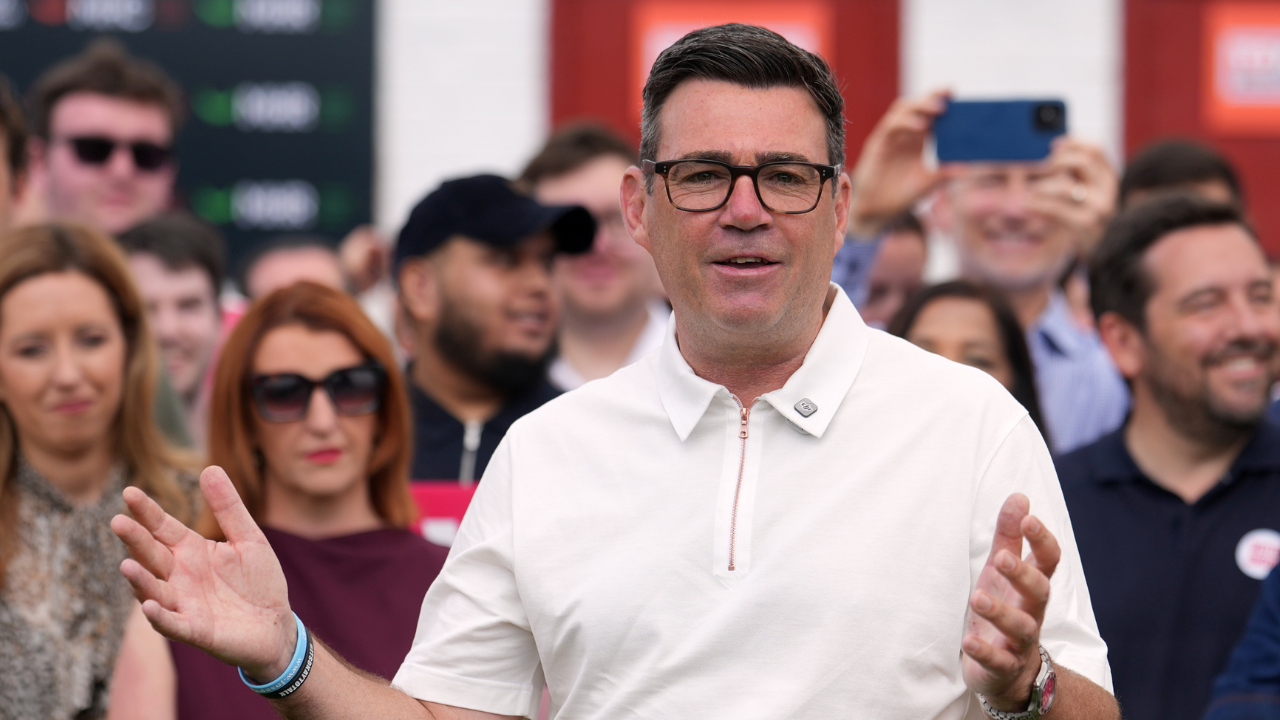
The rain-soaked streets of Makerfield in northwest England became the unlikely epicenter of a seismic political shift this week, as Andy Burnham, the charismatic and widely popular Mayor of Greater Manchester, secured a resounding victory in a high-stakes special by-election. Returning to the halls of Westminster for the first time since 2017, Burnham captured a commanding 55% of the vote, easily outpacing his nearest rival, Rob Kenyon of the right-wing populist Reform UK party, by a margin of over 9,000 votes. For a local community weathered by years of economic stagnation and post-industrial decline, the election was much more than a routine ballot transaction; it felt like a collective cry for a fresh start. Standing before an energized crowd during his early-morning victory address, Burnham did not hide his grander national ambitions. He spoke directly to the deep-seated exhaustion felt by everyday citizens who feel abandoned by the political establishment, declaring that the country is simply not where it should be, and offering his victory as a potential turning point toward a system that operates with basic fairness for all people, regardless of their postal code.
Yet, in a display that perfectly captured the legendary, theater-of-the-absurd nature of British democracy, this era-defining moment was backdropped by a surreal cast of characters on the presentation stage. As the official results were read aloud in the chilly morning hours, the stern-faced, media-trained Burnham found himself physically bracketed by an independent candidate dressed head-to-toe in a plush fox costume and the satirical cult figure known as “Count Binface.” The Count, represented by comedian Jonathan David Harvey wearing a literal silver trash can as a helmet, is a recurring fixture in British politics who champions voter registration through comedy. This bizarre juxtaposition—a deadly serious political savior sharing the spotlight with cosmic jokers—highlighted the profound weariness of a British electorate that often uses humor to cope with its systemic frustrations. While Prime Minister Keir Starmer quickly took to social media to offer perfunctory congratulations, asserting that the victory proved voters preferred a message of optimism over the divisive rhetoric of the far-right, the tension beneath his words was palpable. Starmer, who has occupied 10 Downing Street for nearly two years, now faces a direct, charismatic challenger from within his own ranks who threatens to fundamentally upend his fragile grip on power.
The backdrop to Burnham’s targeted return is a grim landscape of public disillusionment with Starmer’s leadership, which has dramatically deteriorated since his party’s landslide electoral victory in July 2024. Despite initial promises of stability and renewal, Starmer’s tenure has been plagued by a stubborn cost-of-living crisis, a painfully stagnant national economy, and damaging controversies regarding his acceptance of lavish personal gifts from wealthy elite donors. The anger reached a boiling point last autumn following the highly controversial appointment of Peter Mandelson as the British Ambassador to the United States. When the public was reminded of Mandelson’s historic, documented ties to the disgraced and deceased sex offender Jeffrey Epstein, a fierce internal and external rebellion erupted, forcing Starmer to quickly rescind the appointment in a humiliating damage-control maneuver. For millions of ordinary Britons struggling to heat their homes and pay for basic groceries, these elite political scandals have fostered a deep sense of betrayal, painting Starmer not as a working-class champion, but as a distant, out-of-touch technocrat who is failing to deliver on the fundamental promise of change.
Burnham’s path back to Parliament was not a random twist of fate, but rather a meticulously engineered political operation designed to position him as the ultimate alternative to the current Prime Minister. The strategic vacancy in Makerfield was created when the sitting Labour member of Parliament, Josh Simons, voluntarily resigned his seat specifically to clear a path for Burnham’s return—a self-sacrificing move that underscores the deep-seated desire among many party insiders for a change in leadership. Under the strict constitutional rules of the UK parliamentary system, a Prime Minister can be replaced mid-term without a general election if the governing party decides to change its leader. To spark such a leadership challenge, an ambitious contender must secure the endorsement of at least 20 percent of their fellow Labour members of Parliament in the House of Commons. Reports indicate that Burnham, revered by many as “The King of the North” for his fierce advocacy for regional funding and public transit, has already secured the necessary quiet pledges from lawmakers to launch a formal challenge when the timing is right.
This internal rebellion comes at a moment of extreme vulnerability for the Labour Party, which is currently bleeding voters to both the political left and right. Disillusioned progressives, frustrated by Starmer’s cautious policies, are increasingly migrating to the environmentally focused Green Party, while working-class voters are being drawn to the nationalist appeals of Reform UK. Led by the prominent right-wing populist and Donald Trump ally Nigel Farage, Reform UK has aggressively capitalized on public anxieties surrounding mass migration and border control, presenting themselves as the only true anti-establishment alternative. While Farage publicly expressed his disappointment over Burnham’s victory in Makerfield, the strong second-place showing by his party’s candidate serves as a stark warning to the Labour establishment that populist anger is continuing to build. Many political analysts believe that Burnham, with his approachable, authentic communication style and strong regional roots, is the only Labour figure capable of bridging this deep cultural divide and reclaiming the trust of working-class communities who feel ignored by metropolitan Westminster.
As Burnham prepares to travel to London to be officially sworn in as a member of Parliament, a tense face-to-face showdown with Starmer looms large on the horizon. Insiders have confirmed that Culture Secretary Lisa Nandy is facilitates a high-stakes conversation between the two leaders to discuss the future direction of the party and the country. Despite Starmer’s public insistence that he has no intention of walking away and will fight with everything he has to remain Prime Minister, the momentum shift toward Burnham feels increasingly unstoppable. Ultimately, this political drama transcends mere party infighting or the ambition of two rival men; it reflects a profound, deeply human search by the British public for a leadership that listens, empathizes, and finally delivers on the promise of a fairer, more stable society. As Burnham steps back onto the national stage, he carries with him the heavy hopes of a fatigued nation that is desperately searching for a guiding light to lead them out of a prolonged period of national decline.