


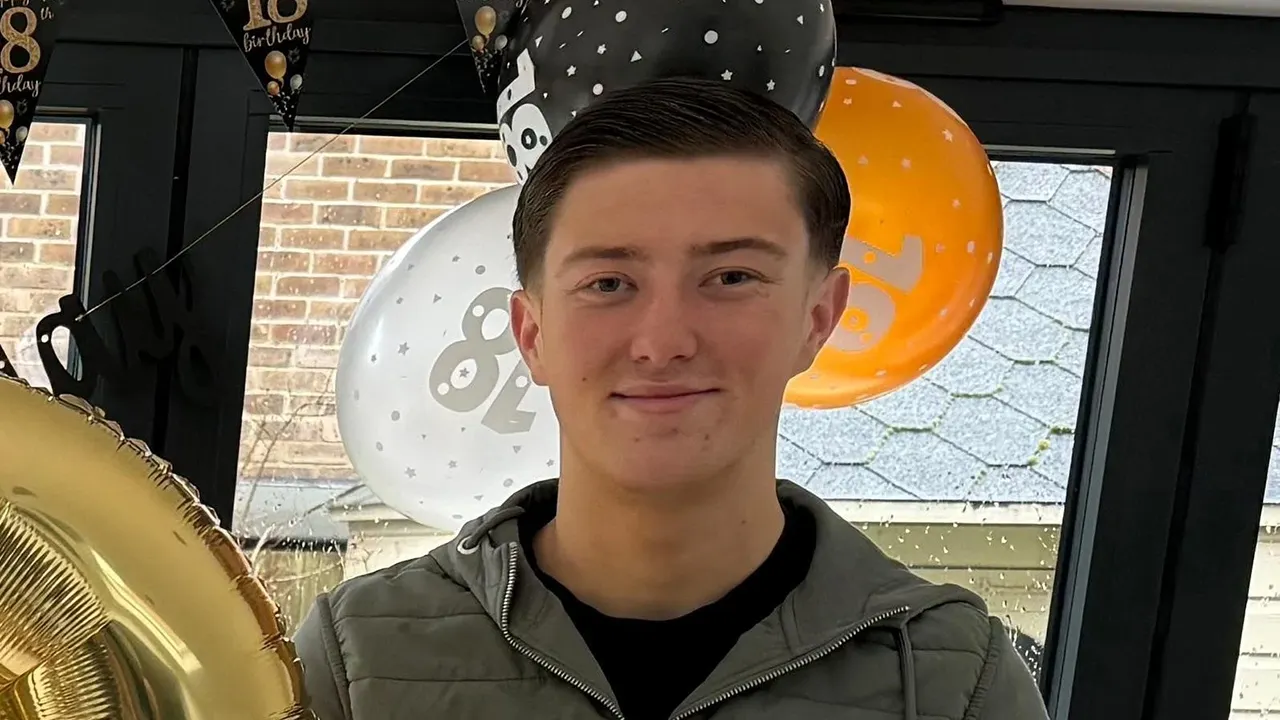
The tragic and untimely death of Henry Nowak, a promising eighteen-year-old finance student at the University of Southampton, has left a profound mark on the collective consciousness of the United Kingdom. His story, which cut short a bright future filled with academic ambitions and familial hope, is a harrowing reminder of how quickly a young life can be stolen in an act of senseless violence. However, what has transformed this devastating loss from a localized tragedy into a national scandal of compounding grief is the newly released police bodycam footage. This video captures Henry’s final, agonizing moments on a cold Southampton street on December 3, 2025, revealing a deeply disturbing sequence of events where a dying teenager’s desperate pleas for help were met with institutional skepticism and physical restraint. The footage, made public following the murder conviction of twenty-three-year-old Vickrum Digwa, has laid bare the raw, unfiltered terror of a young man bleeding to death while trying to convince the very people sworn to protect him that he was slipping away. It forces a painful, necessary confrontation with the way emergency services interact with victims in moments of extreme crisis, showing a stark and devastating contrast between a youth’s final gasps for air and the dismissive reaction of the officers who arrived at the scene.
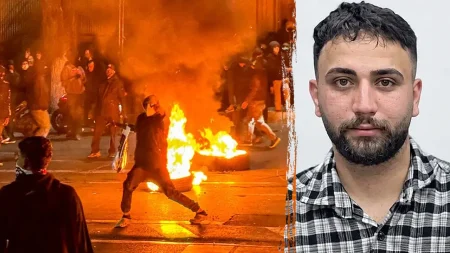
The nightmare began on that December night when Henry was violently set upon by Vickrum Digwa, who was armed with a formidable twenty-one-centimeter blade described by prosecutors as a Sikh kirpan-style weapon. According to court proceedings, the attack was not merely quick and physical, but accompanied by a psychological cruelty that extended beyond the stabbing itself. As Henry’s chest filled with blood and his body began to fail, he desperately tried to flee his attacker to find safety. Instead of letting him go, Digwa and others chased, abused, and even filmed the wounded student as he struggled to stay upright in a state of severe medical distress. When police officers finally arrived on the scene, they did not find a chaotic brawl, but rather a dying teenager collapsed on the pavement, barely able to sit up, gasping for breath, and crying out for someone to save him. Yet, the atmosphere had already been poisoned by Digwa, who, in a calculated attempt to shield himself from the consequences of his horrific actions, falsely claimed to the responding officers that he had been the victim of a racially motivated assault by Henry. This manipulation of the narrative exploited systemic sensitivities, shifting the officers’ immediate focus from medical triage to suspect apprehension, and ultimately sealing Henry’s fate on the cold wet ground.
The freshly released bodycam footage records the devastating dialogue that took place during these critical, final seconds of Henry’s life, capturing a sequence of events that is difficult to watch or comprehend. As Henry lay on the ground, struggling against the suffocating effects of his internal injuries, he repeatedly told the officers, “I’ve been stabbed” and “I can’t breathe.” Rather than administering immediate first aid or searching for physical evidence of trauma, one of the responding officers responded with a dismissive, “I don’t think you have, mate.” Treating the dying victim as a hostile perpetrator based on the attacker’s false allegations of racism, the officers proceeded to put handcuffs on Henry’s wrists, pinning his arms behind him as his life slipped away. It was only after he lost consciousness and the physical reality of his severe, multiple stab wounds became undeniably apparent that the officers finally unlocked the handcuffs and desperately initiated cardiopulmonary resuscitation. This realization, however, came far too late, leaving a young man to spend his last moments of awareness bound like a criminal, denied the basic comfort of human touch, reassurance, or a belief in his suffering.
Following Digwa’s conviction and subsequent sentence of life in prison, Henry’s father, Mark Nowak, stood outside the court to deliver a heart-wrenching statement that captured the compounding trauma of his family’s loss. While the family holds Digwa “solely and 100% responsible” for taking Henry’s life with a blade, Mark Nowak directed a fierce, painful indictment toward the police force, stating that his son should never have died in the streets of Southampton while in police custody. He described the treatment Henry received in his dying breaths as “inhumane and degrading,” highlighting the unimaginable pain of knowing that his son’s final words were treated with disbelief and his failing body met with steel cuffs. The elder Nowak painted a picture of a terrified boy who had done everything he could to survive a brutal assault, only to find himself treated as a threat by the very system designed to rescue him. His words resonated widely, humanizing the statistics of knife crime and giving a powerful, grieving voice to a family that must now live with the knowledge of how their son was treated in the moments before his world went dark.
The institutional failure documented on the bodycam has ignited a fierce political firestorm across Britain, elevating the tragedy of Henry Nowak into a central debate over identity politics, policing procedures, and the prioritizing of ideology over human life. Prominent political figures have seized on the case as a symbol of systemic dysfunction; Nigel Farage, the leader of Reform UK, publicly stated that the incident illustrated a paralyzing culture where “the fear of being called racist was greater than dealing with Henry Nowak’s murder.” Echoing this sentiment, Reform UK Member of Parliament Robert Jenrick made appearances on national media to demand the release of the footage, accusing authorities of prioritizing immediate compliance with allegations of racism over the urgent, life-saving needs of a visibly dying teenager. The gravity of the case eventually reached the highest levels of government, with Prime Minister Keir Starmer describing the killing as “an awful, shocking case” and affirming that it was entirely correct for the Independent Office for Police Conduct (IOPC) to launch a thorough investigation into the actions of the responding officers. This political discourse reflects a deep societal anxiety that administrative caution and a fear of social media backlash have eroded the frontline instinct for basic human empathy and common-sense medical response.
In the wake of the public outcry and the life sentence handed down to Vickrum Digwa, the Hampshire & Isle of Wight Constabulary has found itself under intense scrutiny and the subject of an active, ongoing investigation by the Independent Office for Police Conduct. The police force issued a formal apology through Temporary Deputy Chief Constable Robert France, who expressed profound regret that Henry had been handcuffed in the moments immediately preceding his loss of consciousness. While this acknowledgement of failure represents a step toward accountability, it offers little solace to a shattered family and a devastated university community who are left to wonder if a different, more compassionate response could have saved Henry’s life. The tragedy serves as a stark, haunting reminder of the human cost that occurs when professional skepticism hardens into a total lack of empathy, leaving a young student’s legacy bound up in a fight for institutional reform. As the investigation continues, Henry Nowak’s story remains a symbol of a life cut tragically short, urging a fundamental reassessment of how those in authority listen to, protect, and value the lives of the vulnerable in their most desperate hours of need.