






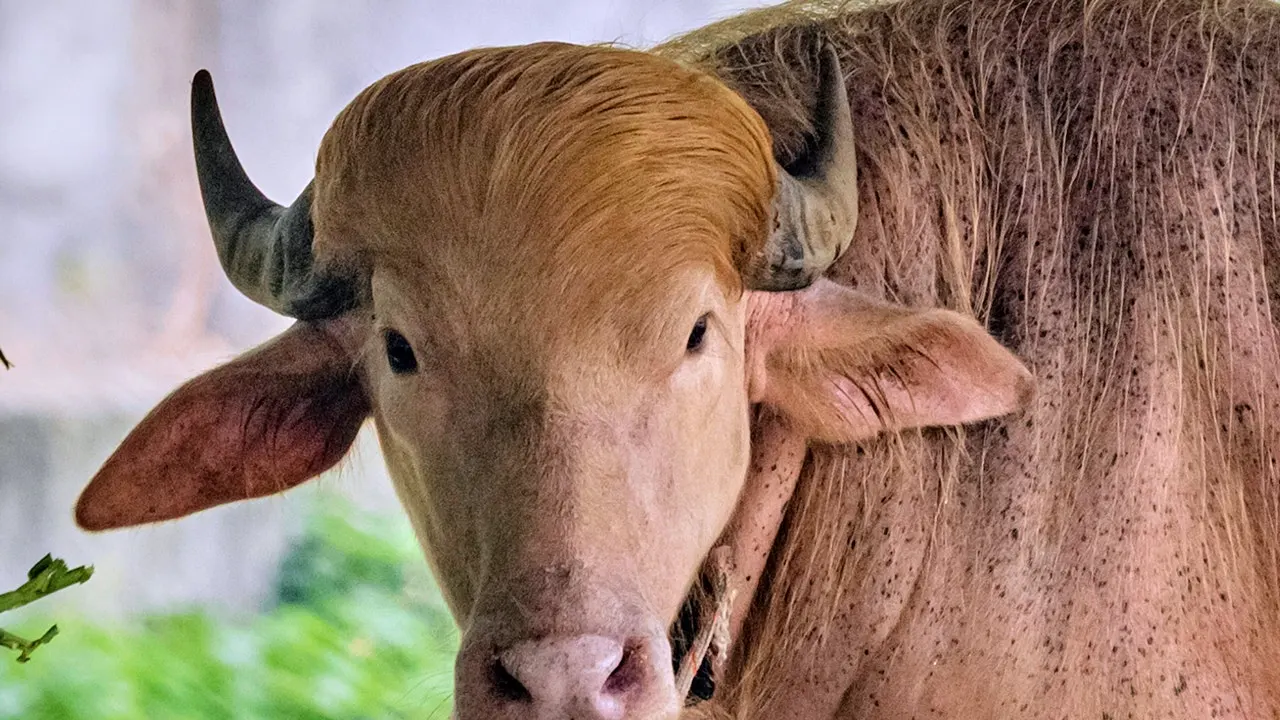
In our hyper-connected modern era, the lines defining global pop culture, international politics, and rural agricultural life have blurred in ways that would have seemed entirely fantastical just a generation ago. Nothing illustrates this bizarrely delightful phenomenon quite like the recent, meteoric rise of a rare albino buffalo in Bangladesh, a creature whose striking physical appearance has captured the imaginations of millions far beyond its homeland. Nestled in a quiet farm on the outskirts of the bustling capital city of Dhaka, this gentle, pale-skinned beast possessed a completely unique genetic quirk: a magnificent, swooping tuft of bright golden-blonde hair situated perfectly atop its head. To any casual observer, the resemblance was instantaneous and uncanny, mirroring the trademark, sweeping hairstyle of former United States President Donald Trump. When a local farmer first pointed out this striking aesthetic parallel, he could have scarcely predicted how quickly the observation would catch fire. Within hours of a video matching the pale-skinned, horned animal with its famous human doppelgänger being uploaded to social media platforms, the clip went thoroughly viral. The digital world, always hungry for the spectacular and the amusing, collectively gasped and giggled at the animal’s uncanny swagger. Suddenly, a humble farm that usually echoed only with the sounds of daily livestock chores was transformed into a bustling hub of excitement, drawing massive, inquisitive crowds from all walks of life who were eager to catch a firsthand glimpse of this unexpected marvel. The internet had spoken, and an ordinary albino buffalo was thrust headfirst into the dizzying realm of global celebrity, proving once again that humor and curiosity are universal human languages that can unite people across vast oceans and vastly different realities.
However, behind the lighthearted laughter of the viral video lay a much more serious and potentially grim reality for the newly crowned animal celebrity. In Bangladesh, livestock animals are central to traditional agricultural life and cultural celebrations, none more so than Eid al-Adha, the deeply sacred Muslim festival known as the “Feast of Sacrifice.” During this period of intense spiritual devotion and communal sharing, millions of cattle, goats, and buffaloes are sold at bustling open-air markets to be ritually slaughtered, with their meat distributed to family, friends, and the less fortunate. This albino buffalo, despite its growing internet fame, was initially destined for this very fate, having already been purchased by a buyer and scheduled for the ceremonial sacrifice. For a brief moment, it appeared that the animal’s viral stardom would be nothing more than a fleeting footnote before its life came to an end on the holiday altar. Yet, the sheer power of public fascination intervened in a way that defied centuries-old tradition. Recognizing the immense cultural value, rarity, and public joy associated with the uniquely coiffed creature, high-ranking Bangladesh government officials stepped in with an unprecedented decree. In an act reminiscent of a presidential pardon, authorities halted the planned slaughter and ordered that the animal be officially transferred to the safety and permanence of the National Zoo of Bangladesh in Dhaka. This dramatic intervention not only spared the buffalo’s life but elevated its status from a mere livestock commodity to a treasured national possession, showcasing the delicate balance between preserving cherished religious traditions and honoring the unexpected whims of modern global media attention.
Upon its arrival at the national zoo, the albino buffalo stepped into a life of pampered luxury that many human beings could only dream of, cementing a surprising parallel to the high-flying, decadent lifestyle of the billionaire businessman whose name it inherited. No longer confined to the dusty paddocks of a rural farm, the majestic creature was given a spacious, well-maintained enclosure where it quickly became the undisputed star attraction of the entire institution. Day after day, thousands of visitors lined up along the fences, waving their smartphones in the air, desperate to capture the perfect selfie with the creature that had taken the internet by storm. The atmosphere surrounding the exhibit was electric, filled with the constant click of cameras and the excited chatter of children and adults alike. Observers noted that the buffalo seemed to carry itself with a quiet, unbothered dignity, seemingly aware of its own elevated status. Mohammed Nasim, a university student from Dhaka who made a special trip to the zoo, captured the collective sentiment of the crowd perfectly when he observed that the resemblance went far deeper than mere physical traits. Nasim pointed out that the animal’s expressive eyes, pale skin color, and iconic blonde crest naturally evoked the image of Donald Trump, but more importantly, its daily existence had come to mirror the former president’s prestigious lifestyle. Pampered by attentive handlers, fed premium meals, and living under the constant, adoring gaze of the public and the media, the buffalo was truly living a larger-than-life, high-profile existence, demonstrating how easily human projection can elevate a simple animal into a symbol of wealth, fame, and unyielding charisma.
Yet, as is so often the case when politics and public life intersect, the buffalo’s rapid rise to fame was not without its share of intrigue, controversy, and institutional drama. Initially, the excitement at the national zoo was so pronounced that administrators eagerly leaned into the media frenzy, going so far as to erect an official sign on the animal’s enclosure that proudly labeled the rare albino specimen as “Donald Trump.” This bold move was designed to capitalize on the viral trend and make it easier for tourists to identify the celebrity resident, but it quickly ignited a firestorm of debate behind closed doors. Identifying a farm animal—even a highly revered and pampered one—with the name of one of the most powerful, influential, and polarizing political figures on the global stage carries heavy diplomatic and social weight. Realizing the potential geopolitical sensitivities and the risk of offending international allies or domestic traditionalists, zoo officials quietly and hastily removed the controversial sign from the enclosure. The drama deepened when, shortly thereafter, the curator of the national zoo was abruptly dismissed from his post. While government and zoo officials refrained from publicly disclosing the exact reasons for his termination, the timing of the firing led to widespread speculation that the naming controversy had claimed its first administrative casualty. This sudden administrative shake-up highlighted the high stakes of modern public relations, reminding the world that even in the seemingly innocent realm of a public zoo, a lighthearted joke can quickly collide with the complex realities of international diplomacy and professional accountability.
The removal of the physical sign did nothing to quiet the lively conversations and ideological divisions playing out among the daily crowds gathered around the buffalo’s pen. For many visitors, the name “Donald Trump” was a harmless piece of observational humor, a fun and engaging way to connect a rare natural mutation with a globally recognizable face. They viewed the moniker as a term of endearment, arguing that the animal’s unique style deserved a unique and memorable identity. However, another vocal segment of the population harbored deep reservations about the comparison, viewing the naming choice as highly inappropriate and fundamentally disrespectful. Local resident Mohammad Joynal Abedin was among those who expressed strong disapproval of the situation, telling reporters that bestowing the name of a prominent global leader upon a beast of burden was an error in judgment. Abedin argued that such actions showed a lack of decorum and respect for the office of the presidency, suggesting that the original farmer had made a poor, short-sighted decision in prioritizing viral clicks over basic cultural respect. Yet, in a fascinating display of human psychology, even those who found the name offensive could not resist the magnetic pull of the buffalo’s celebrity. Abedin himself admitted that despite his misgivings and his belief that the situation was disrespectful, he had still made the trip to the national zoo specifically to see the famous animal with his own eyes. This dual reaction encapsulates the complicated nature of modern spectacle, where curiosity often triumphs over controversy, and people find themselves drawn to the very things they publicly criticize.
Ultimately, the story of the “Donald Trump” buffalo is a heartwarming, thought-provoking testament to the unexpected ways in which nature, human imagination, and the digital age collide to create joy and community. At its core, the animal is simply a beautiful, rare albino buffalo, entirely oblivious to the geopolitical debates, viral social media metrics, and administrative dramas swirling just beyond its enclosure. It does not know who the president of the United States is, nor does it care about the concept of international diplomacy; it simply enjoys the delicious fodder, the gentle care of its keepers, and the warm, sunny days in Dhaka. For the people of Bangladesh, the buffalo has become a source of shared wonder and escape from the challenges of daily life, drawing families together for a lighthearted afternoon of laughter and shared experience. The creature stands as a living monument to human creativity—a reminder of our innate tendency to find patterns, humor, and connection in the world around us. Long after the viral internet trends have faded and the controversies have settled into history, this magnificent animal will continue to live its peaceful, secure life at the national zoo, safe from the fate of the slaughterhouse. In humanizing this remarkable tale, we see that beneath the superficial layers of political satire and media frenzy lies a deeper story of survival, compassion, and the simple, unifying power of wonder that can turn a humble farm animal into a beloved global ambassador of joy.