


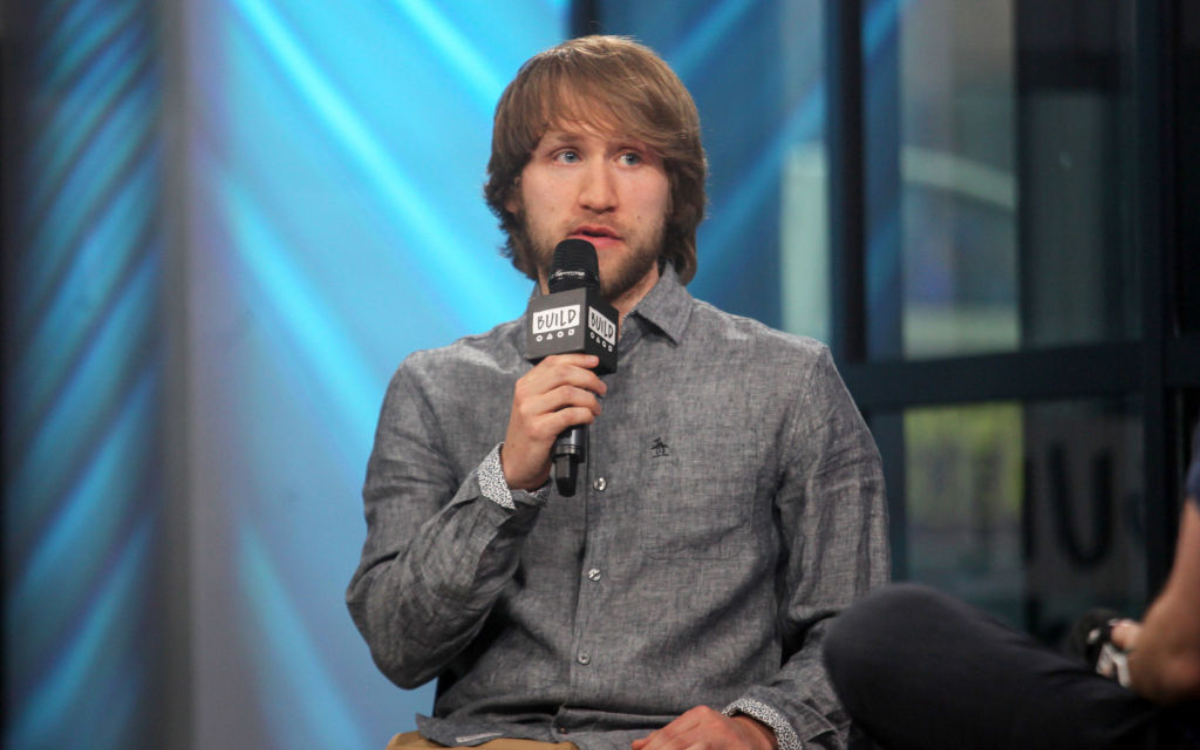
For nearly two decades, Jesse Ridgway, widely known to his millions of online followers as “McJuggerNuggets,” has lived his life in the public eye, sharing the highs and lows of his personal journey with an intensely loyal audience. Yet, nothing could have prepared him and his wife, Ashley, for the devastating emotional storm that gathered after they shared what should have been their happiest milestone: the anticipation of becoming first-time parents. Their initial excitement was abruptly shattered when routine prenatal screening revealed their unborn child had an exceptionally high probability of Trisomy 21, the chromosomal condition that causes Down syndrome. Plunged into a sudden state of grief, shock, and profound uncertainty, the couple spent weeks desperately researching, consulting medical professionals, and weighing the complex realities of their situation. Ultimately, they made the agonizing, deeply personal decision to terminate the pregnancy—a choice they made together in the quiet sanctuary of their home, hoping to spare their potential child a life of severe medical complications. When Jesse took to his social media platforms two days after his wife’s procedure to candidly share their heartbreaking loss and the rationale behind their choice, he hoped to offer solace to other grieving families. Instead, the couple was instantly swept into a brutal vortex of public outrage, facing an onslaught of vitriol that laid bare the raw, polarized nature of America’s cultural divide.
The sudden backlash that erupted across the landscape of social media was swift, fierce, and incredibly cruel, catching the grieving couple entirely off-guard. Conservative commentators, pro-life activists, and even high-profile political figures quickly seized upon their tragedy, turning their private heartbreak into a weaponized political battleground. House Speaker Mike Johnson publicly weighed in on the matter, branding the couple’s decision as “evil,” while online trolls and radical activists flooded Jesse’s accounts, labeling him a “monster” and accusing the couple of committing a horrific act. For Jesse, the sheer irony of the situation was as painful as it was baffling: those who claimed to be the most passionate defenders of the sanctity of life were suddenly inundating his family with graphic death threats and wishing violent harm upon his grieving wife. The cognitive dissonance of being terrorized by individuals who preached compassion and the protection of the innocent was deeply disorienting for a couple already running on emotional fumes. Rather than finding a community in which they could safely mourn the loss of their wanted baby, Jesse and Ashley found themselves barricaded in their home, forced to navigate a terrifying reality where their personal tragedy was being digested as viral template content for a hostile public.
Despite the terrifying hostility directed toward them, Jesse felt an urgent, deeply rooted obligation to remain completely honest with the audience that had supported him for almost twenty years. In his view, the crushing silence that historically surrounds reproductive healthcare and pregnancy termination only serves to isolate families who are carrying immense loads of grief. It is a statistical reality that thousands of abortions are performed across the United States every single day—with the Guttmacher Institute estimating well over one million procedures in 2025 alone—and yet, because of societal taboos, these decisions are almost exclusively made in the dark, whispered about only in locked doctor’s offices or hushed conversations. When it comes to prenatal diagnoses of Down syndrome, the statistics are even more striking, with scientific reviews indicating that between 61% and 93% of such pregnancies end in termination. Jesse recognized that by stepping into the light and putting a human face on these statistics, he could help demystify a common yet deeply hidden human experience. He believed that hiding their abortion would not only be a betrayal of the transparency that built his career, but would also perpetuate the toxic shame that plagues so many other couples who find themselves facing the same heartbreaking medical crossroads.
As the online debate raged, parents of children with Down syndrome also stepped into the conversation, sharing beautiful, heart-warming photographs and glowing stories of their own thriving children in an effort to show the couple what could have been. While Jesse expressed deep respect and profound empathy for these families, wishing them nothing but continued happiness and success, he also urged the public to confront the complex, often devastating clinical realities that are frequently omitted from idealized social media portraits. The lived experience of Trisomy 21 is not uniform, and many individuals with the condition are forced to battle a lifetime of severe, debilitating health complications, ranging from congenital heart and respiratory diseases to immune system dysfunction, leukemia, and early-onset Alzheimer’s disease. Scholarly reviews, including studies published in The Lancet, have long documented that while life expectancy for individuals with Down syndrome has thankfully improved over the past several decades, it still remains drastically shorter than that of the general population, with many facing painful, life-limiting struggles from infancy. Jesse emphasized that their decision was not a rejection of families who choose a different path, but rather a realistic assessment of what they, as parents, felt equipped to handle, prioritizing what they believed was the most compassionate choice for their future family.
This devastating crucible has radically transformed Jesse’s own personal and political worldview, forcing him to engage with issues he had previously given very little thought to. Like many people who have never been personally touched by a high-stakes medical crisis, he had historically avoided the deeply polarizing abortion debate, finding it easier to remain on the sidelines of a conflict that felt distant and abstract. However, experiencing the raw reality of a wanted pregnancy coming to an end in a sterile medical clinic altered his perspective forever, turning him into an unwavering, passionate advocate for reproductive freedom and a woman’s right to choose. He realized that the decision to terminate a pregnancy is rarely, if ever, made lightly or without profound sorrow, and that the laws and societal judgments surrounding the issue are heavily detached from the nuanced, messy realities of human biology and grief. By speaking out publicly and refusing to retreat into a comfortable silence, Jesse hopes to bridge the gap of understanding, humanizing the choice for millions of onlookers who might otherwise view the issue through a cold, dogmatic ideological lens.
Ultimately, even on the days when the weight of the grief and the relentless online harassment leaves Jesse and Ashley feeling completely drained of energy, they have absolutely no regrets about choosing to share their story. For every hateful comment or politically motivated condemnation they have received, they have been quietly met with an equally powerful, subterranean wave of support from women and men who have lived through the exact same nightmare. They have been deeply moved by a constant flood of private messages and emails from people thanking them for having the courage to speak the truth out loud, validating a pain that so many have been forced to carry in absolute solitude. These intensely personal connections have given the couple a renewed sense of purpose and strength, serving as a powerful reminder that their vulnerability has real-world value that far outweighs the fleeting noise of keyboard critics. Refusing to step back from the digital platforms that have defined his adult life, Jesse is determined to keep pushing forward, using his voice as a beacon of empathy and raw honesty for any family wondering lost in the quiet shadows of a similar grief.