



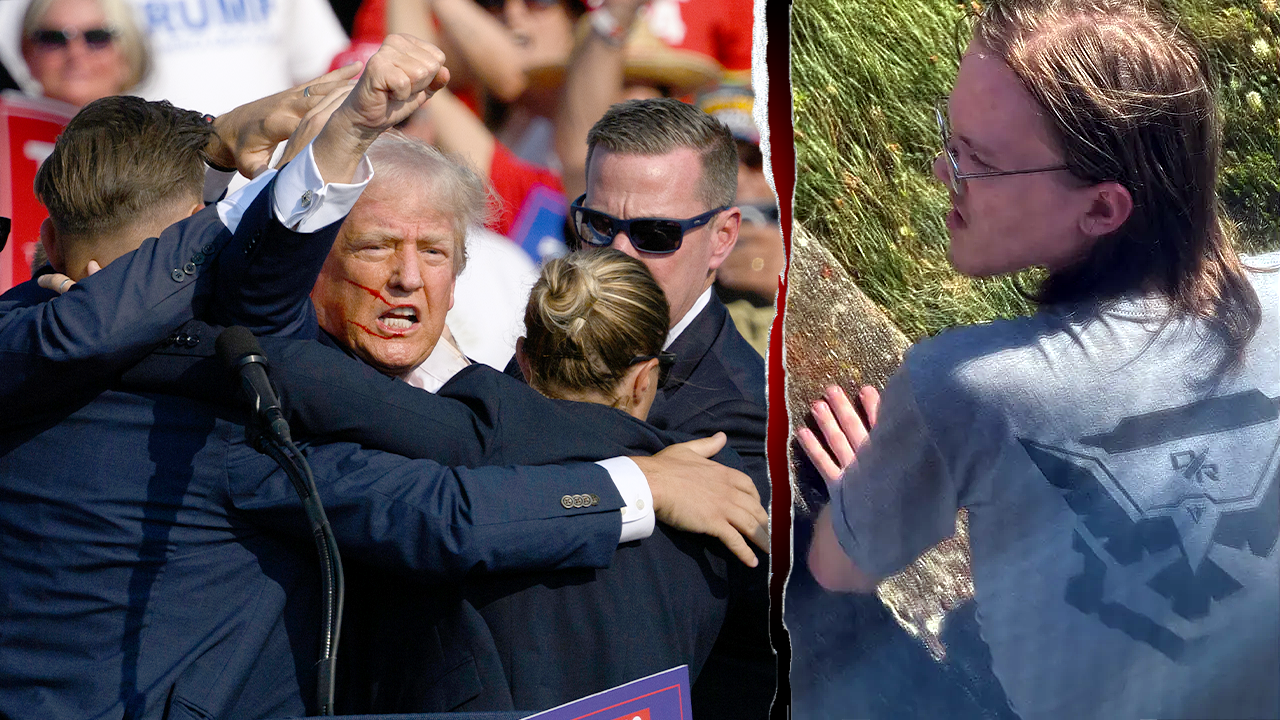
The rifle shot that tore through the Butler Farm Show grounds on July 13, 2024, was the culmination of a slow, disturbing unraveling that had been happening in plain sight. Newly released federal documents, turned over to the Senate and first reported by the New York Post, paint a chilling portrait of Thomas Crooks, the 20-year-old who attempted to assassinate former President Donald Trump, killing one rallygoer and seriously wounding two others. According to former FBI Special Agent Jonathan Gilliam, the documents are filled with alarming “red flags” that show a young man in deep psychological distress. “These are definitely examples of somebody who is mentally not stable and also somebody who was spiraling into almost a manic or delusional state,” Gilliam told Fox News Digital. He went on to explain that when you combine delusions, possible auditory hallucinations, manic behavior, and outside influences — whether from people around him or content consumed online — you get a dangerous mix. “It’s very possible that that is the large part of this equation that we just have not seen,” Gilliam said. The documents suggest that Crooks was not a cold, calculating mastermind who carefully planned every detail over months, but rather a troubled young man whose grip on reality was slipping, and whose erratic behavior was noticeable enough to those closest to him that it should have raised alarm bells long before he pulled the trigger.
The people who knew Crooks described behavior that, in hindsight, is deeply unsettling. One individual close to him told investigators that Crooks began to “get more agitated” as he got older and “talked to himself a lot.” This was not occasional muttering; it was a constant, growing habit that became more pronounced after he attended community college. “After community college, he would talk to himself more and more, moving his hands and speaking to himself… Sometimes Thomas would stay up dancing all night,” the individual recalled, adding that he “seemed to have endless energy.” The image of a young man silently dancing and whispering in the dark hours of the night is haunting. FBI notepads recorded that Crooks would be in his room at night, and “it sounded like he was dancing and whispering each night.” Two to three times a week, he would pace through the house, and when confronted, he would offer a simple, almost childlike explanation: he was bored and trying to entertain himself. The pacing was distracting to someone else in the household, but Crooks seemed unable or unwilling to stop. When directly asked about his habit of talking to himself, he admitted it, but he flatly denied hearing voices in his head. For former FBI agents like Gilliam, these are textbook warning signs of a person entering a manic or psychotic episode, especially combined with the relentless energy and agitation described by those who saw him every day.
Perhaps the most telling detail in the documents involves a redacted individual who confronted Crooks about a mysterious gallon jug. The individual said Crooks claimed the jug contained something “used to clean the bed of his 3D printer.” But the explanation didn’t ring true. The individual told investigators that Crooks’s “ears would flame red when he lied.” The fact that this person knew Crooks well enough to read his physical tells suggests a close relationship, and it raises an unsettling question: what was actually in that jug? The FBI documents note that Crooks was “never into explosives,” but the gallon jug remains an unexplained piece of the puzzle. Was it simply a cleaning solvent for his 3D printer, or was it something more sinister? The documents do not provide a definitive answer. What they do provide is more evidence of a young man who was deteriorating mentally while simultaneously gaining access to the tools of violence. Gilliam pointed out that the combination of a delusional state, manic behavior, and potential influence from people or online content could be the missing piece that investigators have not yet fully uncovered. The people around Crooks saw the changes, saw the agitation, saw the endless energy, but they either did not know what to do or did not recognize the danger.
At the same time his mental state was worsening, Crooks was taking concrete steps to arm himself. The documents show that in the months before the attack, he enrolled in a series of firearm courses at the Keystone Shooting Center. He signed up for the Basic Carbine Course on April 30, 2024, scheduled for May 25, and paid $139.99. He enrolled in the Basic Handgun Course on June 7, scheduled for June 13, for $139.99. And he enrolled in the Intermediate Handgun Course on June 1, scheduled for June 22, for $149.99. This is a deliberate, escalating progression of tactical training, far beyond what a casual gun owner might seek. On May 25, 2024, around the time of his carbine course, Crooks was spotted at Keystone Armory in Edinboro, Pennsylvania. The FBI described surveillance footage showing the individual believed to be Crooks accompanied by two other males — one thought to be in his mid-30s, and another older white male with a gray beard, potentially his father. They wandered through the store looking at various firearms, and Crooks bought 20 rounds of Red Army 7.62x54R ammunition for $19.07. That ammunition is typically used in rifles like the SKS or the Dragunov, not a standard AR-15. It suggests he was either experimenting with different weapons or possibly planning to use a rifle chambered in that caliber. He also made purchases online, and the FBI documents make reference to Crooks “purchased ammo online going site to site until he found one that would sell to him.” That detail is significant: it shows persistence and determination, but also a degree of caution, seeking out sellers who might not perform rigorous background checks.
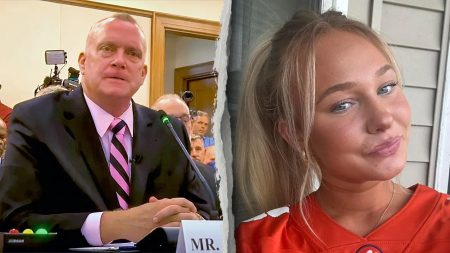
The FBI investigation, led by Director Kash Patel, has not uncovered any evidence that Crooks was part of a larger conspiracy. Testifying before the Senate Oversight Committee, Patel was direct: “We found no evidence that that individual was literally even speaking to any other human being other than his parents, who he resided with.” That statement paints a picture of a deeply isolated young man, living in his parents’ home, keeping to himself, and functioning almost entirely alone. Yet the documents also reveal that the FBI contacted at least one foreign government during the course of its investigation, though no further details were provided about why. That unexplained detail leaves the door open to questions about whether Crooks had any online contacts or influences outside the United States, or whether the FBI was simply tracing a digital trail that crossed international borders. For now, the official conclusion is that Crooks was a lone wolf, motivated by some combination of personal grievance, mental illness, and radicalization that remains incompletely understood. His coworker told law enforcement that in the weeks before the attack, Crooks “opened up a little more” and became more “excited about going to school.” He had graduated with an associate degree in engineering science from the Community College of Allegheny County and was planning to attend Robert Morris University to study mechanical engineering. On the surface, he had a path forward. But beneath that thin veneer of normalcy, he was falling apart.
It is easy to look at Thomas Crooks and see only a monster, a would-be assassin whose name deserves to be forgotten. But the humanizing details in these documents force a more uncomfortable reckoning. This was a young man who talked to himself in the dark, danced alone at night, lied about a jug of cleaning fluid, and told people he was just bored when they asked why he couldn’t stay still. He was a person in crisis, surrounded by people who noticed something was wrong but had no framework to stop what was coming. The tragedy of Butler is not just the violence that unfolded on that day, but the slow, visible deterioration that preceded it. There were red flags everywhere: the endless energy, the agitation, the self-talk, the sudden interest in firearms training, the obsessive pursuit of ammunition. Each one on its own might be explainable. Together, they form a pattern that was fully visible only in retrospect. The newly released federal documents do not give us all the answers. They do not explain why Crooks chose that day, that rally, that target. They do not tell us what was in his heart or his mind in those final moments on the rooftop. But they remind us that the threat of political violence is not always a faceless conspiracy. Sometimes it is a lonely, troubled young man who left behind a trail of warnings that no one was able to read in time. The challenge now is not just to hold those responsible accountable, but to learn how to recognize the next person who is spiraling toward the same darkness — and find the courage to intervene before the shots ring out.