


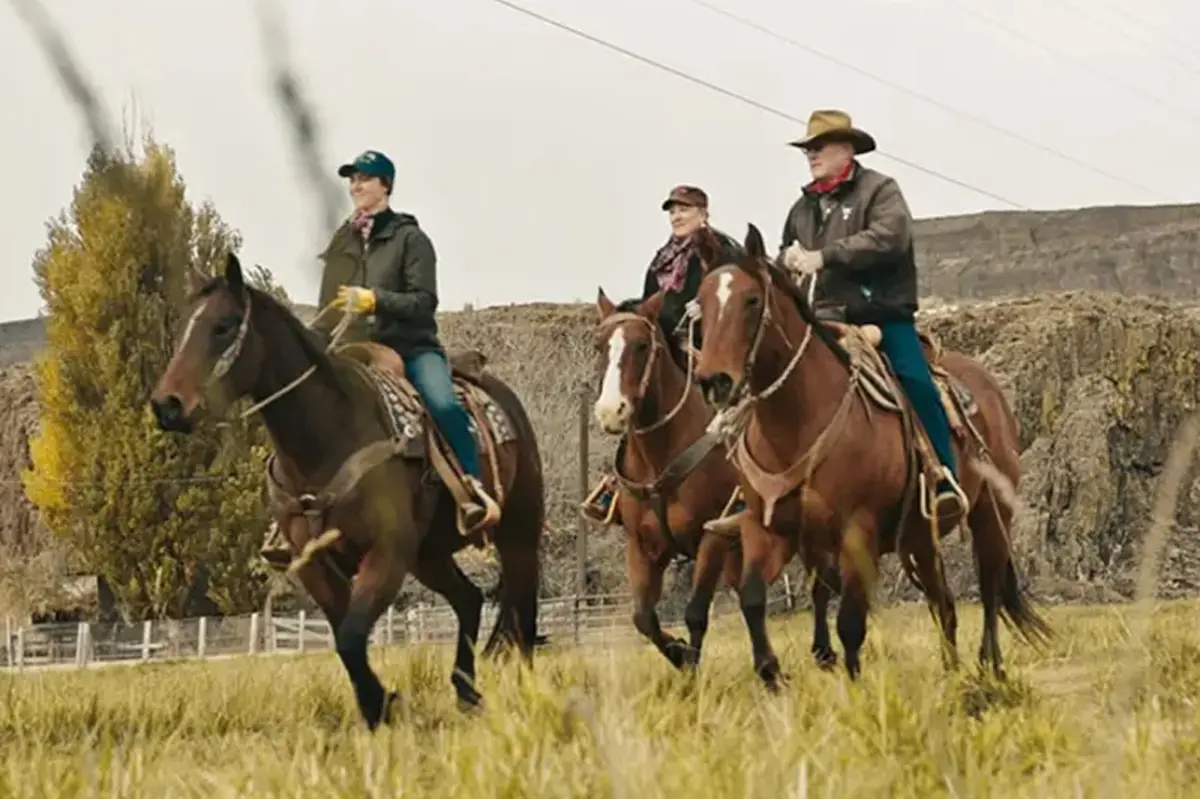
The King family has spent generations raising cattle across the wide, dry landscapes of Grant and Douglas counties in Washington State, where water is not a luxury but the very thread that holds their way of life together. Wade and Teresa King, who run King Ranch alongside their children and grandchildren, thought they were doing the right thing when they dug ponds to provide reliable stockwater for their livestock. Instead, those ponds have triggered a legal and financial battle that they describe as an existential threat. In 2023, the Washington State Department of Ecology fined the family $267,540, alleging that they had damaged regulated wetlands by excavating and recontouring naturally occurring wetland areas. The Kings insist these are not wetlands at all, but long-standing stockwater ponds that ranchers in the region have depended on for decades. The fine, along with orders to restore the land, has thrown the family into a fight for their ranch, their livelihood, and their future. “Losing this fight would be an existential threat,” Wade said. “I don’t know how we would recover from that, to be honest with you.” The case has become more than one family’s dispute with a state agency; it has become a rallying point for ranchers who fear that their own operations could be next.
The heart of the dispute lies in a fundamental disagreement over what the land actually is. According to the Department of Ecology, inspectors used satellite imagery, aerial photographs dating back to 1949, and site visits to determine that the Kings had damaged 6.37 acres of naturally occurring wetlands by excavating, recontouring, and placing fill in them. The department says the evidence shows no indication that these areas were previously stockwater ponds, and it has ordered the Kings to restore 23 areas in Grant County, and later 11 more in Douglas County, bringing the total to 34, most of which are on state land. Ecology also said it repeatedly tried to resolve the concerns, but that the Kings refused to cooperate with those efforts. The Kings, however, see the agency’s interpretation as both wrong and dangerous. They argue that the stockwater ponds have existed for years as part of normal ranching operations, and that the department’s designation of them as wetlands is a way to expand regulatory authority over land that has always been privately used for agriculture. “That’s the big reason why they want to call them wetlands when they’re not wetlands,” Wade said, adding that the label gives the agency far more control than if the ponds were recognized for what they are: simple, practical water sources for cattle.
Beyond the dispute over the land itself, the Kings are fighting for something they say is even more fundamental: their right to a jury trial. When they challenged the fines and restoration orders, the Department of Ecology directed them to go through the Pollution Control Hearings Board, an administrative panel that operates under the executive branch and does not offer jury trials. The Kings argue that this process is inherently biased against property owners. “It’s all under the executive branch, and they very rarely go with the property owner,” Wade said, noting that Washington Governor Bob Ferguson, who was attorney general when the case began, now has appointment authority over the board alongside the state Senate. “They almost always side with the agencies and it’s just not a fair trial for appellants like us.” In March, the family filed a separate lawsuit in Grant County Superior Court, arguing that being forced through the administrative process violated their constitutional right to a jury trial. A judge dismissed that lawsuit, ruling that the Kings had to complete the administrative process first. But the family appealed, and in September, a Washington Court of Appeals commissioner paused the administrative proceedings while the court considers whether the Kings are entitled to a jury. Oliver Dunford, a senior attorney at Pacific Legal Foundation who is representing the Kings, said they are prepared to take the case all the way to the U.S. Supreme Court if they lose in Washington. “We have to ask them one question,” Dunford said, “to rule that the Seventh Amendment does apply against the states, and then to argue that the Kings should have had a jury trial under the Seventh Amendment.”
The financial stakes are staggering for a family ranch. The initial fine of $267,540 is only the beginning. The Kings’ attorneys estimate that complying with the Department of Ecology’s restoration orders could cost more than $3.7 million. For a multigenerational cattle operation, that kind of money is not just a setback; it is potentially crippling. But for Teresa King, the orders are not merely expensive—they are impossible. “How do we as ranchers turn these into wetlands and comply with everything that Ecology wants us to?” she asked. “It’ll be unachievable and it would just spin us in the ground financially.” Wade echoed her frustration, pointing out that the department has not given them any clear instructions on how to restore the alleged damage. “How are we supposed to make wetlands from non-wetlands?” he said. The family has been on this land since the 1950s. Teresa described a deeply rooted operation where the fourth generation is now running the ranch, and fifth and sixth generations are living and working there. The thought of losing it over a disagreement about what the land should be called is almost too much to bear. “It’s fourth generation, then we have fifth and sixth living and working on this ranch and we want to continue with this,” she said. “We just want to be left alone.” The emotional weight of the case is clear: this is not a legal abstraction to the Kings. It is their home, their history, and the future they are trying to build for their children and grandchildren.
The implications of the case reach far beyond one ranch in central Washington. The Kings, with the support of Pacific Legal Foundation, are framing their fight as a defense of property rights, due process, and the ability of ranchers across the country to use water lawfully on their own land without facing ruinous fines from administrative agencies. Dunford said that if the case reaches the Supreme Court and the Kings prevail, it could have ripple effects across the country. “If we prevail, it would have an enormous effect, certainly across the state of Washington, but hopefully across the country, and prevent these agencies from just issuing these fines and then essentially putting the burden on you to prove your innocence and take the case all the way to the Supreme Court just to get a chance at a jury trial,” he said. The case highlights a growing tension between environmental regulators and agricultural landowners, particularly in the western United States, where water rights and land use are often deeply intertwined with a family’s survival. For many ranchers, the fear is that agencies are increasingly bypassing courts and using administrative boards to enforce regulations without offering property owners the fundamental protections of the judicial system. The Kings believe they are not just fighting for themselves, but for every rancher in Washington who relies on long-standing exemptions for livestock water rights. “It’s not just us,” Teresa said. “We are defending every rancher in the state of Washington’s exempt livestock water rights.”
At the center of it all, the Kings remain determined to protect the land they have cared for across generations. They push back against the notion that they are somehow damaging the environment, pointing out that their livelihood depends on clean water and healthy pasture. “We want clean water,” Wade said. “Why would we pollute or cause damage to the land or the water that we rely on in our livelihood? We’re generational. Why would we do something to harm ourselves that way and harm the environment?” Their frustration is not just about the fine or the restoration orders; it is about being treated as adversaries when they see themselves as stewards. The ranch has sustained their family for decades, and they have always believed that taking care of the land is the same as taking care of themselves. Now, with the legal process on hold and the possibility of an appeal to the nation’s highest court looming, they are bracing for a long fight. They have already endured years of uncertainty, and they know there are no guarantees. But they also know that walking away would mean abandoning not just their ranch, but the way of life they have fought to preserve. For Wade and Teresa King, the struggle is personal, generational, and profoundly tied to the land itself. As they wait for the courts to decide whether they will get their day in front of a jury, they hold on to the hope that their family’s story will be heard and that the rights of ranchers across the country will not be quietly erased by administrative fiat. “We want to continue with this,” Teresa said, speaking for the generations that have come before and the ones still to come. “We just want to be left alone.”