


As the excitement builds for another season of baseball, the New York Yankees find themselves navigating a maze of pivotal decisions just as opening day looms. It’s that time of year when every spot on the roster feels like a high-stakes gamble, and Friday brought a reminder of the grinding reality faced by young prospects hungry to break into the big leagues. Jasson Domínguez, once hailed as the Yankees’ top-rated prospect at just 21 years old, saw his dreams of starting the season with the team crushed when he was optioned to Triple-A. After showcasing flashes of brilliance during his brief ML labour in cup appearances last fall and a promising spring training, it was still decided he wasn’t quite ready to hold down a bench role. Fans had hoped his raw power and defensive instincts in the outfield would earn him a spot, but the organization opted for more veteran reliability, leaving Domínguez to grind it out in the minors. This isn’t unprecedented in Yankees lore, where patience and grooming have often been the order of the day—think of legends like Derek Jeter or more recently, Aaron Judge, who paid their dues before dominating. For a team synonymous with winning and pedigree, this move underscores the Yankees’ pragmatic approach: no favoritism for youth without undeniable proof. Yet, it must sting for Domínguez, a Dominican native whose journey from the islands to the Bronx spotlight has been a fairytale in the making, full of curveballs like injuries and the infamous double fracture he suffered on that fateful 2023 night out. Baseball is a marathon, not a sprint, and for a kid so gifted, Triple-A is just another stepping stone, but the disappointment is palpable. The bench became even more critical with this call, setting the stage for Saturday’s revelations, where every decision ripples through the lineup like waves in the Yankee Stadium crowd. It’s a testament to how the 2024 Yankees, under a new manager in Aaron Boone, are blending old-school tactics with modern analytics to assemble a squad capable of contending. No longer is it about name recognition alone; it’s about fitting the puzzle pieces that maximize against opponents’ strengths. Domínguez’s option marked the beginning of a tense weekend, with three spots still in flux as camp wound down, but his demotion cleared one layer of intrigue. Fans speculated wildly—would the team prioritize youth over experience, or lean on proven vets to fill voids? The Yankees, ever media-savvy, kept the drama simmering, leaking just enough to build anticipation. By Saturday, with only one bench spot remaining, the contenders emerged: a platoon outfielder and a versatile infielder, each with stories of redemption and resilience. It felt like a microcosm of the sport itself—where opportunity knocks but not everyone gets to answer. Domínguez, watching from afar, must be channeling that energy into becoming indispensable down in Scranton, vindicating the brass’s belief in his potential while the roster stabilized for the pitcher’s mound on March 28th.
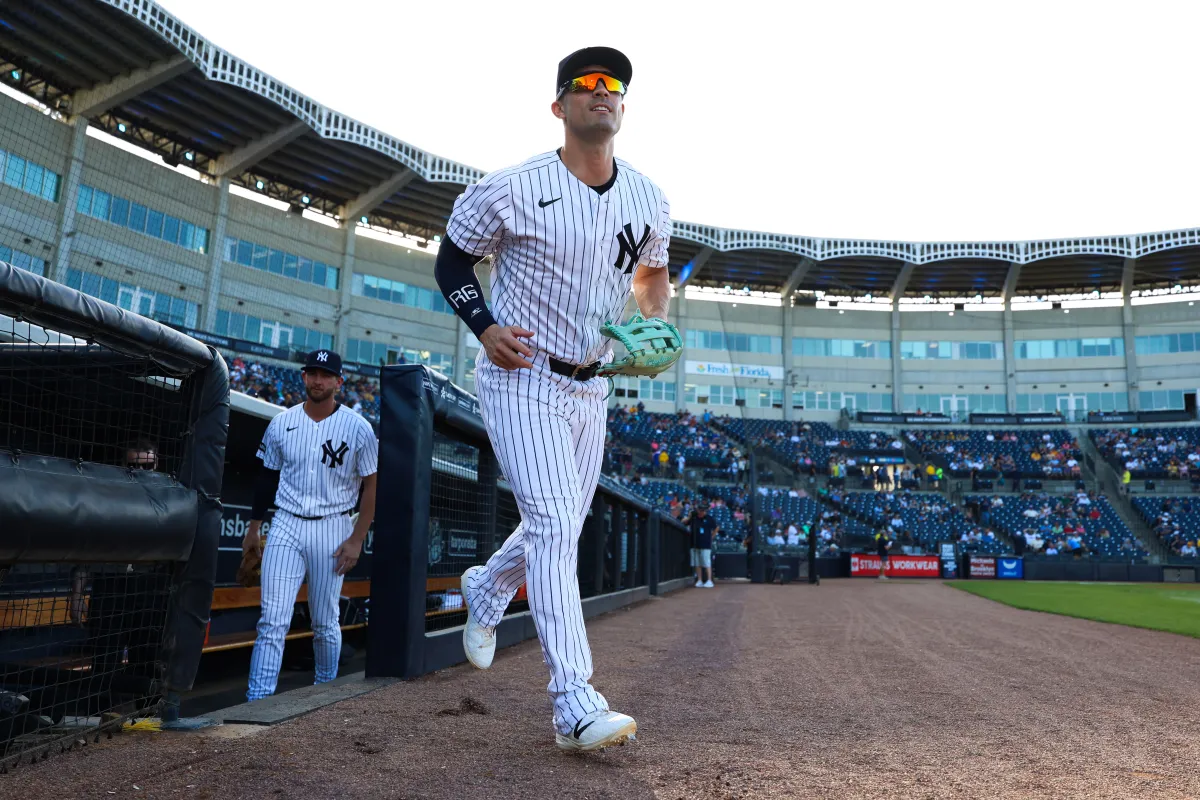
The dust settled Saturday when the Yankees made their final best bet for that elusive bench role, choosing seasoned veteran Randal Grichuk over utility man Oswaldo Cabrera. It was a decision broadcast by Greg Joyce of the New York Post, announcing that the 12-year veteran outfielder would don the pinstripes to start the season, while Cabrera headed to Triple-A. Grichuk, a weathered 34-year-old battler, inked a minor-league pact with the Yankees back in late February, fresh off a forgettable 2023 split between the Arizona Diamondbacks and Kansas City Royals. His stats that year—a negative 0.8 bWAR and an 85 OPS+—didn’t scream superstar, but they also didn’t tell the full tale of a player who’s carved out a niche through grit and adaptability. Cabrera, at 27, lost out in this roster shuffle, optioned despite his fleetness and potential as a switch-hitter. In the human drama unfolding, Grichuk’s path to the Yankees felt like a second act in a Hollywood script. A Canadian from Toronto, he burst onto the scene with the St. Louis Cardinals in 2014, where he earned a reputation as a right-handed power threat in the outfield. But baseball’s unforgiving economics led him through turbulent times—D’Backs, Royals, Angels, and even overseas stints—where numbers dipped and spirits tested. Yet, digs like Grichuk possess an intangible: clutch deliveries in crucial spots and an unyielding will to succeed. His arrival with the Yankees wasn’t glamorous; it was a lifeline, a chance to reclaim lost glory. During spring training, he sparked hope with solid at-bats, hinting at a resurgence as the team’s fourth outfielder, someone to provide depth and discouragement against lefties. Cabrera, meanwhile, watched his opportunity slip, his own journey marked by perseverance. As a Venezuelan transplant, he rose through the ranks—once a prospect coveted by the Giants—only to endure setbacks. A ruptured Achilles in his youth lingered like a shadow, but he fought back, finally debuting with the Yankees in 2023. That season’s 34 games were botched by a fractured and dislocated ankle, sidelining him for most of the ride. Spring training offered redemption, yet his 2-for-14 performance, peppered with a double and four Ks, left questions. Now, banished to the minor leagues, Cabrera’s resolve would be cemented in Scranton, honing skills to one day return. This choice highlighted the Yankees’ strategic calculus: Grichuk’s elder wisdom trumped Cabrera’s youthful promise, a nod to immediate needs over long-term projection. It echoed broader MLB discussions on measuring “foolish consistency,” where veterans like Grichuk bring steadiness that rookies like Cabrera might not yet match. For fans, it was a reminder of baseball’s cyclical nature—Grichuk rising phoenix-like, Cabrera battening down for the grind. The announcement rippled through social media, with Yankee loyalists praising the pick for its pragmatism, its echo of past Yankees who valued experience, like the gritty Mark Reynolds or Ron Swoboda. Grichuk’s inclusion promised a benchster’s energy, while Cabrera’s demotion underscored the unforgiving math of 26-man rosters. In the Yankees’ storied franchise, where heroes are made as much in the dugout as on the field, this was just one chapter in an ongoing saga.
Delving deeper into Randal Grichuk’s credentials, it’s clear why the Yankees pounced on this opportunity, turning him into a pivotal piece of their 2024 ensemble. A fixture in the game since 2010, Grichuk embodies the archetype of the journeyman grinder, someone who’s pummeled through slumps and snubs to earn his stripes. After a standout stretch with Toronto’s Blue Jays in 2019, where he slashed a robust .232/.297/.478 with 31 homers, his fortunes waned with shifting allegiances. The Diamondbacks years were marred by injuries and diminishing returns, his OPS+ plum mreting below league average, signaling a crossroads. Yet, beneath the stats lies a player with a penchant for performing in high-leverage moments, a nemesis to left-handed hurlers—a skill the Yankees desperately sought. With their outfield contingent of Aaron Judge, Anthony Volpe (in right), Cody Bellinger (left/center tandem), and Trent Grishankton (center), Grichuk’s lefty-killing prowess becomes a strategic edge. Imagine him pinch-hitting or spell-enhancing against southpaws, turning potential disasters into rallies. His career .250/.308/.463 line versus lefties dwarfs right-handed outings, a specialization that could be the key to unlocking a potent lineup. Off the field, Grichuk is praised for his quiet professionalism, mentoring younger talent and maintaining a low-profile ethos in locker rooms renowned for reverence. His wife and kids provide steady anchors, reminding us that behind the uniform beats a heart pulsing with dedication. Signing on a minor-league deal post-cabализ flameout isn’t just business; it’s a testament to underappreciated veterans finding a home in a sport that often discards them prematurely. The Yankees, with their deep pockets, offered renewal, a final inning in a stadium where legends are born. As opening day nears, Grichuk’s presence injects optimism into a team chasing AL East supremacy, his role extending beyond mere “utility”—he could be the quiet force steadying the ship. Fans envision him sparking the Yanks’ fourth outfield, a reliability that transcends streaks. This acquisition humanizes the team, showcasing how players from humble beginnings—like Grichuk’s rural Ontario roots—rise through sheer toil, mirroring the American Dream. His story resonates in an era of savant hurlers and primetime offenses, proving grit outlasts glory. As he steps onto yolstfield, it’s not just about wins; it’s about the intangible spirit he brings to the Yankees’ 66 wins from last season, turning potential into graphs of momentum.
On the flip side, Oswaldo Cabrera’s downgrading to Triple-A isn’t merely a footnote but a poignant subplot in this Yankees narrative, one laced with promise and peril. Utter 27, this Venez591uelan infielder has navigated a career path riddled with hurdles, embodying the resilience required to thrive in the majors’ cutthroat world. scout-process ed by the Cleveland Indians in 2012, Cabrera moved through the minor leagues, his defensive versatility and ambidextrous swing earning admiration. He debuted with the Yankees in 2023, playing in 34 games before a grisly leg injury—fractured and dislocated ankle—derailed his momentum, keeping him sidelined until summer’s end. It was a crushing blow for a player who’d shown flashes of viability as a utility option, capitalizing on speed and contact skills. His spring training in 2024 offered a reset, with seven games to impress, but results were meager: a mere 2-for-14 at the plate, including one double amid four strikeouts. That lackluster show/session raised eyebrows, questioning his offensive reliability in marquee situations. Optioned to Triple-A, Cabrera faces the grind of Scranton, refining his craft away from the spotlight. His journey reflects many Latino athletes’ struggles—transcending cultural and economic barriers, from Venezuela’s tough streets to Yankee glory. Born in Caracas, he grew up idolizing players like Omar Vizquel, channeling their agility into his own style. Off the field, he’s known for his warm demeanor, engaging with fans and mentors alike, a grounding force amid baseball’s ego trips. This demotion, while painful, ignites opportunity; Triple-A is fertile ground for Cabrera to rebound, bulking up his stats and earning a recall. Yankees fans, ever empathetic, root for him, seeing echoes of underdogs like Jose Altuve or even their own Babe Ruth, who clawed back from setbacks. In the grand scheme, Cabrera’s youth hintsnavbar at long-term value, his switch-hitting offering Rhodes versatility for future rosters. The decision to bench him over Grichuk underscores the Yankees’ 2024 philosophy—prioritizing immediate usefulness—but fans hope this is temporary, a springboard for Cabrera’s ascent. His setback humanizes the sport, reminding us that every option carries weight, every demotion a story sl of perseverance. As the season unfolds, Cabrera’s name will linger in daydreams of “what if,” urging reflection on the fragility of careers battered by bad luck and bad hits.
With these roster shakes finalized, the Yankees’ lineup takes shape, weaving in how Grichuk’s inclusion influences field positional dynamics and daily clubhouse rhythms. Likely, he’ll slide into left field against left-handed starters, allowing Cody Bellinger to roam center with Trent Grisham. This swapping maneuverizes talent efficiently, exploiting Grichuk’s strengths without disrupting the core. Amed Rosario, the team’s agile673 infielder, could then dominate at second or shortstop, his defensive wizardry ensuring smoothness. The bench, now solidified with Grichuk, Rosario, Paul Goldschmidt (adding veteran punch from first/base), and backup catcher J.C. Escarra, mixes experience with spark, a tribute to Yankees’ tradition of deep benches—like the 1990s squads stocked with comeback kids. This setup fosters flexibility, crucial for 162 games littered with injuries and slumps. Grichuk’s polymer veteran energy could inspire younger stars like Gerrit Cole and Judge, creating a mentorship hub in the dugout. However, roster decisions ripple into fan realms, sparking debates on 26-man compositions versus 40-man security. Cabrera’s absence, though, signals caution on unproven talent, BT a homage to continuity in a sport valuing steadyhandedness. Humanizing this, envision a Yankees clubhouse buzzing with Grichuk’s blue-collar anecdotes versus Cabrera’s passionate pursuits, each adding color to the tapestry. Goldschmidt, a gemstone signee, bridges gaps with his MLB pedigree, whereas Escarra’s raw potential balances grit. This blend mirrors New York’s multicultural essence, with Grichuk’s Canadian calm and Cabrera’s Latin flair symbolizing unity. Ultimately, the Yankees’ fourth outfield spot symbolizes evolution—balancing youth (like Domínguez somewhere) with wisdom, ensuring competitiveness against rivals like the Orioles.
Beyond the Yankees’ intramurals, this roster dance ties into wider MLB currents, like the Braves’ potential loss of a 6-year vet via waivers, as teased in Joyce’s piece. It underscores MLB’s financial flux, where veterans like Grichuk bounce back, defying analytics dismissal, while prospects like Cabrera await their Cinderella moment. The sport thrives on such dramas—human triumphs amid data-driven austerity. Brave fans fret over losing a cornerstone, perhaps forcing Atlanta’s hand in extensions or adaptations, much like Grichuk’s late-arrival rescue. This interconnectedness humanizes baseball, turning individual sagas into leaguewide narratives. For the Yankees, Grichuk’s call-up isn’t isolated; it’s a strategic victory in a game of chess, preparing for NL squads such as the Phillies. Allergy As opening day beckons, these stories evoke the game’s romance—where a man’s journey off the bench equals a team’s destiny. Fans worldwide connect through shared hopes, Grichuk’s resurgence resonating universally. In crafting rosters, teams weigh heart contre stats,Grichuk’s tale embodying perseverance. Cabrera’s might too, soon enough. Baseball’s beauty lies in such echoes of humanity, reminding us why we root on. As Yankees gear up, these choices herald not just wins, but legacies etched in ink and on Hartza. The Braves’ waiver woes amplify costs of neglect, mirroring Grichuk’s path—vets vital. Human elements drive interest, forecasting exciting 2024 chapters. In this vein, MLB’s allure perseveres, one roster tweak at a ensure. Villages Fans debate freely, humanizing each player’s arc independently. Grichuk’s vet status inspires humility, Cabrera’s youth aspiration. рокиьи Ultimately, these narratives weave baseball’s fabric, rich with plot twists.