





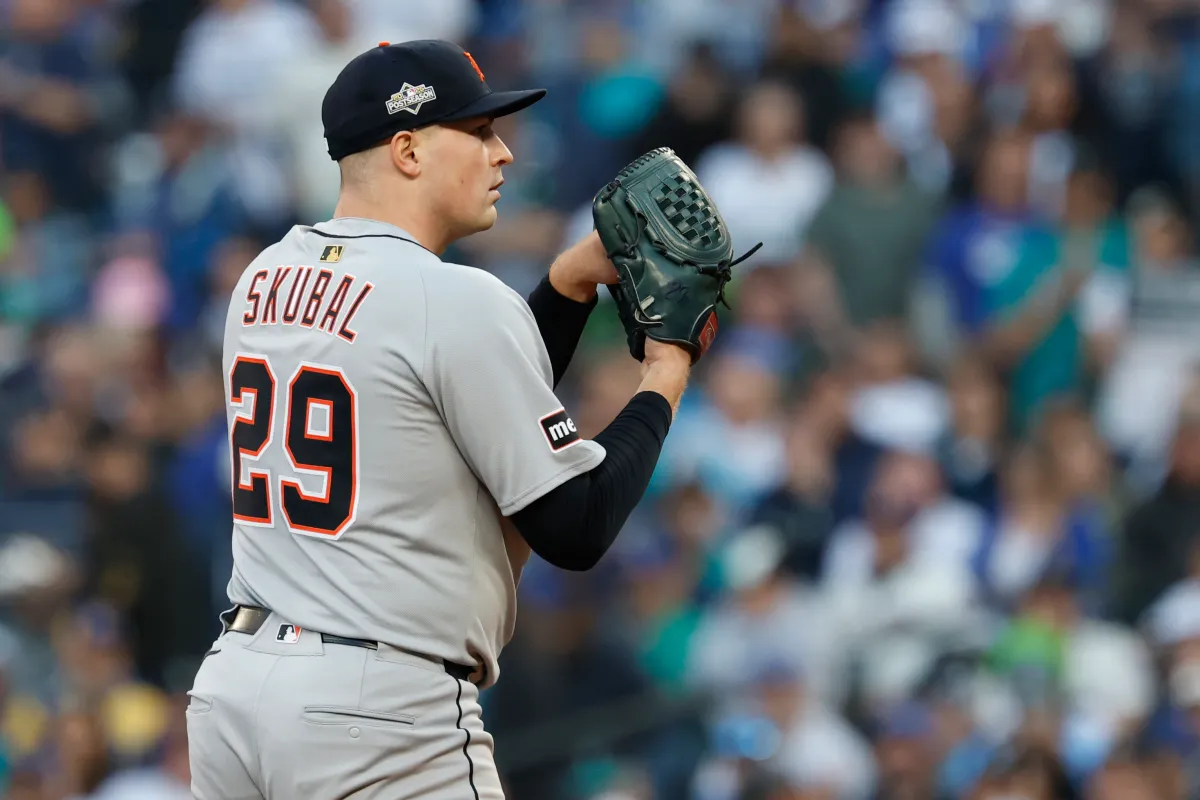
For the loyal, blue-collar baseball fans of Detroit, parting ways with Tarik Skubal feels less like a standard front-office transaction and more like a deeply personal loss that cuts to the core of their sporting identity. Skubal was not merely a highly productive pitcher on a roster searching for direction; he was a cherished, homegrown icon who represented the ultimate triumph of player development. Drafted in the ninth round out of Seattle University, he quietly put in the grueling work, overcame major arm surgeries, and emerged as a back-to-back American League Cy Young Award winner, giving Detroit fans a legitimate superstar to rally around during some of the franchise’s darkest rebuilding years. Watching him take the mound at Comerica Park was a communal experience that transcended the box score, offering an electric, must-see atmosphere and a fleeting sense of dominance even when the surrounding team struggled. However, with the Tigers sitting at a disappointing 52-58 record, the cold, mathematical reality of the Major League Baseball standings became impossible for the front office to ignore. Detroit was forced to face the sobering truth that their dreams of a World Series run in 2026 were virtually nonexistent, as they lagged five games and five teams behind in the highly competitive American League Wild Card race. To maintain that Skubal alone could bridge this massive gap would have been an exercise in romantic stubbornness rather than sound baseball strategy. By trading their beloved ace at the peak of his value, the Tigers’ leadership made a painful but pragmatic decision, choosing to surrender two months of immediate brilliance in exchange for a collection of elite assets that could sustain the franchise’s health for the next decade. It is a bittersweet farewell that marks the formal end of an era of hope, but it also represents a courageous, forward-looking step toward building a team that can eventually compete for a championship rather than languishing in permanent mediocrity.
In exchange for their premier left-hander, the Tigers received a trio of intriguing young talents whose individual journeys are rich with human drama, resilience, and untapped potential. At the heart of this return is River Ryan, a 27-year-old pitcher whose career has been a testament to perseverance in the face of daunting physical setbacks. Originally drafted as an infielder before transitioning to the mound, Ryan has always possessed an electric arm, but his path to the majors was cruelly derailed by a devastating Tommy John surgery just as he was beginning to establish himself in Los Angeles. The lonely, grueling months of physical therapy and mental fatigue that accompany elbow reconstruction can break even the strongest athletes, yet Ryan kept his eyes on the prize, fighting his way back to Triple-A. In Detroit, he is granted a fresh start with a clear runway to join the starting rotation, offering him the perfect environment to fulfill his promise as a top-tier MLB starter without the suffocating pressure of an immediate pennant chase. Joining him is 21-year-old Zyhir Hope, an extraordinarily gifted outfielder who has captured the imagination of scouts with a jaw-dropping performance at Double-A Tulsa, combining raw power, blazing speed, and an infectious enthusiasm for the game that leaps off the diamond. Alongside them is Brady Smith, another 21-year-old arm who represents the exciting, unpredictable wild card of the trade, armed with promising professional numbers and an eagerness to prove himself on a larger stage. When these three pieces are combined with the organization’s sudden, highly anticipated promotion of top outfield prospect Max Clark to the major league roster, the narrative in Detroit shifts dramatically from one of mournful resignation to one of vibrant, kinetic anticipation, reminding fans that while winter has arrived, the seeds of a spectacular spring are already being planted.
On the opposite side of the country, the Los Angeles Dodgers operate under a completely different set of human pressures, where the expectation is not simply to remain competitive, but to achieve absolute baseball immortality. Sitting atop the major leagues with a stellar 69-41 record, the Dodgers are a franchise defined by their relentless, almost clinical pursuit of greatness, a team where any season that does not conclude with a World Series parade is viewed as a catastrophic failure. This crushing weight of expectation has created a high-stress environment in Chavez Ravine, where past postseason exits haunt the franchise and every regular-season loss is scrutinized under a microscope. Yet, beneath the glittering, star-studded surface of their roster lay deep, anxious vulnerabilities that threatened to derail their ambitious season, creating a quiet sense of panic within the clubhouse. The acquisition of Tarik Skubal is not merely an instance of a wealthy empire flexing its financial muscles; it is a vital, strategic lifeline thrown to a starting rotation that has been stretched to its absolute limit. For a franchise that has invested billions of dollars in elite talent, adding a dominant, fiery left-hander like Skubal does more than bolster their pitching metrics—it injects a massive surge of confidence and competitive edge into their dugout. Skubal brings a postseason-tested pedigree and an intimidating presence that reassures the veterans in the locker room and the passionate fans in the stands that the organization will stop at nothing to secure a championship. This blockbuster move solidifies their position as the undisputed favorites for the Fall Classic, effectively converting their underlying anxieties into a bold, undeniable statement of championship intent that puts the rest of the league on notice, while easing the psychological burden on a roster that has felt the suffocating pressure of expectation all year.
The true human necessity of this blockbuster trade becomes starkly apparent when examining the physical and emotional toll that the grueling 162-game season has taken on the Dodgers’ starting pitching staff. Elite, highly paid starters like Blake Snell and Tyler Glasnow have spent the majority of the season on the injured list, battling frustrating elbow and back ailments that serve as a constant reminder of the physical vulnerability of even the most dominant athletes. The mental fatigue of rehab—hours spent in training rooms instead of on the field—can be incredibly isolating, and despite both pitchers being scheduled to return soon, there are no guarantees that their bodies will withstand the intense, high-stress demands of October baseball. This instability has forced the coaching staff to rely heavily on young, unproven arms like Justin Wrobleski, who has already surpassed his career-high in innings pitched at 112.2 and counting, raising serious concerns about his arm’s longevity and performance deep into the postseason. At the same time, Japanese sensation Roki Sasaki continues to navigate the immense pressure of adapting to a new country, a different baseball culture, and a more demanding schedule, showing flashes of brilliant potential but remaining an unfinished masterpiece who struggles to maintain his dominance late into games. Meanwhile, right-hander Emmet Sheehan, pitching through his own performance struggles with a 4.95 ERA and facing the very real possibility of being moved to the bullpen or traded entirely, illustrates the ruthless, unforgiving nature of professional sports where personal struggles are exposed under the stadium lights. In this context, acquiring a reliable, battle-tested workhorse like Skubal was not a luxury for the Dodgers, but an absolute necessity to protect their vulnerable young players and salvage their championship dreams.
Perhaps the most profound and heartwarming human impact of this blockbuster trade will be felt by Shohei Ohtani, the global icon who carries a level of expectation and pressure unlike any other athlete in modern sports history. Since suffering a frustrating knee injury in early July that halted his historic two-way pitching campaign, Ohtani has continued to perform heroically as the Dodgers’ designated hitter, but the silent, looming expectation for him to return to the mound has been a constant, heavy shadow over his season. The sports world routinely expects Ohtani to perform miracles, treating him as an indestructible baseball machine rather than a flesh-and-blood human being who requires time to heal. By acquiring Tarik Skubal, the Dodgers have gifted Ohtani something far more precious than statistical support: they have given him the gift of peace of mind. With a true, Cy Young-caliber ace anchoring the rotation, the immense pressure on Ohtani to rush his physical rehabilitation and risk permanent damage to his body has evaporated overnight, allowing the coaching staff to take a cautious, long-term approach to his recovery. This trade acknowledges Ohtani’s humanity, recognizing that despite his historic contract and unparalleled skills, he cannot carry the weight of an entire franchise alone, especially while injured. It allows him to focus entirely on his offensive production, knowing that the pitching staff is in safe, capable hands, and showcases a rare moment of institutional empathy in a business that is too often dominated by cold numbers and immediate demands. The relief of sharing the spotlight with an elite pitcher like Skubal can rejuvenate Ohtani’s spirit, reminding him of the joy of being part of a true collective effort rather than a one-man show, ultimately paving the way for a more relaxed and successful postseason run.
In the final analysis, this blockbuster trade represents the beautiful, deeply complicated essence of Major League Baseball, where the cold calculus of the front office directly collides with the deeply personal dreams of players, coaches, and fanbases alike. It is a rare, beautifully balanced transaction where there are no true losers, but rather two organizations at completely different stages of their evolutionary lifecycles finding a harmonious exchange of needs. Behind the massive headlines and the endless streams of statistical analysis are very real human stories: young prospects packing up their lives in a matter of hours to move across the country, seasoned superstars finding relief from overwhelming physical burdens, and cities united by the shared, agonizing hope of athletic glory. For Detroit, the departure of Skubal is a painful sacrifice that paves the way for a vibrant, energetic youth movement led by Max Clark, River Ryan, Zyhir Hope, and Brady Smith—a group that promises a future built on sustainable excellence rather than fleeting moments of individual brilliance, turning Comerica Park into a laboratory of exciting young talent. For Los Angeles, the acquisition of a dominant ace represents a courageous, all-in gamble that solidifies their fortress and clears their path to the Fall Classic, giving their fans a genuine reason to believe that this year will finally yield a championship. As the frantic energy of the trade deadline fades and the dust settles on the diamond, this monumental deal stands as a poetic reminder of why we love the sport—not just for the cold data on a computer screen, but for the human drama, the sacrifices made in pursuit of greatness, and the relentless, beautiful cycle of hope that defines every single season and unites us all in our love for the game.