





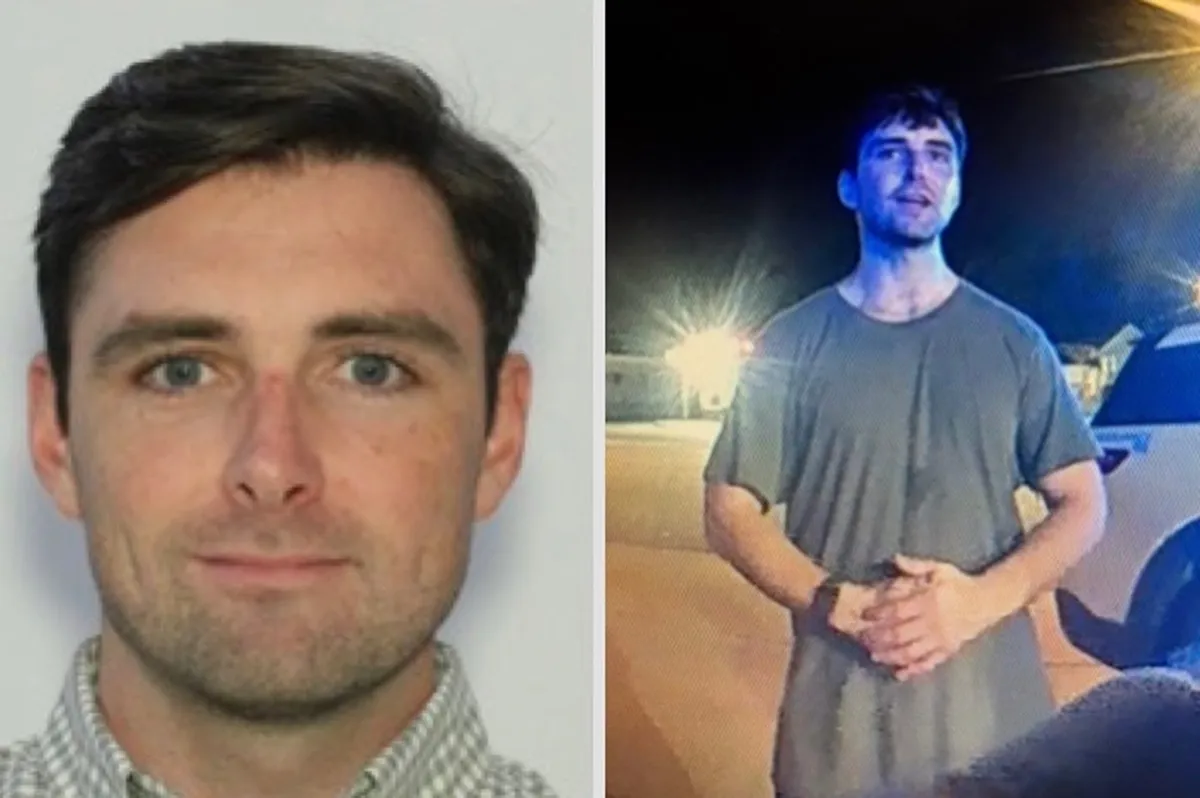
On Thursday evening, the Metro Nashville Police Department delivered a heartbreaking update in the search for a missing Colorado man. Conor Anderson, 31, had been reported missing after traveling to Nashville for a work conference, and his disappearance had drawn the attention of local authorities, his loved ones back home, and a growing circle of concerned strangers. In a somber post on the social platform X, police announced that Anderson was found deceased in a wooded area adjacent to a parking lot at 14 James Robertson Parkway. The choice of location—a seemingly unremarkable patch of trees near downtown—only deepened the sense of tragedy. Authorities were careful to note that there were no immediate indications of foul play, and that the medical examiner would determine the official cause of death. For those following the case, the news was a painful final chapter to a search that had offered some hope of finding Anderson alive. The phrase “no immediate indications of foul play” did little to comfort those who had prayed for a different outcome, but it at least ruled out the possibility that he was the victim of a violent crime in an unfamiliar city. Still, the mystery of how a young man who traveled for work ended up dead in a patch of woods in Nashville remained unanswered, and would likely remain so until the medical examiner’s office completed its investigation.
Anderson had flown into Nashville on August 15 to attend a work conference, a routine professional trip that many people make every day. He checked into the Millennium Maxwell House Hotel, a well-known hotel along the Cumberland River that hosts business travelers and tourists alike. On paper, it was an ordinary business trip: a flight, a hotel room, a conference badge, and a schedule full of meetings. But something went terribly wrong. Anderson was last seen early on the morning of August 16, after he encountered two police officers in East Nashville. His final hours appeared to involve a strange and unsettling series of events that left him without cash, possibly disoriented, and walking alone in a part of the city he did not know. Loss of life is always tragic, but there is something particularly haunting about the death of a person who was simply traveling for work, far from home, in a city where he had no support network. The anonymity of a hotel room, the disorientation of a new place, and the vulnerability of being alone at night can be overwhelming. Anderson’s family, who had been anxiously waiting for any word from Nashville, were now left to grieve not only the loss of a beloved son, but also the unanswered questions about his final hours.
Police had provided more details in a statement released prior to the discovery of his body. Around 1 a.m., Anderson had flagged down two officers from the East Precinct as they were driving by. He wanted to report an interaction he had with unknown individuals outside a nearby bar. He explained that he had given the men $20 to “show him around the area,” but they had simply walked off with his money. It was a strange story, and Anderson’s desire to tell the police about it, even though the loss was minor, suggested that he may have felt uneasy or been seeking some kind of assistance. Body camera footage from the interaction showed one officer asking whether Anderson had been attempting to buy drugs. The question was a natural one for police, but Anderson strongly denied it. “On my life, there was no intention of any drug transaction,” he replied. The officers apparently accepted his answer and explained that if he wanted to make a formal report, they would need his driver’s license. Anderson refused to provide it. Officers encouraged him to get a rideshare back to his hotel instead, and he agreed. That was the last confirmed sighting of Anderson. The brief interaction, captured on body camera, is now a key part of the timeline. It shows a man who was not obviously in crisis but who was, perhaps, in the early stages of a night that would take a tragic turn.
Behind the dry police statements and the timelines lies a deeply human story. Conor Anderson was thirty-one years old. He had family members who loved him, friends who were no doubt sick with worry, and colleagues who probably never imagined that a work trip would end in such a devastating way. The person who flew to Nashville with a suitcase full of conference clothes was someone’s son, perhaps someone’s brother, perhaps someone’s best friend. He likely had plans for the future: a career to build, relationships to nurture, ordinary dreams that most of us take for granted. Instead, his life came to an end alone, in a wooded area beside a downtown parking lot, far from the Rocky Mountains and the life he had known in Colorado. The thought is almost unbearably sad. His family must have spent days hoping for good news, scanning the internet for any update, calling police, and praying that he would turn up safe. The notification that his body had been found would have hit them like a freight train. No parent should have to hear that their child’s life ended in a patch of trees in a city where they had gone to earn a living. Regardless of the autopsy results, the loss is profound. And while authorities have said there are no immediate indications of foul play, Anderson’s loved ones are left with the knowledge that he was alone in his final moments, and that his death may never be fully explained.
This case also raises uncomfortable questions about the vulnerabilities of business travelers, the unpredictability of mental health crises, and the ways in which people can slip through the cracks. When someone travels to a new city for work, they are often operating on little sleep, surrounded by unfamiliar faces, and disconnected from their usual routines. In Anderson’s case, an ordinary night out or a decision to walk instead of taking a rideshare may have led to conditions that were more dangerous than he realized. The interaction with the two officers suggests that he was lucid enough to speak, but also perhaps not entirely at his best. He had handed twenty dollars to strangers, had been left without money, and had refused the formalities that might have led to a more structured response. The officers encouraged him to go back to his hotel, and he agreed. It is impossible to know what happened after that moment. Did he wander off because he was confused? Did he feel unsafe and decide to find his own way? Did he experience a medical episode? The absence of foul play indications hints at possibilities such as an accidental death, a medical emergency, or exposure, but until the medical examiner releases a cause, none of these can be confirmed. In the meantime, the case serves as a reminder that being alone in a strange city can be isolating and disorienting, and that small decisions, like refusing a rideshare or walking through an unfamiliar part of town, can carry enormous consequences.
As Nashville and Colorado mourn the loss of a young man, the focus now shifts to the ongoing investigation and the medical examiner’s findings. Metro Nashville police have said that the cause of death will be determined by the Medical Examiner, and the public will likely learn more in the coming days. For now, there are no answers that can make sense of his death, and no explanation that can bring him back. But there is an opportunity to remember Conor Anderson as more than a missing person case or a headline. He was a person with a life, a personality, a past, and a future that will now never be lived. His family deserves privacy, compassion, and time to grieve. They also deserve a thorough investigation and a clear explanation of what happened to him. The community, too, should learn from this tragedy: it should remind us to be kind to strangers, to check on those who seem lost, and to understand that the person walking alone at night in an unfamiliar city could be someone’s beloved family member. The void left by Conor Anderson’s death cannot be filled, but perhaps the memory of him can inspire a greater sense of connection and care. While his body was found in a quiet, forgotten corner of downtown Nashville, his story should not be forgotten. The investigation may close, but the grief of his family will continue, and the unanswered questions will remain a part of their lives. Hopefully, the medical examiner’s report will provide at least some closure, and the family can begin the painful process of healing. In the meantime, all that can be offered are condolences, respect, and the quiet hope that his loved ones find peace in the midst of this unimaginable loss.