






The Invisible Weight of a Trillion-Dollar Milestone
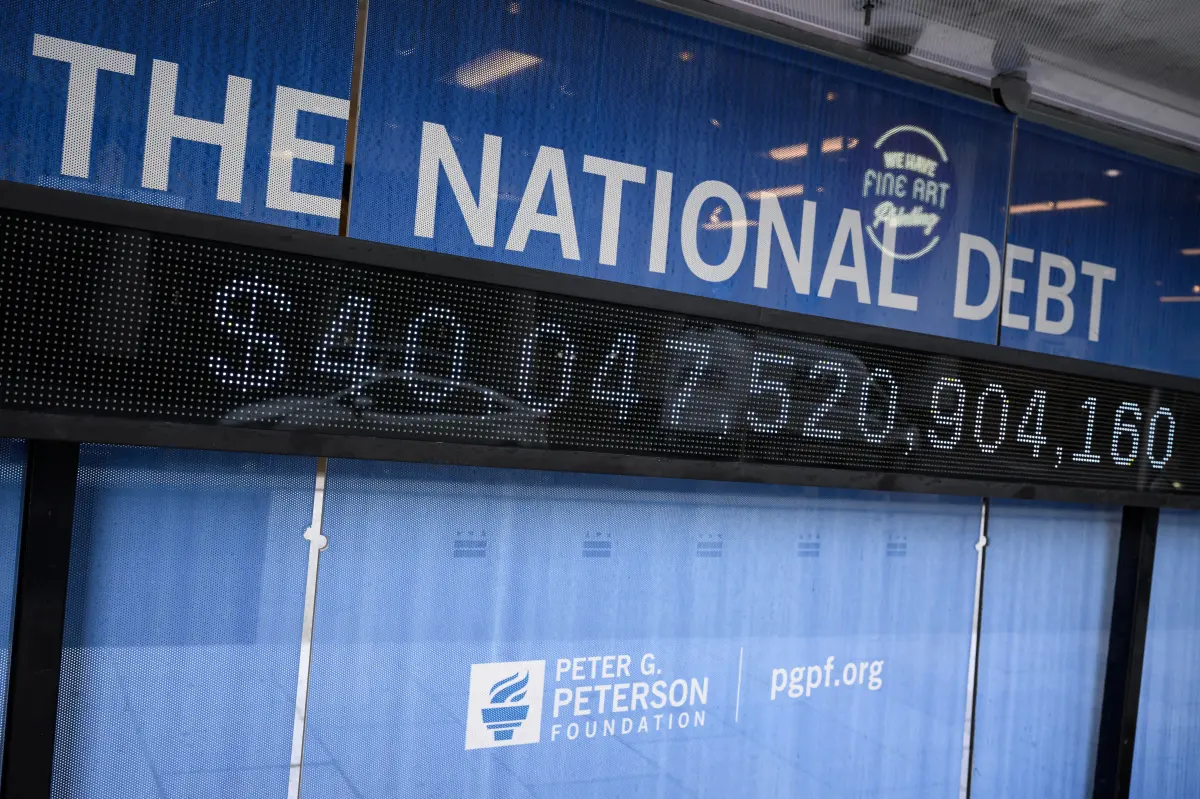
Amid the marble halls of Washington and the relentless churn of political headlines, a quiet, staggering milestone was breached. The Treasury Department confirmed this week that the national debt has officially crossed the $40 trillion threshold. To put that number in perspective, it is a figure that has doubled in just a decade and has ballooned nearly sevenfold since the turn of the millennium, when the nation’s ledger sat at a relatively modest $6 trillion. For most Americans, the number is so astronomical that it defies comprehension, existing more as an abstract concept in a budget spreadsheet than a tangible reality. Yet, fiscal experts and economists alike are urging the public to look beyond the sheer scale of the figure and understand what it actually means for the everyday lives of families, borrowers, and taxpayers.
Treasury Secretary Scott Bessent was quick to downplay the psychological weight of the specific number, suggesting there was “nothing magic” about the $40 trillion mark. This sentiment is echoed by many economists who view debt milestones as somewhat arbitrary points on a continuous curve. However, the insistence on looking past the number misses a more significant and uncomfortable truth: the trajectory of the debt, the accelerating pace at which it is growing, and the compounding interest it generates are creating a fiscal reality that will inevitably find its way into the pocketbooks of every American citizen. Maya MacGuineas, president of the Committee for a Responsible Federal Budget, articulated this concern clearly, noting that the debt “doesn’t exist solely on the government’s ledgers; it is felt throughout the economy.” She warned that excessive borrowing exacerbates inflation, squeezes out other critical budget priorities, and leaves the nation dangerously vulnerable to domestic emergencies and international turmoil. The conversation, therefore, is shifting from a dry discussion of fiscal policy to a stark examination of how government borrowing affects the cost of a mortgage, the availability of public services, and the long-term economic security of the nation.
The Household Impact of a National Burden
The most visceral way the national debt impacts Americans is through the cost of borrowing. When the federal government needs to finance its deficits, it floods the market with Treasury bonds, competing directly with private businesses and individuals for the same pool of available capital. This increased demand for capital drives up interest rates across the board. According to the latest monthly Treasury Statement, the cost of servicing the debt has already exceeded $900 billion in the first ten months of the current fiscal year—a staggering sum that outpaces federal spending on both healthcare and national defense. As interest rates remain elevated, the consequences trickle down to the average citizen in highly tangible ways. Mariana Trujillo, managing director for government finance at the Reason Foundation, explained to Newsweek that an ever-growing national debt puts upward pressure on interest rates, making mortgages, car loans, and business financing more expensive.
The real-world implications of this are profound. Research from the Conference Board highlights that a family purchasing a $600,000 home with a 30-year fixed-rate mortgage could end up paying more than $100,000 extra over the life of the loan simply because of the upward pressure the national debt places on interest rates. In a more extreme interest rate shock scenario, that additional cost could soar to $182,000. This is not an abstract macroeconomic concept; it is the difference between affording a home, a new car, or capital to start a small business, and being locked out of the market. Every dollar the government borrows to finance its spending is a dollar that becomes more expensive for a family to borrow for their own future, effectively putting a hidden tax on the aspirations of the middle class.
The Squeeze on Services and Everyday Government
Beyond the cost of credit, the ballooning debt is forcing a painful re-evaluation of government spending priorities at both the federal and state levels. Servicing the debt is financed through tax revenue, and as net interest payments consume a larger share of the federal budget, the funds available for other priorities—such as infrastructure, education, and social safety nets—diminish. Maya MacGuineas highlighted this “squeeze” effect, where debt interest crowds out vital public investments. This fiscal pressure trickles down far beyond Washington. Mariana Trujillo pointed out that if rising interest costs force the federal government to reduce aid to states and cities, those local governments may have to close budget gaps by raising income, sales, or property taxes, or by cutting the services that citizens rely on daily. This creates a perverse cycle where the debt, which was meant to fund government operations, ultimately degrades the quality and availability of public services at every level of governance.
The financial burden is not hypothetical; it is a mathematical certainty that is already unfolding. The government is projected to spend over $1 trillion on debt interest this fiscal year alone, a figure that exceeds the budgets of many federal agencies. By current projections, the debt is expected to reach 154 percent of the Gross Domestic Product (GDP) by 2036, a ratio that would render the United States dangerously sensitive to shifts in investor confidence. This interest burden acts like a treadmill that the government cannot step off of; every dollar spent on interest is a dollar that cannot be spent on research, infrastructure, or education. For a family buying a $600,000 home, the difference in interest rates driven by government borrowing can amount to a difference of more than $100,000 over the life of a 30-year mortgage. In an extreme interest rate shock scenario, researchers suggest that same family could end up paying $182,000 more than the baseline. This is the hidden tax of the national debt, one that affects the American Dream of homeownership, the ability of small businesses to expand, and the overall financial security of millions.
The Entangled Web of Taxes, Tariffs, and Deficits
As the fiscal picture darkens, the government finds itself in a bind: how does it address a debt crisis without crushing the economy or its citizens? The issue of revenue generation has become a central battleground, particularly in light of recent legal and policy decisions. The Supreme Court’s ruling against key tariffs imposed during the Trump administration has complicated federal revenue forecasts and thrown a wrench into the government’s plans to offset its deficits. The Congressional Budget Office estimated that the loss of those tariffs could increase projected deficits by roughly $2 trillion over the next decade if they are not replaced. This has forced the Treasury to scramble for alternative sources of income, with Secretary Bessent expressing confidence that the administration could return to the “same level if not higher of tariff income” through other means RNA. However, these legal setbacks expose a fundamental vulnerability: the government’s fiscal health is becoming increasingly reliant on volatile policy decisions rather than a stable, robust tax base, making the entire economic outlook more precarious.
The Interest Rate Paradox and the Housing Market
For the average American family, the connection between a trillion-dollar federal debt and their monthly mortgage statement can seem distant, but the link is direct and powerful. The Conference Board, a nonpartisan economic research firm, noted that the rising debt affects the cost of borrowing, economic opportunity, and financial security for all ages. The researchers calculated the potential consequences for a family buying a modest home. In a baseline economic scenario, a family purchasing a $600,000 home with a 20 percent down payment could save more than $100,000 over the lifetime of a 30-year fixed-rate mortgage if the government were to pare back its borrowing. Conversely, under an “extreme interest rate shock scenario” driven by uncontrolled debt, the same family would end up paying $182,000 more than the baseline, effectively pricing a significant portion of the American public out of the housing market altogether.
Government Strategy and Political Battles
Faced with this growing crisis, the current administration maintains a posture of cautious optimism, arguing that the United States can outgrow its debt pile. The White House has framed the issue not as a problem of excessive spending, but as a challenge of accelerating economic growth. Spokesman Kush Desai told Newsweek that the administration is focused on “slashing waste, fraud, and abuse” and using a supply-side agenda to lower interest rates and drive down the debt-to-GDP ratio. Treasury Secretary Bessent has echoed this “pro-growth” strategy, stating that the U.S. can “grow our way out of” the problemft. Vice President JD Vance expressed confidence in this approach, claiming that the administration has a “very discreet plan” to address the debt, even as they inherited what they describe as a “debt bomb” from the previous administration.
However, these promises of supply-side salvation are complicated by the messy reality of fiscal politics. A significant blow to federal revenue forecasts came in February when the Supreme Court struck down key elements of former President Donald Trump’s tariff regime. The loss of those tariffs, a substantial revenue stream for the government, is projected to increase deficits by roughly $2 trillion over the next decade if not fully replaced. While Bessent has indicated that current tariff measures could recover the lost revenue, the uncertainty surrounding trade policy adds another layer of volatility to the fiscal outlook. The administration’s plan appears to rest on a bet that deregulation, energy production, and tax cuts will ignite a boom so powerful that it outpaces the compounding growth of the debt itself—a strategy often referred to as “growth out of debt.”
The Choice Between Austerity and Growth
The nation now stands at a fiscal crossroads, where the path forward is defined by a fundamental question: can the economy grow its way out of this hole, or will painful austerity measures be required? Vice President JD Vance has stated that the administration has a “very discreet plan” to achieve the former, aiming to make the economy grow faster than the debt. Yet, this “grow your way out” strategy is viewed with skepticism by many economists who argue that the sheer structural imbalance of the budget requires difficult choices regarding both spending and revenue. The lack of a clear, bipartisan consensus on how to tackle the debt creates an environment of uncertainty. If the government leans on austerity—cutting spending—it risks triggering a recession that would slash tax revenues and increase safety-net spending, making the debt situation worse. If it leans on tax increases, it risks stifling economic growth)Skip. The stalemate in Washington over how to approach the fiscal cliff leaves the country in a state of financial limbo, where the debt continues to grow at an accelerating pace without a credible long-term plan to rein it in.
The Looming Future and the Question of Choices
The United States now finds itself in a club of highly indebted nations, with a debt-to-GDP ratio that exceeds those of Germany, Canada, and the United Kingdom, surpassed only by Japan. This is not a sustainable position, nor is it a comfortable one. The “unprecedented” volume of Treasury issuance required to service this debt is beginning to test the market’s appetite, raising the risk of a future liquidity crisis that could force the Federal Reserve to intervene or cause the government to “print money,” leading to inflation that erodes the savings of every American. The administration’s reliance on tariff revenue has proven volatile, as seen by the Supreme Court striking down key measures, and the promise of “supply-side growth” has yet to materialize into the kind of economic boom that would outpaced the debt.
The $40 trillion debt is more than a political talking point; it is a structural transformation of the American economy. It represents a fundamental choice about national priorities—a decision to defer the costs of today’s consumption onto future generations. The rhetoric from officials often frames the debt as a manageable issue that can be overcome with economic growth. Yet, the math is unforgiving. As interest rates remain elevated, the government is set to spend over $1 trillion on interest payments, surpassing the defense budget and translating into higher costs for everyone from college students taking out loans to entrepreneurs seeking startup capital. The choice before the nation is stark: either confront the difficult trade-offs required to curb spending, or accept the slow erosion of economic opportunity, higher taxes, and a reduced capacity to respond to crises that an ever-growing national debt guarantees. The $40 trillion figure is not a magical number, but it is a landmark on a path that, if left unchanged, leads to a future where the American Dream becomes increasingly unattainable for the very citizens the government is meant to serve.