


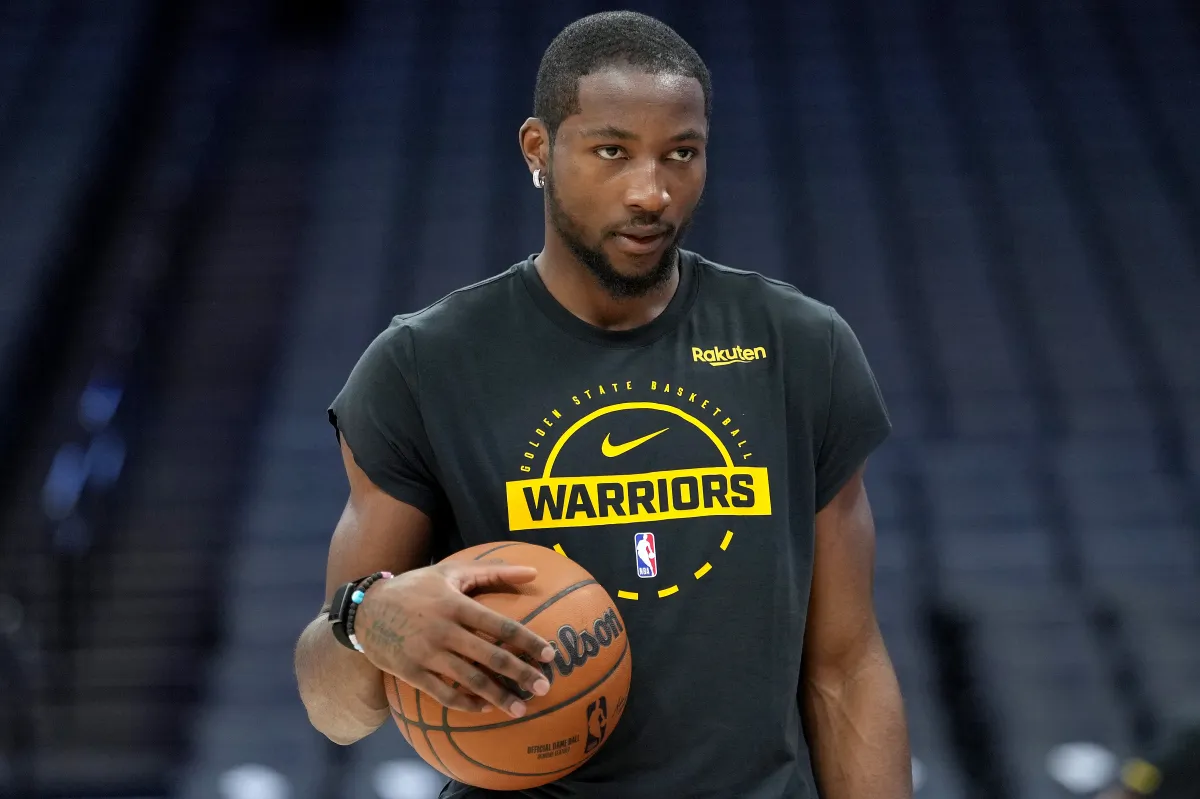
The Jonathan Kuminga Dilemma: A Young Star’s Uncertain Future with the Warriors
As the 2025-2026 NBA season began, Jonathan Kuminga’s name had already been circulating in trade conversations around the Golden State Warriors. Despite signing a two-year contract, the writing was on the wall that his tenure might be short-lived, with January 15 marking his trade eligibility date. What’s unfolded since then tells a story of mismatched expectations, diminished opportunities, and the challenging business side of professional basketball. Warriors general manager Mike Dunleavy’s recent comments revealed the stark reality of Kuminga’s situation: “I think as far as the demand, I’m aware of that. In terms of demand, you make a demand, there needs to be demand on the market. We’ll see how that unfolds.” These carefully measured words hint at something troubling for both the player and team – despite Kuminga’s official trade request coinciding with his eligibility date, the market for his services appears lukewarm at best, creating a standoff where neither side seems positioned to get what they want.
The relationship between Kuminga and the Warriors has deteriorated rapidly this season, painting a picture of a young player caught in basketball limbo. After starting the first 13 games of the season, Kuminga has experienced a dramatic fall from grace, playing in just five games since his last start on November 11. This sudden exile from the rotation represents a crushing disappointment for a player who entered the season with expectations of an expanded role. Dunleavy’s additional comments further illuminate the business-first approach the organization is taking: “Always with these guys, I tell them I’m willing to work with them, I’m willing to help them out. We’re good with that’s his wishes, we’ve got to figure that out, but we’ve got to do what’s best for the organization.” The sentiment is clear – the Warriors acknowledge Kuminga’s desire to leave but won’t make a move unless it benefits their long-term strategy.
The human element of this situation is perhaps the most compelling aspect of the unfolding drama. Imagine being a young, talented professional who has worked his entire life to reach the pinnacle of his sport, only to find himself suddenly deemed expendable and relegated to the end of the bench. For Kuminga, this reality must be particularly painful given his earlier status as a promising piece of the Warriors’ future. Head coach Steve Kerr’s recent comments about Kuminga potentially returning to the rotation ring somewhat hollow against this backdrop: “He could be [a part of the rotation]. He obviously hasn’t played in a while, but at this point, we have to experiment a little with rotations to see where we are, and he’s definitely a part of that conversation.” These words, while diplomatically crafted, stand in stark contrast to the actions taken by the coaching staff, who have consistently kept a healthy Kuminga sidelined even when the team was shorthanded and could have used his talents.
The timing of this situation adds another layer of complexity to Kuminga’s professional predicament. With Jimmy Butler sidelined for the remainder of the season, logic would suggest an opportunity for Kuminga to showcase his abilities and potentially increase his trade value. However, the Warriors’ reluctance to utilize him even under these circumstances speaks volumes about the fundamental disconnect between player and organization. Kerr’s attempt to publicly suggest that Kuminga remains invested in the team’s success contradicts the reality of a player who has formally requested to leave the organization. This creates an uncomfortable limbo where Kuminga finds himself both unwanted and unmovable – a particularly difficult position for a young athlete in the prime development years of his career.
From a broader perspective, Kuminga’s situation highlights the often cold business calculations that govern professional sports, where human aspirations and emotions frequently collide with organizational priorities. For the Warriors, a franchise that built a dynasty on smart personnel decisions, Kuminga represents both a potential asset and a potential problem. If they can’t find a suitable trade partner willing to offer appropriate value in return, the organization faces the prospect of either reintegrating a disgruntled player or letting his contract situation play out unfavorably. For Kuminga, the options are equally challenging – either adapt to a diminished role with a team that has demonstrated they don’t value his contributions, or hope for a trade to materialize that allows him to restart his career elsewhere.
As the February trade deadline approaches, Kuminga’s future hangs in a delicate balance. If no trade materializes, his last hope would be for the Warriors to decline his contract option, which would allow him to become an unrestricted free agent next summer and choose his own destination. This saga serves as a reminder of how quickly fortunes can change in professional sports – from promising young talent to trade chip in what feels like the blink of an eye. For Warriors fans, Kuminga’s situation represents a disappointing chapter for a player once seen as part of the bridge to the franchise’s post-Curry era. For neutral NBA observers, it’s a compelling case study in how team dynamics, coaching philosophies, and business decisions intersect to shape the careers of young athletes, sometimes leaving them caught in circumstances they never anticipated when they first entered the league with dreams of stardom.