

In the quiet hours before dawn, the people of Moscow were pulled from their sleep by a sound that has become all too familiar in wartime: the low hum of drones, the sharp crack of air defenses, and the urgent alerts that pierced the night. According to Russian officials, Ukraine launched nearly 700 drones toward Moscow overnight, marking one of the largest aerial assaults on the Russian capital since the beginning of the war. More than 650 unmanned aerial vehicles were detected heading for the Moscow region between 8:30 p.m. Monday and 5 a.m. Tuesday local time, said Moscow’s mayor, Sergey Sobyanin. As the night dragged on, Sobyanin later announced that another 68 drones had been destroyed en route to the capital. But the attack was not without consequence. Two people were killed: a 71-year-old man in a suburb south of Moscow and a 20-year-old man northwest of the capital. Nine others were reported injured, according to Moscow regional governor Andrey Vorobyov. The numbers are staggering, but they only begin to describe what hundreds of thousands of residents experienced during those terrifying hours. There was no single explosion and no quick end to the danger. Instead, the night unfolded in waves of warning, with people watching the sky, counting the seconds between blasts, and wondering whether the next drone would pass overhead or strike their neighborhood.
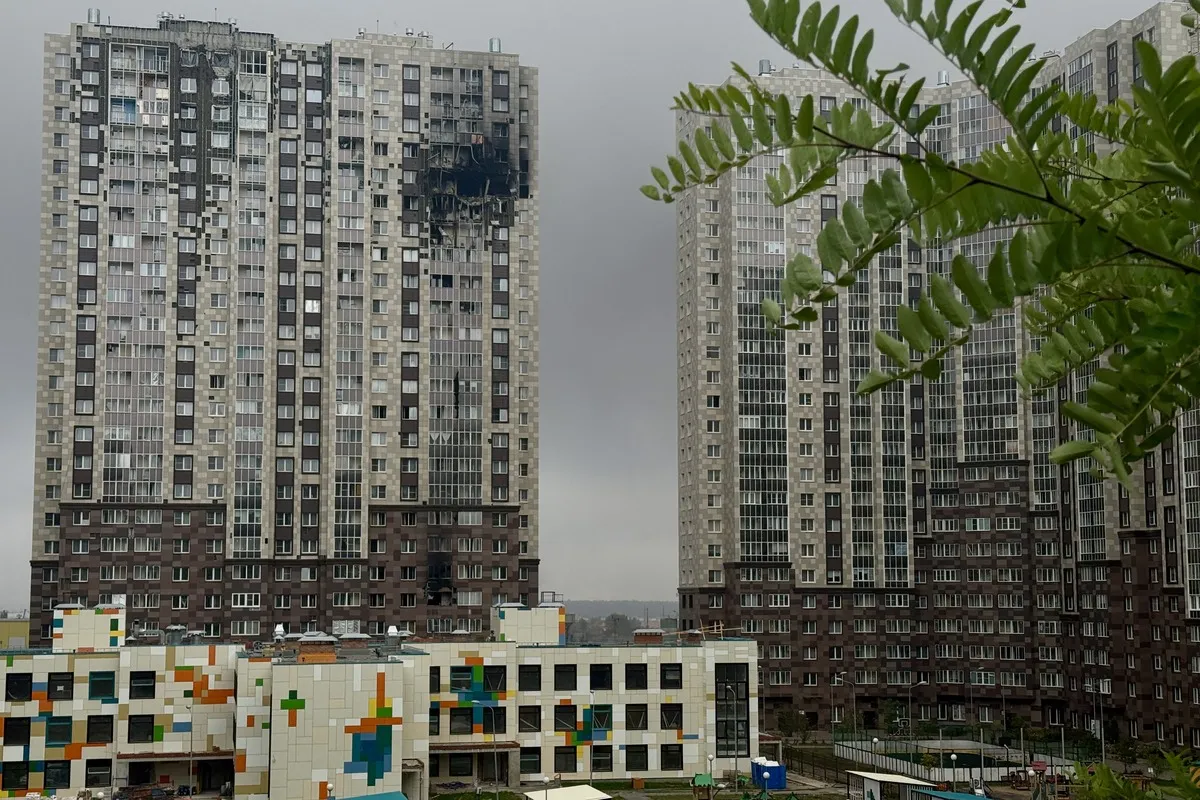
The loss of life is the most painful part of any attack, and this night was no different. For all the talk of defensive systems, interception rates, and military strategy, two families woke up on Tuesday to an emptiness that no official statement could fill. The 71-year-old man, who lived in a suburb south of Moscow, had likely lived through decades of change, war, and peace, only to be killed by a drone in the place he called home. The 20-year-old man, who died northwest of the capital, was at the beginning of a life filled with possibility. He might have been a student, a worker, a son, a brother, or a friend. Beside them, nine other people were recovering from injuries that ranged from minor to serious, carrying visible scars that would heal slowly, and invisible ones that might never fade. In Moscow’s suburbs, the morning after the attack was marked by shattered windows, blackened balconies, emergency vehicles, and the dazed faces of neighbors standing outside their apartment buildings. Emergency services moved through the streets, cordoning off areas, checking buildings, and searching for anyone who might need help. But in those quiet residential neighborhoods, the human cost of the assault was already written in the faces of people who could not believe what had happened so close to where they lived.
For those who lived through the night, the assault was a terrifying reminder that war is not always something that happens elsewhere. Moscow, a capital of more than twenty million people, has often felt distant from the front lines. Its residents have grown used to the war being a story on their screens, a subject of conversation, an economic inconvenience. But on this night, the war came to their doorstep with an unfamiliar and deeply unsettling intensity. The sound of a drone overhead is unlike almost anything else: it is a persistent, mechanical buzz that can be heard long before the machine is visible, a sound that immediately sets the heart racing. When the air defenses opened fire, the night sky was filled with flashes, streaks of light, and the thunderous noise of explosions as interceptor missiles met the incoming threats. For many people, there was no time to do anything except follow the official advice: move away from windows, take shelter in corridors or basements, wait for news. It was a long, sleepless night, made worse by the uncertainty. No one could tell whether the attack was over or whether more drones were still on their way. The mayor’s updates, when they came, offered some reassurance, but they also confirmed the scale of the danger. Hundreds of drones had been directed at the Moscow region, and the sheer number was almost impossible to comprehend. Each drone, after all, had been launched for a reason, and each one carried the potential to destroy a life, a home, or a family.
The strategic significance of the attack is hard to overstate. This was not a small raid or a symbolic strike. According to the information released by Russian officials, the assault involved nearly seven hundred drones, with more than six hundred and fifty detected heading toward the Moscow region over a period of about eight and a half hours. The additional sixty-eight drones destroyed en route, which Sobyanin mentioned in a later update, suggested that the threat was ongoing and evolving even as the night wore on. For much of the war, Moscow has been seen as a city protected by geography and air defenses, a place where the conflict could be observed from a safe distance. That perception has gradually changed, and a night like this accelerates the transformation. If the capital can be targeted by such a large wave of drones, then no city in Russia is truly beyond the reach of the conflict. This reality is not only military but psychological. It changes the way people think about the war, about their own safety, and about the future. It also raises difficult questions about escalation, about the effectiveness of air defense, and about the choices that lie ahead for all sides. But in the immediate aftermath, those questions were for officials and analysts. For ordinary residents, the only question that truly mattered was simple: was everyone they loved safe?
In the cold light of Tuesday morning, the consequences of the attack became clearer. Moscow regional governor Andrey Vorobyov confirmed the deaths and injuries, and local authorities began the slow work of assessing the damage and supporting the affected families. Emergency crews searched the wreckage, checked the surrounding buildings, and collected pieces of debris that would later be analyzed as part of the official investigation. Residents were urged to remain cautious, and those whose homes had been damaged were offered temporary shelter. For many people, however, the emotional damage was far deeper than the physical destruction. A night of terror leaves echoes that do not disappear with the sunrise. Children who had been woken by explosions might be afraid to go to sleep again. Parents who had spent hours worrying about how to protect their families would replay those moments in their minds for weeks. Elderly people, especially those who had lived through other wars, would find themselves transported back to earlier memories of violence and fear. The city itself went on, as cities do. Roads filled with traffic, shops opened, children went to school. But the ordinary rhythm of the day seemed different, marked by a quiet tension that was hard to shake. This is still a breaking story, and more details are likely to emerge in the coming hours and days. More information about the drones, the casualties, and the broader implications will be reported as officials release it. But the first hours after an attack are often the most raw, when the truth has not yet been processed and the human cost remains close to the surface.
At its center, this story is about human beings. The 71-year-old man who died in a Moscow suburb will never again sit at his kitchen table, read the morning news, or watch his grandchildren grow. The 20-year-old man who died northwest of the capital will never have the chance to make his mark on the world. Nine other people will carry the physical and emotional weight of this night for the rest of their lives. Behind every statistic, every wounded person, and every destroyed drone, there is a human story that cannot be captured in official briefings. It is tempting to view these events through the lens of strategy and geopolitics, to count how many drones were launched, how many were intercepted, and what this means for the next phase of the conflict. But war is never only about numbers. It is about neighborhoods and apartment buildings, about parents trying to comfort their children, about old people who move too slowly and young people who believe they are invincible. It is about the sound of an explosion in the distance and the helpless feeling of not knowing who is safe. As the sun rose over Moscow, the city began to recover, but it was a changed place. The night had left behind not only physical damage but also a powerful reminder that the war is not over, that it can reach anywhere, and that ordinary lives continue to pay the price. The story is not finished. More nights like this may come, and more sorrow may follow. But for now, in the aftermath of one of the largest drone attacks on the Russian capital, the best and most human response is to remember that every number has a face, every casualty has a name, and every loss is a grief that belongs not only to a family but to us all.