



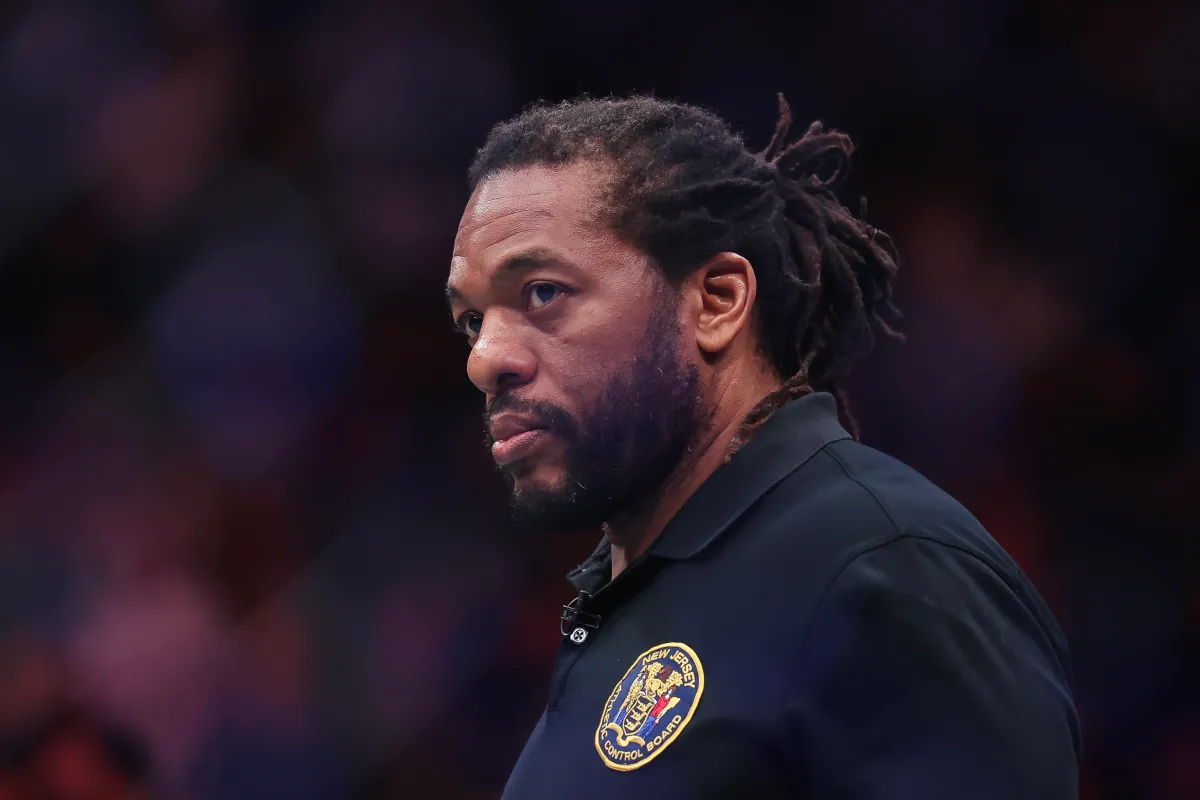
In the high-stakes, adrenaline-fueled colosseum of the Ultimate Fighting Championship (UFC), where careers are forged in blood and championships are decided in fleeting split-seconds, no role is more scrutinized yet less celebrated than that of the third person inside the Octagon. For many years, Herb Dean stood as the undisputed archetype of this perilous profession, a man whose calm authority, rapid reflexes, and sharp instincts earned him the highest praise from UFC President Dana White, who frequently heralded him as the absolute gold standard of mixed martial arts officiating. To step into the cage with Dean at the helm was, for many fighters, a quiet guarantee of safety—a reassurance that even amidst the chaotic violence of professional combat, a watchful, highly experienced eye would protect them when they could no longer protect themselves. Yet, the mixed martial arts world is notoriously fickle, a domain where a lifetime of flawless execution can be completely erased by a handful of highly publicized, controversial decisions. Over the span of a single, agonizing month, Dean has found himself transformed from a widely respected guardian of the cage into the primary target of intense public and professional outrage. This sudden, dramatic fall from grace illustrates not only the relentless pressure mounted upon modern sports officials but also the deeply human costs associated with mistakes made in a sport where human lives and long-term cognitive health are directly on the line. The thin line between a heroic stoppage and a catastrophic failure has never felt more microscopic, and Dean’s recent officiating blunders have ignited a fierce global debate regarding referee accountability, fighter safety, and the limits of forgiveness in a sport that leaves absolutely no room for error.
The catalyst for this overwhelming storm of criticism traces back to a highly anticipated, historic clash that was supposed to redefine a legacy: Alex Pereira’s highly scrutinized debut in the UFC’s heavyweight division. Stepping up to challenge the formidable interim heavyweight champion, Ciryl Gane, at UFC Freedom 250, Pereira was poised to transition his legendary kickboxing prowess and devastating striking power into a brand new, physically intimidating weight class. The atmosphere in the arena was thick with expectation, with fans worldwide eager to see if the former multi-division champion could carry his legendary destructive capabilities into the land of the giants. However, what was built to be a historic passing of the torch quickly spiraled into a nightmare of controversy, confusion, and unresolved anger. In the closing moments of the bout, as Gane pressed the action and initiated the fight-ending sequence, a series of blunt, high-velocity strikes targeted the back and side of Pereira’s head—strikes that are strictly prohibited under the unified rules of mixed martial arts to prevent severe traumatic brain injury. As the referee assignment for this massive event fell to Herb Dean, the expectation was that any illegal maneuver would be instantly recognized and penalized, or at least paused to allow the impacted fighter to recover. Instead, the strikes landed without intervention, paving the way for Gane to secure a devastating, career-altering finished victory. For Pereira, the defeat was not merely a professional setback or a spoiled debut; it felt like a profound betrayal of his physical safety, occurring under the direct supervision of the sport’s most famous official, whose primary mandate was to prevent such unethical damage.
In the emotional aftermath of the devastating loss, a deeply hurt and visibly frustrated Alex Pereira did not hold back his indignation, launching a scathing critique against Herb Dean that transcended the standard boundaries of post-fight complaints. For a fighter of Pereira’s typically stoic, quiet, and reserve demeanor, the raw emotion he displayed was a stark indicator of how severe the perceived injustice truly was. He argued passionately that a referee standing merely inches away from the action has a fundamental human obligation to see and react to rule infractions, particularly those as dangerous as blows to the back of the skull. Pereira’s words carried a heavy weight, questioning Dean’s professional competence and his basic integrity, boldly asserting that Dean had failed to act with the courage required of a man in his position. By calling for Dean to face actual legal ramifications for his oversight, Pereira highlighted a terrifying reality that fighters must confront every time they step through the cage door: they are placing their physical brains and future quality of life into the hands of an official who might simply have a bad day at the office. The psychological trauma of feeling abandoned in a moment of extreme vulnerability, unable to defend against illegal strikes while the designated protector looks on passively, is a burden that few outside the fighting community can fully comprehend. Pereira’s fierce demand for accountability resonated deeply with those who view refereeing not just as an administrative task, but as a sacred duty of guardianship where negligence can result in permanent, life-altering bodily harm.
Any hopes that the controversy surrounding the Pereira-Gane fight was merely an isolated lapse in judgment were quickly shattered in the weeks that followed, culminating in another highly scrutinized showing at a UFC card held in Baku. This time, the controversy centered on a thrilling and chaotic matchup between the rising, hard-hitting Sharaputdin Magomedov and the mercurial, dynamic Michel Pereira. Once again, Herb Dean was entrusted with keeping order inside the cage, but his performance quickly drew the ire of spectators and fighters alike. In the very first round of the contest, Magomedov repeatedly engaged in the highly illegal tactic of pulling his opponent’s hair to gain a tactical advantage, prompting Dean to issue a stern, seemingly definitive warning that any subsequent rule violation would result in an immediate point deduction. This warning set a clear boundary, a line in the sand that defined the rules of engagement for the rest of the match. However, when the third round arrived and a desperate, critical moment unfolded, Magomedov executed a blatant eye poke on Michel Pereira—an infraction notorious for shifting the momentum of close fights and causing acute physical distress. Despite the clear visual evidence of the foul and the explicit promise of a point deduction made earlier in the bout, Dean chose to withhold any substantial penalty, allowing the action to resume without subtracting a point from Magomedov’s scorecard. This crucial omission proved to be a turning point, as Magomedov went on to secure a tightly contested decision victory, leaving Michel Pereira and his team devastated by what they perceived as a systemic failure to enforce the rules.
The immediate fallout from the Baku event erupted across social media platforms, transforming the collective frustration of the MMA community into a deafening chorus demanding Herb Dean’s immediate termination. The court of public opinion, often ruthless but occasionally vindicated, wasted no time in drawing direct parallels between the mistakes made in Baku and the failure that had cost Alex Pereira his heavyweight debut. Distraught fans, seasoned analysts, and casual viewers united in their condemnation, expressing a shared sentiment that Dean had transitioned from an asset into an active, unpredictable hazard to the athletes he was sworn to protect. Passionate statements flooded the internet, with users declaring that Dean’s presence in the cage was a danger to the physical safety of the fighters, making his position entirely indefensible. The historical goodwill that Dean had spent decades building up seemed to evaporate in an instant, replaced by a bitter realization that even those who had previously defended his mistakes could no longer justify his recent string of errors. Comments such as “Alex Pereira was right” and “worst ref in the world” became rallying cries, reflecting a widespread belief that fighters could now commit infractions with complete impunity under his watch. This digital onslaught highlights the terrifyingly fragile nature of a referee’s legacy, where the public demands flawless perfection and remembers the rare, catastrophic failures far more vividly than the thousands of quietly, successfully moderated rounds that came before.
Ultimately, the raging controversy surrounding Herb Dean exposes a profound, systemic dilemma at the heart of modern mixed martial arts officiating: the immense, nearly impossible expectation of human perfection in a sport characterized by chaotic, blindingly fast physical violence. Referees like Dean are tasked with watching every limb, interpreting intent, and enforcing a complex rulebook, all while enduring the immense pressure of live television, screaming crowds, and the knowledge that a single decision can alter a human being’s financial and physical future. While it is easy to condemn Dean from the comfortable vantage point of slow-motion, high-definition replays, the reality of officiating inside the Octagon is a harrowing exercise in split-second intuition where true perfection may simply be an illusion. However, acknowledging the humanity and inherent fallibility of referees does not absolve them of the need for profound, systemic accountability, especially when their errors threaten to undermine the athletic integrity and safety of the sport. If the UFC and various athletic commissions hope to restore the fractured trust of both the fighters and the global fanbase, they must look beyond individual scapegoating and focus on implementing better training, clearer point-deduction protocols, and perhaps even utilizing modern technology to assist referees in real time. Until such reforms are realized, the unfortunate plight of Herb Dean serves as a sobering reminder of the fragile contract between those who fight and those who judge, a reminder that in the unforgiving world of combat sports, a single moment of hesitation can shatter a legacy and leave a lasting scar on the very fabric of the game.