


The journey through a home-turf World Cup is never a linear march of triumphs, a lesson the United States Men’s National Team learned in dramatic fashion on a warm Thursday night. After dispatching Paraguay and Australia with tactical precision and athletic dominance that had fans dreaming of a historic deep run, the USMNT ran into a stubborn and inspired Turkish side, ultimately falling in a breathless 3-2 thriller. On paper, the defeat was inconsequential; the Americans had already locked up the top spot in Group D, ensuring their advancement to the prestigious Round of 32 with six points. This represented Team USA’s best-ever group-stage finish, a milestone that should have sparked celebration. Yet, soccer is an emotional ecosystem governed by psychological momentum, and the sting of conceding three goals in front of a passionate home crowd left a lingering sense of unease. Fans riding a wave of unbridled optimism were suddenly forced to reckon with the fragile nature of tournament soccer, wondering if this late bump in the road would derail the youthful exuberance that had characterized their early victories, or if it would serve as the cold, sharp wake-up call necessary for the unforgiving knockout battles ahead. It was a classic tournament paradox: a virtually meaningless loss on the scoreboard that nevertheless felt heavy, reminding this ambitious young squad that in the pressurized crucible of the knockout rounds, there is absolutely no room for complacency. The match itself was a rollercoaster, with the coaching staff rotating the squad to rest key starters, which naturally disrupted the seamless chemistry displayed in their opening fixtures. While the reserve players fought valiantly, Turkey’s clinical counter-attacks served as a stark reminder of the lethal quality present at this level. As the final whistle blew, a collective sigh of frustration rippled through the stadium, quickly replaced by a sober realization: the real tournament, where heroes are forged, was only just beginning, and this minor stumble might be exactly the grounding experience the Americans needed.
In the hyper-reactive world of modern sports, where a single defeat can trigger intense media scrutiny, former USMNT goalkeeping icon Tim Howard stepped forward as the reassuring voice of experience. Speaking on the popular “Unfiltered Soccer” podcast, the legendary shot-stopper—who knows a thing or two about the extreme pressures of the world stage—firmly rejected any narrative of doom. Instead, Howard looked at the Turkey defeat through the lens of a battle-tested veteran, arguing that a highly competitive match where things don’t go perfectly is actually the ultimate preparation for the high-stakes games to come. “It’s really good to play in hard games. That’s great. Playing in a hard game that didn’t go our way when the result didn’t matter is success to me,” Howard explained, reframing the loss not as a setback, but as a priceless training exercise that exposed vulnerabilities without costing the team their tournament life. But Howard didn’t stop at mere positive reinforcement; he quickly pivoted to psychological warfare, turning his sights toward the United States’ upcoming round-of-32 opponents, Bosnia and Herzegovina. Delivering a pointed, swagger-infused warning that instantly went viral, Howard remarked that the Bosnians, affectionately known as the Dragons, “are better off not even getting on a plane and going to San Francisco because the U.S. is gonna put work in against them.” This bold declaration perfectly captured the confident spirit of American soccer today, shifting the conversation entirely from post-match hand-wringing to a state of eager anticipation. By projecting this fierce confidence, Howard did more than just grab headlines; he actively deflected media pressure away from the young American squad. His words echoed the sentiments of a nation waiting for its soccer team to carry themselves with the swagger of a global powerhouse. For the players, hearing a legend publicly declare his faith was a powerful shot of adrenaline, reminding them that they possess the physical dominance and technical skill to dismantle any opponent in their path.
While Howard’s comments stoked the competitive fires, Bosnia and Herzegovina represent a resilient challenge that cannot be overlooked, having fought through their own dramatic and historic group stage journey. Guided by the tactical mind of manager Sergej Barbarez and anchored by their legendary 40-year-old captain Edin Dzeko, the Dragons have proven to be a team that thrives on adversity. Placed in a challenging Group B alongside Canada, Switzerland, and Qatar, Bosnia’s path to the knockout rounds was a true test of character. They opened their campaign with a grueling 1-1 draw against a highly motivated Canadian side, followed by a devastating 4-1 loss to a clinical Swiss team that left many writing off their hopes of survival. However, with their backs against the wall, the Dragons showed why they belong on this stage, rallying to secure a comprehensive 3-1 victory over Qatar to snatch third place and secure their first-ever ticket to the World Cup knockout stage. This historic achievement has ignited a wave of euphoria back home and among Bosnian communities worldwide, who view this sudden-death match as a golden opportunity to make an indelible mark on football history. Despite defensive vulnerabilities and an aging core, the Bosnians possess a wealth of veteran experience and emotional momentum that makes them an incredibly dangerous opponent. Edin Dzeko, in particular, represents the beating heart of this side, a striker of world-class longevity who can turn a match on its head with a single moment of brilliance in the box. Under Barbarez, the team has embraced a pragmatic defensive style integrated with rapid transition play designed to exploit overly aggressive opponents. They recognize that they are the underdogs against a younger, faster American side, but they also know that pressure can do strange things to a home team. Bosnia will likely look to congest the midfield, slow the tempo, and use their superior aerial presence during set-pieces to frustrate the Americans.
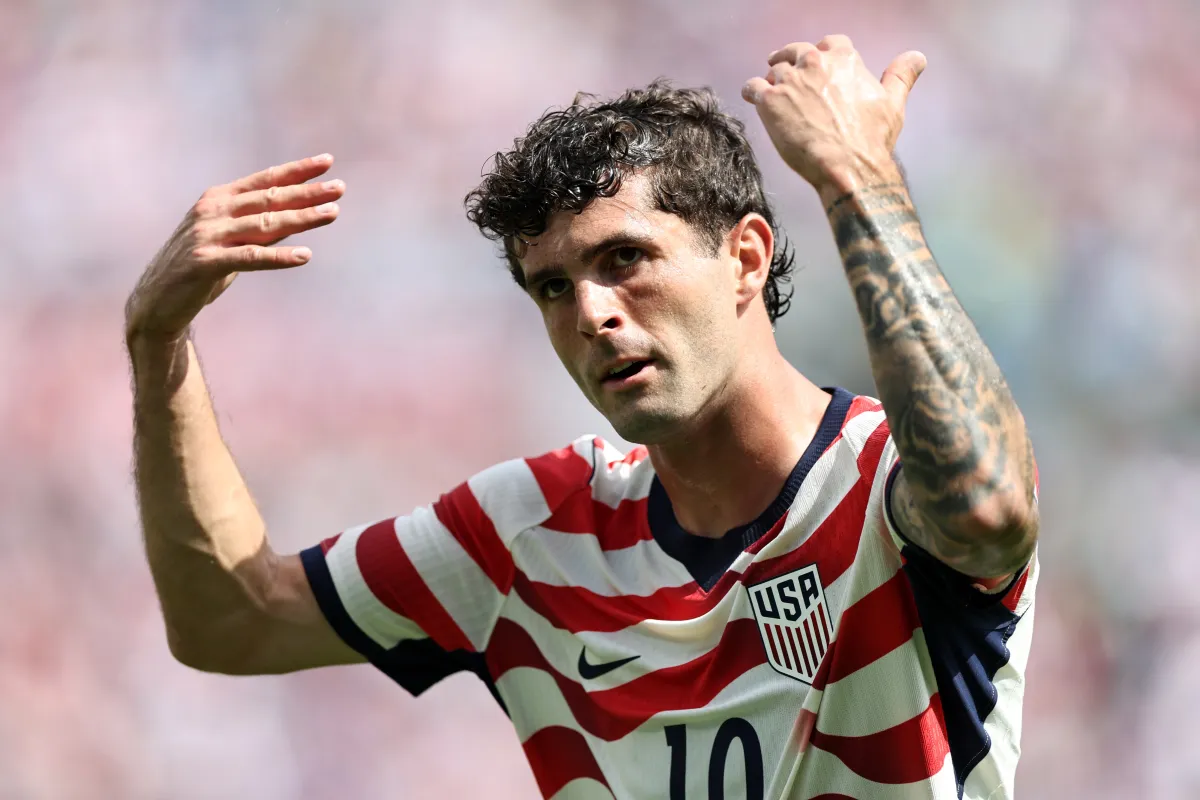
Yet, despite Bosnia’s organizational discipline, the athletic dominance and depth of the USMNT present a formidable tactical mismatch, especially with the return of their talismanic leader, Christian Pulisic. The dynamic winger, widely regarded as the creative heartbeat and emotional captain of this energetic generation, is expected to be fully fit and back in the starting lineup after resting his weary muscles during the Turkey match. Pulisic’s presence completely transforms the dynamics of the American attack, injecting an elite level of dribbling, vision, and big-game intelligence that forces opposing defenses to shift and double-team, thereby opening up vital pockets of space for secondary stars like Folarin Balogun and Timothy Weah. When Pulisic is orchestrating the offense, the U.S. plays with a relentless, high-pressing tempo that can easily overwhelm older, slower defensive units like Bosnia’s, which struggled mightily against the pace of Switzerland in the group stage. Moreover, the young American squad boasts incredible tactical versatility, allowing them to shift fluidly between a dominant possessional style and a lethal, lightning-fast counter-attack depending on how the match unfolds. Under the bright lights of a knockout game, this physical superiority to win second balls, dominate transition play, and maintain a high-energy press for a full ninety minutes could prove to be the deciding factor that wears down a brave but fatigued Bosnian defense. The American coaching staff has undoubtedly spent hours studying film from Bosnia’s heavy defeat to Switzerland, identifying structural flaws in the Dragons’ backline when stretched wide. By utilizing overlapping fullbacks and rapid ball movement, the U.S. will aim to isolate Bosnia’s central defenders in one-on-one situations where their lack of foot speed can be ruthlessly exposed. Furthermore, the depth of the American bench ensures that the coaching staff has a variety of tactical cards to play, whether they need to inject fresh legs to preserve a lead or introduce creative playmakers late.
All of this tactical analysis and national anticipation will finally converge on Wednesday, July 1st, at 8:00 p.m. Eastern Time, when these two nations collide under the majestic arches of Levi’s Stadium in Santa Clara, California. Situated in the heart of Northern California’s tech valley, Levi’s Stadium is set to become an absolute cauldron of noise, color, and collective human emotion as tens of thousands of fans drape themselves in red, white, and blue. The Bay Area, with its rich cultural diversity and deep love for the beautiful game, provides the perfect cinematic backdrop for a match of this historic magnitude, ensuring a sell-out crowd that will create an intimidating atmosphere for the visiting Bosnians. For decades, American soccer pioneers and passionate supporters have dreamed of a moment exactly like this: a do-or-die World Cup knockout match hosted on home soil, with a young, exciting squad capable of capturing the imagination of the entire country. This represents a massive cultural milestone, signaling that soccer has officially transcended its history as a niche sport to become a major, unifying national passion. From coast to coast, sports bars will be packed, viewing parties will be organized, and millions of families will gather around their television screens, united by a shared hope that this group of players can guide the country into uncharted sporting territory. The stadium itself will also play host to a significant and vocal contingent of Bosnian-American fans, who have traveled to witness their homeland’s historic achievement, adding a beautiful layer of cultural intensity to the stands. The air will be thick with the aroma of diverse culinary tailgates, the echoes of rhythmic drumming, and unique displays of national pride, illustrating the power of the World Cup to turn a modern sporting arena into a rich tapestry of human stories and local passion.
As the minutes tick down toward kickoff, it becomes increasingly clear that the USMNT’s journey in this World Cup has brought them to a pivotal, defining crossroads where the lessons of the past must be put to immediate use. The minor setback against Turkey, far from being a devastating blow to their aspirations, should instead be viewed as a necessary, humanizing chapter in their development—a brief moment of vulnerability that stripped away any lingering illusions of invincibility and replaced them with a sharp, disciplined focus. To achieve greatness on the world stage, a team must not only know how to win beautifully, but also how to absorb a punch, learn from their mistakes, and respond with a ruthless, calculated efficiency when the stakes are at their absolute highest. Standing in their way is a proud, battle-tested Bosnian team that has absolutely nothing to lose and everything to gain, a squad that will fight with every ounce of their collective being to extend their fairytale tournament run. But this young American team, backed by a passionate nation, fueled by tactical preparation, and led by a rejuvenated Christian Pulisic, seems uniquely prepared to rise to the occasion and prove that they belong among the elite of global soccer. When the referee blows the whistle to start the match on Wednesday night, it will not just be about executing a game plan or securing a place in the Round of 16; it will be about a young nation asserting its soccer identity on the grandest stage of all, showing the world that American soccer has finally arrived, and that the best is still yet to come. For the players who grew up watching previous generations struggle for respect, this match is the culmination of personal sacrifices, tireless youth academy matches, and a shared dream of putting American soccer on the map once and for all.