






For millions of travelers, America’s national parks are far more than postcard-perfect vistas and rugged hiking trails; they are the nation’s great outdoor classrooms, where the complex, messy, and deeply moving stories of the American experiment are preserved in the very soil where they unfolded. Yet, a quiet ideological battleground emerged within these sacred public spaces following the March 2025 executive order, “Restoring Truth and Sanity to American History,” signed by President Donald Trump. In an effort to counter what the administration characterized as a “revisionist movement” painting the United States as “inherently racist, sexist, oppressive, or otherwise irredeemably flawed,” federal officials systematically dismantled, altered, or outright removed numerous interpretive signs, educational plaques, and historical exhibitions. For park rangers, local historians, and families visiting these sites, the sudden disappearance of these markers was deeply jarring, transforming places of shared learning into sterile land-milieus stripped of their human context and leaving behind empty pedestals where difficult, essential conversations once thrived.
This policy of systematic erasure was met with swift resistance from those who have dedicated their lives to preserving the integrity of American heritage, culminating in a landmark legal battle that defended the preservation of objective truth. A coalition of preservationists, history advocates, and park groups—including the National Parks Conservation Association and the Association of National Park Rangers—filed a lawsuit arguing that the administration was actively rewriting history by replacing rigorous scholarship with a sanitized, highly selective mythology. On Friday, U.S. District Judge Angel Kelley issued a preliminary injunction, siding with the advocates and delivering a scathing critique of the administration’s actions. In her written decision, Judge Kelley asserted that the government’s attempt to restore “dignity” was instead an effort to “rewrite the Nation’s history with a white-out pen,” warning that a country’s story cannot be faithfully told if it deliberately excludes the struggles and contributions of marginalized communities. To ensure the country confronts its full legacy, Kelley ordered the immediate restoration of all removed historical and scientific displays by July 4, aligning the recovery of these narratives with the nation’s upcoming 250th anniversary.
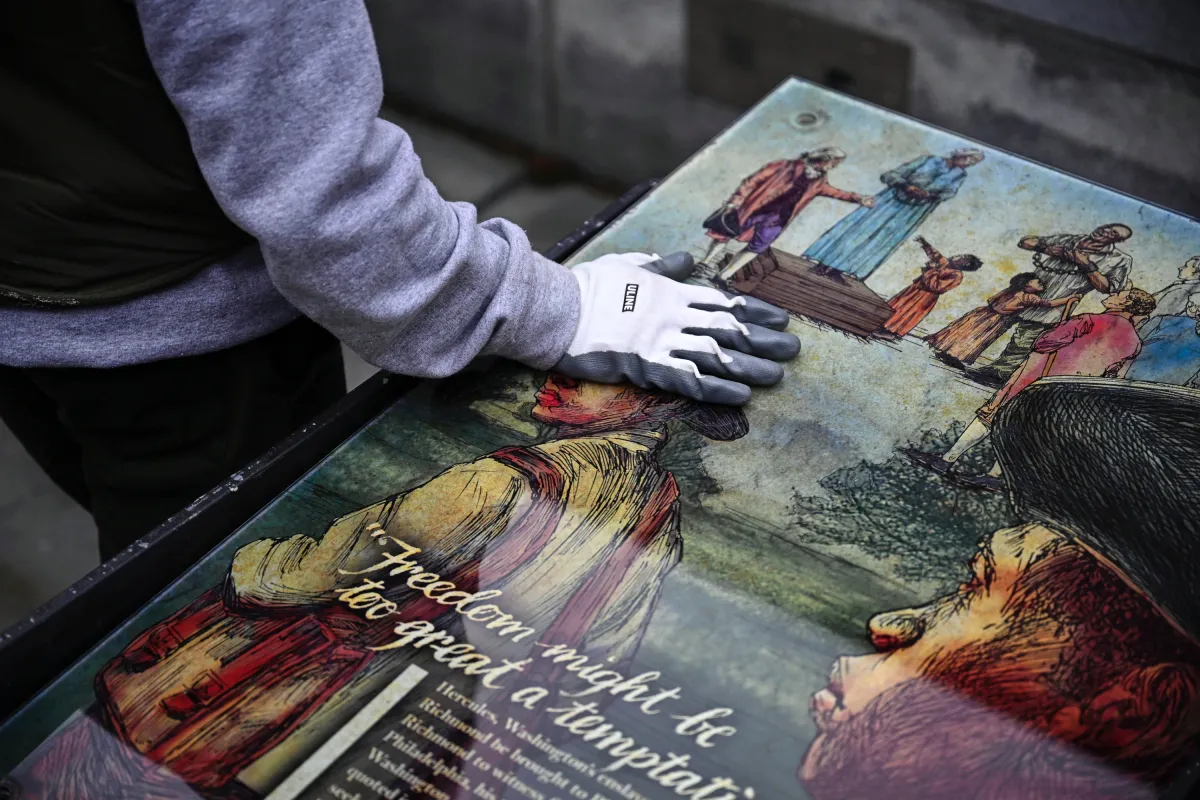
The human cost of this historical sanitization was perhaps felt most acutely at the President’s House in Philadelphia, Pennsylvania, a site dedicated to exposing the profound paradox of freedom and bondage at the nation’s birth. Here, steps from where the Declaration of Independence was debated, stood exhibits detailing the lived experiences of the enslaved individuals who worked and lived under George Washington’s roof. By removing these poignant displays, the administration effectively silenced the memories of people like Oney Judge and Hercules, whose struggles for self-determination are intricately woven into the foundation of the American story. Similarly, at the historic Bunker Hill Monument in Massachusetts, officials prepared to strip away panels linking the early struggles of the Revolutionary War to subsequent generations of civil rights activism, immigration reform, and women’s suffrage. Preventing visitors from seeing how the initial spark of liberty ignited these later movements disconnected the past from the present, robbing modern citizens of the opportunity to see their own ancestor’s fights for equality as a direct continuation of the American founding.
The administration’s push to clean up historical narratives also targeted displays designed to highlight systemic exclusion, such as the interpretive sign at the Francis G. Newlands Memorial Fountain in Washington, D.C. Installed in 2022 after years of advocacy by local communities, this panel provided essential historical context regarding Senator Newlands’ aggressive promotion of white supremacy and his historical efforts to disenfranchise Black citizens and restrict non-white immigration. By removing this sign, the National Park Service sought to obscure the darker aspects of Newlands’ legacy, turning a blind eye to the historical realities that continue to shape the social and physical architecture of the nation’s capital. For local residents and educators, the preservation of this sign was not about inciting division, but about fostering honest civic dialogue and recognizing the courage of those who fought against Newlands’ discriminatory vision. Removing such markers minimizes the historic struggles of marginalized communities, suggesting that their pain and progress are merely footnotes to be discarded when they complicate a idealized narrative of national unity.
Beyond the realm of social and political history, the administration’s purge extended into the natural sciences, silencing critical educational displays on climate change at several prominent federal sites. Throughout the park system, interpretive boards explaining the accelerating impacts of a warming planet on glaciers, fragile ecosystems, and rising sea levels were quietly altered or removed. This censorship directly undermined the efforts of park scientists and field researchers, whose daily work involves documenting the real-time degradation of our natural heritage and translating complex data for the general public. To strip away these signs is to leave visitors in the dark as they bear witness to dying forests, receding coastlines, and shrinking snowcaps, disconnecting the physical reality of the landscape from its scientific cause. It represents a profound disservice to the millions of visitors who look to national parks not only for recreation, but to understand our collective responsibility as stewards of a changing Earth.
Unsurprisingly, the federal court’s mandate was met with immediate, fierce pushback from the Department of the Interior, which dismissed Judge Kelley as a “liberal activist” and defiantly shifted the focus toward patriotic showmanship, pointing to the upcoming “UFC Freedom 250” celebration on the White House South Lawn. However, the legal victory remains a powerful testament to the idea that true patriotism does not require a sanitized history, but rather the courage to look at our scars, our failures, and our triumphs through an unfiltered lens. By compelling the government to re-install these signs by the historic milestone of July 4, the ruling ensures that the millions of citizens celebrating the country’s 250th anniversary will be met with a rich, complex, and honest telling of the American journey. Ultimately, the restoration of these exhibits proves that the preservation of memory is an ongoing act of democracy, demonstrating that a mature, resilient nation is one that honors the full, diverse tapestry of its people, ensuring that no voice is hidden from the public lands we all share.