


It was early on a Sunday morning, and the Reflecting Pool in front of the Lincoln Memorial lay still under a pale Washington sky. On any other day, it might be just another tourist snapshot—a long, shimmering mirror stretching toward the great marble statue of Abraham Lincoln. But this was September 11, the twenty-fifth anniversary of the attacks that changed the country. It was a day for remembrance, for solemn names read aloud, for grief that never quite fades. Instead, the nation got a different kind of fight: President Donald Trump, the Department of the Interior, and The New York Times, all tangled up over what, exactly, went wrong with that pool. It sounds almost small, almost absurd, to argue about masonry and liner coatings on a morning set aside for remembering something so profound. But that’s where we found ourselves—watching a political firestorm erupt over a landmark that is supposed to represent what we hold together, not what tears us apart.
The trouble began when The New York Times published a story timed to the anniversary of 9/11, looking into why the Reflecting Pool—after a massive, celebrated renovation costing tens of millions of dollars—was already showing signs of damage. The paper cited contractor documents from a company called Atlantic Industrial Coatings, which had been brought in to try to fix things. Those documents painted an unflattering picture: workers had not applied enough primer in some areas. They had used layers of lining material that were chemically incompatible with each other. The result was bubbling, peeling, and cracking, the kind of decay that makes a newly restored national treasure suddenly look old and neglected again. The report was detailed, technical, and, if true, damning—not to the vandals or protesters who had previously been blamed for the damage, but to the very people who were supposed to have renovated the pool properly in the first place. It was a story about contractors, construction oversight, and bureaucratic failure, arriving on a morning when most Americans were thinking about tragedy, heroism, and the fragile nature of life.
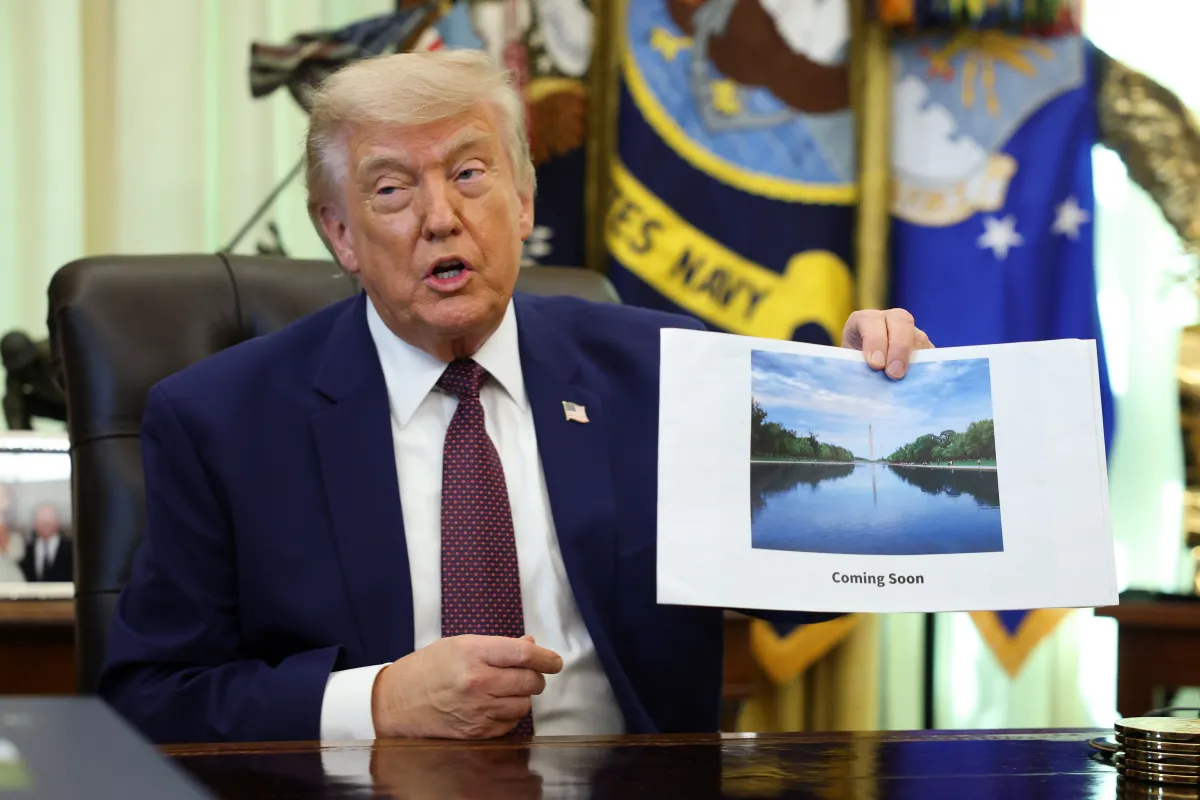
The White House did not take kindly to that timing. Early Sunday, President Trump amplified a post from the U.S. Department of the Interior on Truth Social, accusing the Times of spending its time and resources analyzing the Reflecting Pool on the anniversary of 9/11 while ignoring what the department described as “significant vandalism” at the site. The message was sharp, pointed, and unmistakably political: How dare you focus on construction documents when there are broken monuments, scrawled graffiti, and damaged stone? It was a classic Trump move—turn the spotlight back on the messenger, question their motives, and cast the media as disrespectful or distracted. But the vandalism story itself has a tangled history. Federal authorities had indeed pursued allegations against individuals accused of damaging the pool. One notable case involved David Hearn, a former Olympic swimmer who faced charges related to the damage. But the Justice Department later dropped that case, reportedly after acknowledging that the damage was not caused by vandalism at all, but by flawed renovation work. That admission complicated the narrative that this was all the work of bad actors, and it gave the Times story a factual foundation that the administration was unwilling to accept.
So what are we to make of this strange collision of remembrance, journalism, and politics? On one level, it’s a very human story about accountability. We all know what it’s like to break something, blame someone else, and then have the truth come out. The Reflecting Pool is just concrete and water, but it is also a symbol. It sits at the feet of Lincoln, the president who held a divided nation together and paid for it with his life. To see that pool scarred and peeling is to see a piece of our national inheritance treated carelessly. The question of who caused the damage—was it a protester with paint, or a contractor with bad primer?—is not really a question about materials. It’s a question about responsibility. Do we own up to our mistakes, or do we look for a scapegoat? Do we take the time to fix what’s broken, or do we spend our energy defending ourselves and attacking those who point out the cracks? In that way, the fight over the Reflecting Pool is a small mirror of something much larger: our politics, our media, and our willingness to face uncomfortable truths.
There is also something deeply human about our relationship to monuments. We build them because we want to be remembered, because we want to pass on something solid and lasting to our children and grandchildren. When a monument crumbles—whether from age, weather, vandalism, or shoddy construction—it feels like a warning. It whispers that even our best efforts can fail, that time comes for everything, that memory itself is fragile. Perhaps that’s why the timing of the Times story stung so much. On the 25th anniversary of 9/11, we were already thinking about loss and impermanence. We were remembering towers that fell in an hour, a field in Pennsylvania, a Pentagon wall that took a terrible blow. And then the newspaper decides to run a piece about a federally funded renovation that went wrong. It felt, to some, like poking at symptoms of decay precisely when the country wanted to feel strong. But to others, it felt like the press doing its job—asking tough questions, demanding that those in power own their failures, and reminding us that the physical things we cherish require both honest upkeep and honest accounting.
In the end, this is still a developing story. Newsweek reached out to the White House for comment, and no immediate answer came back. It is possible that more details will emerge, that the contractor reports will be disputed, that the administration will offer its own evidence, that the public will decide whom to believe. What is more certain is that the pool will need real repairs, and the speeches will eventually fade. The stones will stay. The water will ripple. And the memory of September 11 will keep its place in the American heart, no matter what gets posted online or printed in the morning paper. Maybe that’s the human thing to remember here: we are all flawed builders, all imperfect caretakers. We make mistakes, we point fingers, we sometimes fight over the same muddy ground. But we also have the capacity to step back, look at the reflection in the water, and ask ourselves what we really want to leave behind. A monument is not just marble and grout. It is a promise. And keeping that promise means telling the truth—even when the truth is uncomfortable, even when it arrives on the most solemn of days, even when it would be easier to just look away.