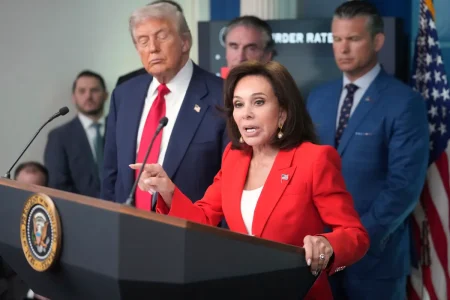



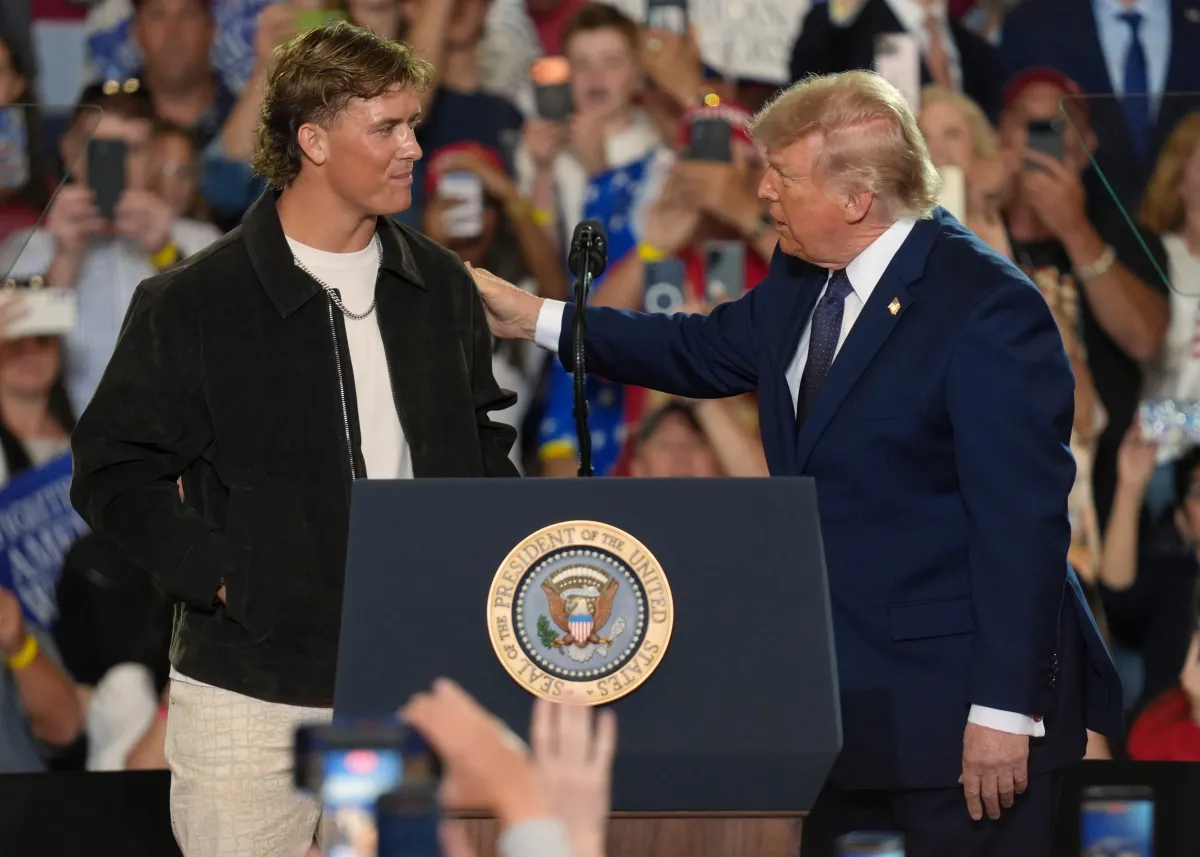
In an era where the boundary between the athletic field and the political arena has all but dissolved, a single moment can ignite a national conversation, transforming teammates into sparring partners under the harsh glare of public scrutiny. This reality was vividly illustrated when Jaxson Dart, the twenty-three-year-old starting quarterback for the New York Giants, stepped onto a stage on May 22 to introduce former President Donald Trump at a highly publicized political rally. The event, held in support of Representative Mike Lawler—a New York Republican engaged in a fiercely competitive primary race—instantly sent shockwaves through both the sports world and social media. As Dart stood at the podium and led the cheering crowd in a spirited chant of “Go Big Blue,” the traditional battle cry of the Giants franchise, he did more than just break the silence on his personal beliefs; he unintentionally lit a fuse within his own locker room. Almost immediately, fellow teammate and Giants linebacker Abdul Carter reacted to the footage online, letting his disbelief slip through in a raw, since-deleted post on X that questioned whether the video was a product of artificial intelligence, asking, “thought this s*** was AI, what we doing man.” Though the digital footprint was quickly swept away, the spark had already caught fire, unleashing an intense, inescapable wave of online speculation, fan debates, and media narratives that threatened to split the franchise along political lines.
The situation escalated dramatically from a localized locker room disagreement into a high-stakes cultural flashpoint when the former president himself chose to weigh in, amplifying the discourse to his millions of followers. Utilizing his platform, Truth Social, Trump shared a photograph of Dart and his girlfriend, accompanied by a characteristically fiery message aimed at shielding the young quarterback from the mounting public backlash. In his post, the president lauded Dart as a genuine “winner,” while simultaneously dismissing his critics as “Radical Left Lunatics” and “LOSERS” who were simply consumed by jealousy over the young athlete’s sudden political spotlight. This digital defense was further bolstered during a Fox News interview with his daughter-in-law, Lara Trump, wherein the former president openly praised Dart’s physical appearance, labeling him a “beautiful” and “handsome guy,” and revealed a private moment from their interaction where the player reportedly expressed affection for him. By highlighting that Dart’s jersey sales had skyrocketed to the number one spot amidst the controversy, Trump attempted to frame the entire episode as a resounding victory achieved by the sheer volume of his supportive MAGA base. This overt politicization of Dart’s gesture transformed a personal choice into a symbolic battle line, leaving the young quarterback to navigate the complicated aftermath of being championed by one of the most polarizing figures in modern history.
Faced with an escalating media storm, Jaxson Dart chose to step forward on the following Friday, offering a deeply personal and reflective look into the motivations behind his decision to take the stage. Standing before a room packed with reporters, the twenty-three-year-old sought to humanize a moment that many had viewed through a purely partisan lens, explaining that his participation was born out of a profound, non-partisan respect for the office of the presidency. For Dart, the opportunity to introduce a former president was rooted in his family’s long history of public and military service, pointing proudly to his retired Air Force uncles and a great-grandfather who once served as the Secretary of the United States Treasury. He explained to the media that his upbringing had instilled in him a deep love for his country and an enduring respect for its democratic institutions, regardless of which political party occupied the White House. Crucially, Dart sought to reassure his teammates and fans alike that his political actions did not diminish his devotion to the diverse brotherhood inside the Giants organization. He spoke of his profound affection for his teammates, emphasizing that their bond existed entirely outside the boundaries of political affiliation or religious doctrine, and confidently asserted that the men he worked with every day understood his true character far better than any social media commentator ever could.
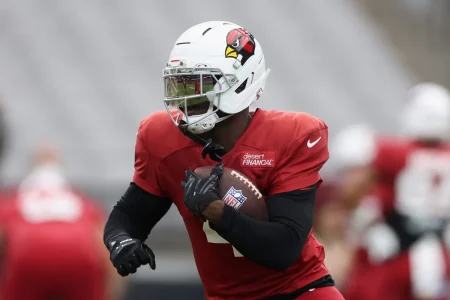
While Dart’s explanation highlighted his personal intent, linebacker Abdul Carter’s public response underscored the profound sense of social responsibility felt by many modern athletes who refuse to let political alignments pass without comment. Speaking to the press on the very same day, Carter delivered a mature, composed statement that transcended the typical “team-first” platitudes, asserting that certain issues are simply larger and more significant than the game of football. He pointed out that as the starting quarterback and the face of the franchise, Dart’s public partnerships carry immense weight, meaning his choices inevitably represent not just himself, but every individual who wears the Giants uniform. For Carter, staying silent in the face of Dart’s alignment with Trump would have been a disservice to his own deeply held personal convictions and the communities he represents. Yet, what could have easily devolved into a bitter, media-fueled feud was instead resolved through mature, face-to-face communication, as Carter revealed that the two had already spoken privately “as men” to clear the air. By stating that he did not desire an apology from Dart, but rather demanded the same right to stand firmly by his own beliefs without rancor, Carter set a powerful example of mutual respect, a sentiment that was visually cemented when images of the two players smiling and embracing after the press conference began circulating online.
This mature resolution was not a stroke of luck, but rather the hard-won result of a deliberate, organization-wide effort to address the controversy head-on rather than swept under the rug. In the days leading up to the public statements, the Giants locker room had been the subject of widespread speculation, with commentators predicting a deep and irreparable division among the players, prompting offensive tackle Jermaine Eluemunor to post a reassuring message online urging fans to ignore the dramatic narratives and focus on the upcoming game. To ensure this focus was reality, the team convened a mandatory, closed-door meeting to discuss the situation openly, a move that was highly praised by Giants head coach John Harbaugh. Drawing on his own experiences with high-level politics, including his team’s historic visit to the White House back in 2025, Harbaugh expressed a profound sense of gratitude for the uncomfortable situation, arguing that the controversy had actually served to make the team stronger. Rather than issuing top-down mandates or attempting to silence his players, Harbaugh embraced the friction, choosing to confront the elephant in the room directly so that his players could talk through their differences, find a common understanding, and ultimately channel that energy back into three incredibly productive days of practice.
Ultimately, the story of Jaxson Dart, Abdul Carter, and the New York Giants serves as a compelling microcosm of the broader struggles facing a highly polarized American society. In a world where public figures are routinely pressured to conform to rigid ideological camps, and where minor disagreements are weaponized to generate outrage and division, this group of professional athletes managed to chart a remarkably different course. They demonstrated that a diverse community, comprised of individuals from vastly different racial, cultural, and political backgrounds, does not need to achieve ideological uniformity to maintain a functional, caring brotherhood. By choosing direct, honest conversation over anonymous online sniping, and by prioritizing their shared humanity and mutual respect over political tribalism, Dart and Carter provided a rare and hopeful blueprint for how to navigate disagreement in the modern age. As the focus of the franchise inevitably shifts back to the football field, the enduring legacy of this episode will not be the political rally or the tweets that followed, but the powerful photograph of a quarterback and a linebacker hugging on the practice field—a quiet, triumphant reminder that empathy and communication can still bridge the deepest of cultural divides.