






The landscape of the NBA is a relentless theater of high-stakes gambling, where the line between absolute genius and catastrophic failure is often razor-thin. Last week, the Minnesota Timberwolves decided to leap headfirst into this volatile arena by executing a truly massive blockbuster trade, sending shockwaves across the entire basketball universe. In an aggressive bid to reshape their long-term identity, Minnesota acquired former All-Star point guard LaMelo Ball and dynamic wing defender Josh Green from the Charlotte Hornets. The acquisition did not come cheap; to secure these assets, the Timberwolves had to surrender Naz Reid, their beloved and incredibly productive big man, alongside a king’s ransom of future draft assets: an unprotected 2033 first-round draft pick, three separate first-round pick swaps, and a trio of second-round selections. On paper, the immediate storyline is nothing short of intoxicating. Anthony Edwards and LaMelo Ball, selected first and third respectively in the pandemic-altered 2020 NBA Draft, are now united in the same backcourt, forming one of the most explosive, charismatic, and must-watch pairings in modern sports history. The sheer aesthetic beauty of this tandem is enough to make any basketball purist salivate: Edwards’ thunderous, downhill athleticism and infectious competitive fire blended with Ball’s audacious vision, elite playmaking flair, and deep perimeter shooting coverage. This trade instantly shifts the Timberwolves from a physical, grinding defensive unit into a high-octane, transition-heavy offensive juggernaut capable of lighting up scoreboard monitors on any given evening. For a franchise that has historical roots in heartbreak and missed opportunities, trading for a star of LaMelo’s magnitude alongside their homegrown superstar is a statement of intent, signaling to the rest of the league that Minnesota is no longer content with slow, incremental growth and is instead aiming straight for absolute basketball supremacy, hoping to capture the hearts of the fanbase and a historic title.
However, beneath the initial wave of intense euphoria and the dazzling highlights of their newly formed superstar backcourt lies a pressing, deeply concerning reality regarding the team’s structural balance. To construct this perimeter powerhouse, Minnesota’s front office was forced to hollow out the very foundation of what made them a formidable contender in the Western Conference. The departure of Naz Reid, who rose from an undrafted project to the reigning NBA Sixth Man of the Year whose unique combination of emotional grit, floor spacing, and interior strength endeared him to the local community, is a devastating blow that leaves a massive hole in the hearts of fans and the team’s rotation alike. This loss becomes even more alarming when viewed in tandem with the team’s preceding transaction. Only days prior, in a desperate bid to shed active salary and navigate the highly punitive penalties of the league’s luxury tax aprons, the Timberwolves traded away Julius Randle to the Brooklyn Nets in a complex three-team deal, a move that left many analysts wondering if the team was prioritizing fiscal health over competitive longevity. When you add up the immediate fallout of these consecutive moves, Minnesota has voluntarily discarded two highly skilled, 6-foot-9 frontcourt players who were responsible for nearly 60 combined minutes of physical, versatile basketball every single night. This sudden roster purge leaves Rudy Gobert, the multi-time Defensive Player of the Year, as the lone remaining big man on the roster who played any meaningful or substantial role for the team during their historic playoff run last year. The comfortable, imposing depth chart that once allowed the Timberwolves to physically wear down their opponents throughout the grueling season has been thoroughly dismantled, leaving Gobert to shoulder an immense, unsustainable physical burden and exposing a massive vulnerability in physical matchups.
This lack of physical size is not merely a minor, academic flaw that can be papered over with clever coaching; it is a glaring systemic vulnerability that paints a massive target on Minnesota’s back in a ruthless Western Conference. To understand why this frontcourt vacuum is so incredibly dangerous, one only has to look at the caliber of elite, transcendent talents that dominate the conference landscape. Any team with genuine championship aspirations must construct a roster capable of matching up with Denver’s Nikola Jokic, a three-time MVP, physical brute, and passing visionary who routinely dismantles defenses that lack multiple physical bodies to throw at him. They must also prepare for the unique, physics-defying challenges presented by San Antonio’s Victor Wembanyama, a towering force whose blend of sheer length, shot-blocking prowess, and perimeter shooting is rapidly reshaping the tactical landscape of modern basketball. Furthermore, the rising powerhouse that is the Oklahoma City Thunder features Chet Holmgren, a highly skilled, razor-sharp young big man who spaces the floor and serves as an elite defensive anchor. In previous seasons, Minnesota’s primary defensive strategy against these elite interior forces relied on having multiple rotation bigs who could rotate, play physical defense, protect the rim, and absorb fouls to preserve Gobert’s stamina. Without the physical presence of Reid and Randle, the Timberwolves no longer possess the sheer bulk, defensive versatility, and overall depth required to execute these complex defensive game plans under head coach Chris Finch. They are suddenly left incredibly small and physically vulnerable, risking getting absolutely bullied in the paint and systematically picked apart over the course of a demanding, hyper-competitive seven-game playoff series where matching size and physical durability is the ultimate key to survival.
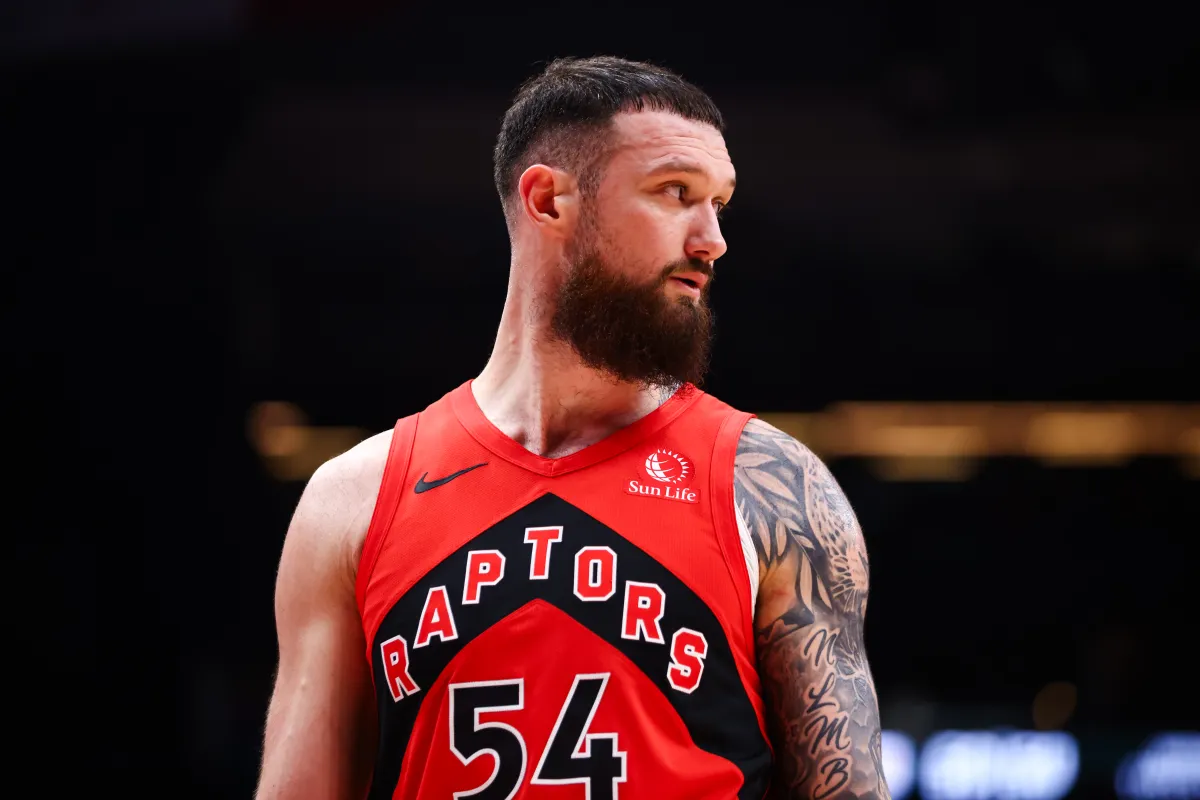
Faced with this brewing roster crisis, Minnesota must find creative, outside-the-box solutions to patch up their depleted frontcourt, and a highly intriguing candidate has emerged from north of the border. As astutely highlighted by Christian Clark of The Athletic, the Timberwolves would be incredibly wise to target Sandro Mamukelashvili, the Georgian-born big man who played his collegiate ball at Seton Hall and quietly put together a highly impressive, breakout season with the Toronto Raptors. Mamukelashvili signed a modest two-year, $5.26 million contract with Toronto last offseason—a transaction that occurred completely under the radar of national media outlets as he joined a rebuilding franchise that struggled to capture the public’s attention. Yet, despite the lack of spotlight, he quickly transformed himself into one of the most efficient, reliable, and hard-working bench pieces in the entire league, displaying a style of play that screams modern utility and tireless work ethic. The beauty of Mamukelashvili’s journey is rooted in his resilience, quiet professionalism, and relentless underdog spirit; he did not complain about his limited national exposure or his bench role, instead focusing on perfecting his unique, versatile game and making the absolute most of every opportunity given to him by the coaching staff. If he decides to decline his player option of $2.8 million for the upcoming season, he will enter unrestricted free agency, presenting the Timberwolves with a golden opportunity to acquire a high-IQ, physically capable player who can seamlessly step into the void left by their recent departures. He represents the ultimate market inefficiency—an incredibly talented basketball player who possesses the exact, modern skill set Minnesota desperately needs, available at a price point that fits cleanly within their tightly constrained financial ledger, making him an exceptionally attractive target.
An in-depth look at Mamukelashvili’s statistical profile reveals a player whose diverse skill set matches up perfectly with the various sports-centric tactical roles previously filled by Randle and Reid. Last season in Toronto, he averaged a career-high 11.2 points, 4.9 rebounds, 1.9 assists, and 0.8 steals in just under 22 minutes of action per night, while shooting a highly efficient 52.3% from the floor and 38.9% from behind the three-point arc. Even more impressive was his ability to scale up his production when thrust into a starting role; in the 13 games he started, those averages rose to a stellar 15.9 points, 6.2 rebounds, 2.9 assists, and 1.3 steals in 30.7 minutes of play, while his long-range shooting skyrocketed to a blistering 41.4% on 5.4 attempts per contest. He run the floors like a wing player, possesses soft hands around the rim, and displays a beautiful shooting stroke from deep. He is far more than a simple, stationary catch-and-shoot threat; he is a highly mobile, dynamic playmaker who can attack defenders off the bounce, moving with a rare fluid coordination and deceptive speed for a player of his size. His elite off-ball cutting and highly intelligent, unselfish passing makes him a natural team facilitator who can keep the offensive flow humming smoothly even when playmakers like Edwards and Ball are resting or drawing heavy defensive double-teams on the perimeter. Placing him next to Rudy Gobert in the frontcourt would give the Timberwolves a highly versatile, complementary pairing that perfectly balances the interior defense with perimeter spacing, allowing Gobert to focus entirely on dominating the rolling lanes and anchoring the rim while Mamukelashvili stretches opposing defenses to the breaking point with his shooting and clever movement, laying the foundation for a brilliant, modern five-out basketball system.
From a financial and long-term organizational perspective, executing a pursuit of Mamukelashvili is not only highly realistic but incredibly logical for a front office managing a heavy luxury-tax bill. Should he choose to decline his player option and seek a new professional home on the open market, Minnesota can strategically leverage their taxpayer mid-level exception—projected to sit at approximately $15 million for the 2026-27 season—to offer him a highly competitive deal that perfectly aligns with his current market value. Securing a highly productive, hyper-efficient stretch big for this amount would represent an absolute heist under the strict financial constraints associated with the first- and second-tax aprons of the new collective bargaining agreement, which have frozen many contenders in their tracks, allowing the front office to solve their critical frontcourt depth issues without forcing them to sacrifice any more future draft capital. This move would fundamentally flip the script on Minnesota’s summer, transforming the LaMelo Ball transaction from an incredibly risky, top-heavy roll of the dice into a beautifully balanced masterclass in modern, forward-thinking franchise construction. Success in the modern NBA is not built solely on the shoulders of superstar talent; it is solidified by securing the correct, highly functional role players who can amplify their superstars’ strengths while seamlessly covering up systemic depth weaknesses on a nightly basis. By pairing the explosive, jaw-dropping talent of Edwards and Ball with the cerebral, floor-spacing versatility of Sandro Mamukelashvili, the Timberwolves can successfully construct a deep, balanced, and incredibly dangerous roster that is built to survive the grueling physical challenges of the Western Conference, capture the imagination of the Twin Cities, and push them over the top into championship glory.