



The journey through the group stage of an international tournament is always a tightrope walk of emotions, and for the United States Men’s National Team, the culmination of Group D in the 2026 World Cup provided a dizzying mix of triumph and tribulation. On paper, the primary mission was accomplished with flying colors: the Americans secured their passage into the highly anticipated Round of 32 as the outright winners of their group, a feat that deserves immense celebration given the historic pressure of playing a tournament of this magnitude on home soil. Yet, soccer is a sport governed as much by psychological momentum as it is by mathematical standings, and the final whistle against Turkey left a decidedly bitter taste in the mouths of players and fans alike. With only seconds remaining on the clock, a momentary lapse in concentration allowed the Turkish side to snatch a dramatic equalizer, shattering the USA’s hopes of progressing with a pristine, unblemished record. It was a stark reminder of the cruel, unforgiving nature of top-tier international football, where a single heartbeat of complacency can instantly unravel ninety minutes of disciplined, hard work. The atmosphere inside the stadium shifted in an instant from celebratory anticipation to stunned silence, leaving the squad to process a bittersweet reality. Yes, they had won the group and kept their championship dreams alive, but the late setback served as a cold splash of water to a team that had briefly felt invincible. As the tournament transition into the brutal, win-or-go-home knockout phase, this minor collapse must be analyzed not merely as a statistical hiccup, but as a critical psychological turning point. The margin for error has now evaporated entirely, and the emotional scars of conceding in the dying seconds of a match must be quickly healed if the Americans hope to survive the grueling challenges that lie ahead on their quest for global glory.
To fully understand the erratic nature of the performance against Turkey, one must analyze the calculated gamble made by the coaching staff, who opted to field an almost entirely rotated starting eleven. With qualification to the Round of 32 already virtually assured, the coaching staff viewed this final group stage match as a golden opportunity to rest their overworked superstars and thoroughly test the depth of the roster. Only the indefatigable midfield engine, Weston McKennie, retained his spot in the starting lineup to provide some semblance of defensive stability and veteran leadership on the pitch. Aside from McKennie’s familiar, high-energy presence, the team sheet was filled with reserve players hungry to prove they belonged on the grandest stage of them all. However, as the match unfolded, the glaring disparity between the USA’s “A-team” and its depth pieces became painfully obvious to everyone watching. When talismanic figures like Christian Pulisic and Malik Tillman were finally introduced in the final third of the game to inject creativity and urgency, the rescue mission was simply too little, too late. While a select few reserve players, most notably defender Auston Trusty, seized the moment and put in commendable, gritty shifts that justified their inclusion in the squad, the vast majority of the rotated lineup struggled heavily under the bright lights. They looked out of sync, lacking the telepathic chemistry and tactical discipline that the first-choice starters have spent years cultivating. This experimental outing exposed a worrying lack of dependable depth, sending a clear message to the coaching staff that while the top-tier talent of the American roster can compete with the best in the world, the drop-off in quality beyond the starting eleven remains a gaping vulnerability that elite opponents will ruthlessly exploit.
Among the individuals who failed to rise to the occasion, perhaps the most heartbreaking disappointment was the performance of Timothy Weah. To critique Weah is a painful exercise for anyone who has closely followed the trajectory of this national team, as he has been a beloved fixture and a symbol of the squad’s youthful revolution since making his highly anticipated international debut back in 2018. Weah has long been celebrated for his electric pace, his directness on the wing, and his uncanny ability to deliver crucial, clutch performances when the stakes are at their absolute highest. Yet, the version of Weah that trotted onto the pitch against Turkey looked like a shadow of his former self, displaying a performance that can only be categorized as an absolute nightmare. Rather than stretching the Turkish defense with his trademark penetrating runs, he struggled to complete basic dribbles, looked uncharacteristically sluggish as if running through wet cement, and consistently found himself caught in the offside trap during crucial counter-attacking transitions. Critics might argue that his struggles were exacerbated by being deployed on an unfamiliar side of the pitch, but in the relentless crucible of a World Cup campaign, such excuses carry very little weight. A World Cup is not a protracted domestic season where a player has months to find their rhythm; it is a rapid, high-pressure sprint where one bad night can send an entire nation packing. The coaching staff simply cannot afford to indulge in nostalgia or hope for a sudden return to form during the high-stakes knockout rounds, especially when there are far more in-form and sharp attacking alternatives ready to take his place on the pitch.
Equally alarming was the defensive meltdown orchestrated by some of the backline reserves, with Mark McKenzie emerging as a primary source of concern for the team’s structural integrity. While he was far from the only defender who struggled on Thursday night—Miles Robinson also endured a thoroughly miserable, error-strewn outing—the reality of the USA’s roster depth dictates a harsh, pragmatic hierarchy. Robinson, despite his poor form in this specific match, possesses a proven track record of athletic recovery and utility that makes him a necessary evil in a defensive unit that is already desperately thin on options. McKenzie, on the other hand, failed to offer any reassuring qualities to suggest he can be relied upon in tight, high-pressure situations against top-tier international attackers. Possessing an imposing physical frame that should theoretically allow him to dominate opposing forwards in aerial duels and physical half-spaces, McKenzie instead looked completely overwhelmed by the tactical intelligence and movement of the Turkish attack. He was repeatedly caught out of position, hesitated at crucial moments of decision-making, and looked visibly lost during each of the three goals that Turkey managed to put past the American defense. His lack of positional awareness and inability to organize the backline under duress exposed a structural weakness that could prove fatal in the upcoming knockout stages. Unless the United States finds itself in the comfortable position of holding an insurmountable five-goal lead, or suffers an unprecedented plague of injuries to their starting center-backs, McKenzie’s performance against Turkey should serve as a definitive signal that he must remain firmly rooted to the bench for the remainder of this tournament.
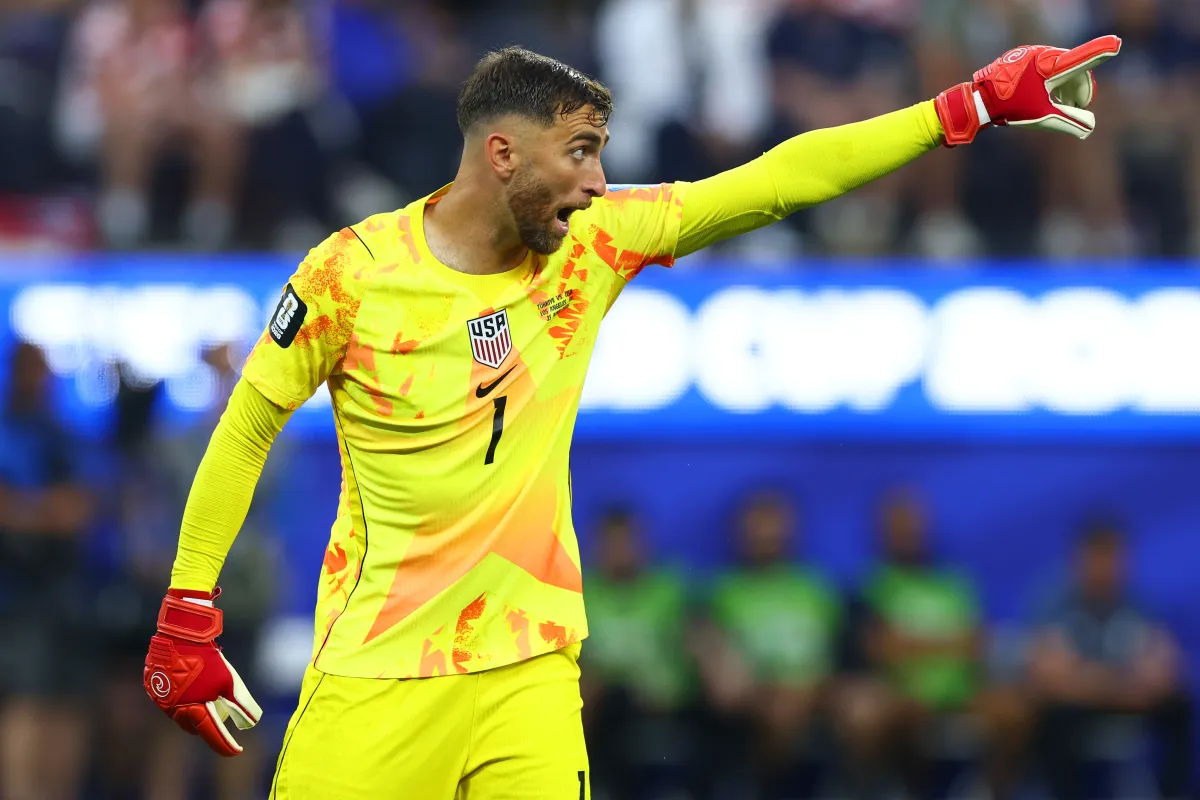
Perhaps the most complex and historically significant issue exposed during the match was the goalkeeper crisis, epitomized by the shaky performance of Matt Turner. For decades, the calling card of American soccer was its ability to consistently produce world-class goalkeepers—legends like Kasey Keller, Brad Friedel, and Tim Howard, who could single-handedly keep the US in matches against footballing giants through sheer athletic brilliance and vocal leadership. Today, the script has flipped completely: the USA boasts a vibrant, dynamic attack capable of breaking down elite defenses, but they lack a reassuring, steady presence between the goalposts. While it would be unfair to lay the blame for all three of Turkey’s goals solely at Turner’s feet, his overall demeanor throughout the game did little to inspire confidence in his teammates or the fans. He appeared visibly nervous when forced to play the ball with his feet, a crucial requirement in the modern game, and failed to project the commanding authority needed to organize a struggling backline. While fans will always hold deep gratitude for his heroic contributions during the 2022 World Cup in Qatar, sentimentality cannot dictate current tactical decisions in a tournament of this magnitude. This campaign represents a crucial turning point, and many believe the reins should be handed over to Matt Freese, who offers a fresh perspective and a higher developmental ceiling. Looking further ahead, the American federation must prioritize the development of a truly elite, world-class goalkeeper by the time the 2030 World Cup arrives, as the current vulnerability at the back threatens to completely derail the immense progress made by the team’s talented outfield players.
As the United States turns its focus away from the lessons of the group stage and begins preparing for a highly anticipated Round of 32 clash against Bosnia-Herzegovina in the Bay Area, the stakes could not be higher. This upcoming knockout match represents a clean slate, a chance to completely scrub away the lingering frustration of the Turkey draw and reassert their status as a legitimate force in this tournament. Playing in front of a passionate, partisan home crowd in California, the Americans will have the undeniable advantage of a localized, electric atmosphere, but they must pair this emotional energy with tactical discipline and ruthless execution. The experiment of resting players and evaluating depth is now officially over; the luxury of squad rotation has been replaced by the stark, uncompromising reality of single-elimination football. The coaching staff must return to their tried-and-true starting lineup, relying on the creative genius of Christian Pulisic, the defensive solidity of their primary center-backs, and the relentless work rate of Weston McKennie to dictate the tempo of the game from the opening whistle. Bosnia-Herzegovina will undoubtedly look at the tape of the Turkey match and try to exploit the defensive and goalkeeping frailties that were so glaringly exposed. It is up to the American team to prove that those flaws were merely the product of a temporary, heavily rotated lineup rather than a fundamental weakness in their overall system. The path forward is clear: the USA has the talent, the home-field advantage, and the motivation to make a deep tournament run, but they must perform with the collective focus and urgency of a true world-class contender if they hope to continue their historic journey on the global stage.