


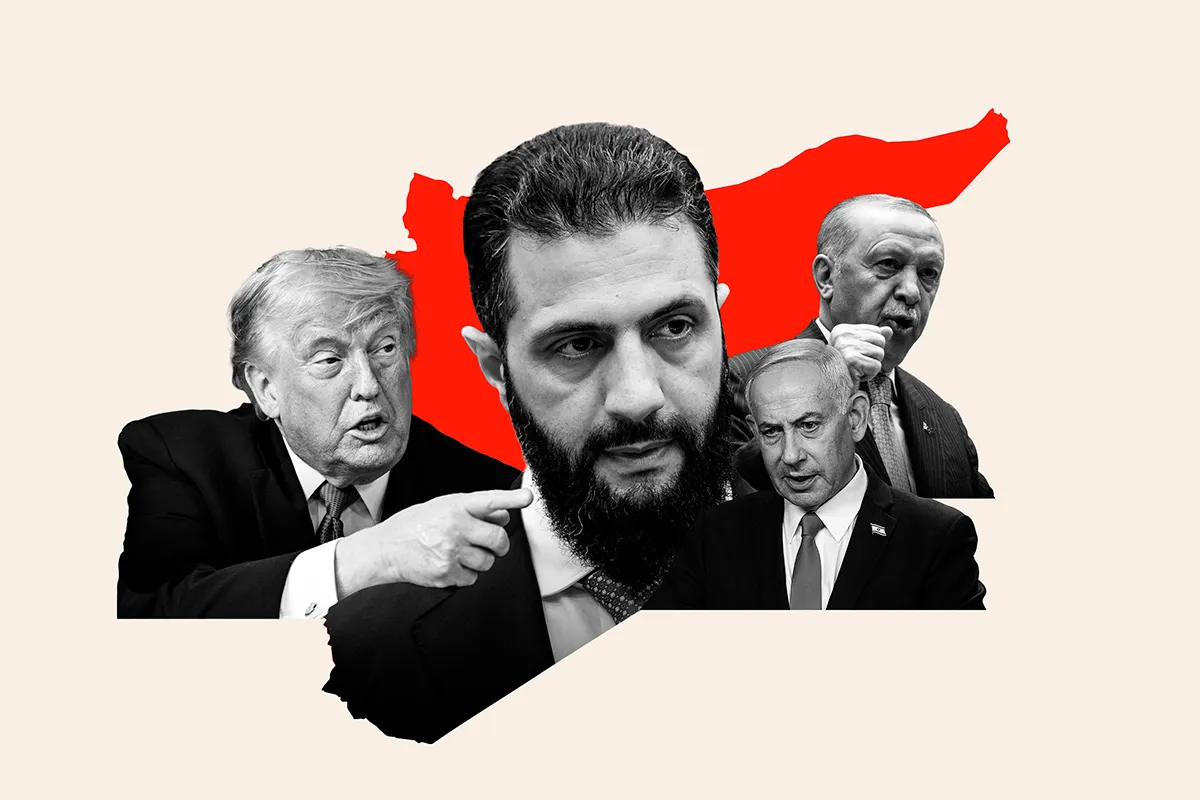
For more than a decade, the people of Syria endured a devastating crucible of violence, displacement, and profound loss, watching their ancient cities reduced to rubble under a brutal civil war that seemed to have no end. When the sudden and dramatic rebel offensive of December 2024 finally brought an end to the decades-long dynasty of the Iran-backed President Bashar al-Assad, a collective, heavy sigh of relief rippled through a war-weary population desperate for nothing more than quiet, stability, and the chance to rebuild their shattered lives. At the center of this monumental shift stood Ahmad al-Sharaa, a former militant once designated as a foreign terrorist by the United States, who has spent the months following his rise to power attempting a remarkable and deeply controversial political reinvention as a moderate, inclusive statesman. Yet, as Sharaa strives to keep his fragile nation from slipping back into chaos, he finds himself caught in an agonizing diplomatic tightrope walk, squeezed between a volatile new administration in Washington and the toxic, deepening rivalry of two of the Middle East’s most powerful actors, Turkey and Israel. The uneasy peace currently holding across the region following a recent U.S.-Iran memorandum of understanding has brought little comfort to Damascus, where the threat of being dragged back into the regional crossfire remains a terrifying reality for everyday citizens who have already sacrificed everything to survive. From the ruins of Aleppo to the quieted streets of Damascus, the human cost of this transition is palpable, as families try to parse whether this new era offers a genuine dawn of peace or merely the prelude to another devastating chapter of proxy warfare.
The most immediate threat to Syria’s fragile stability comes not from direct military confrontation at home, but from a bizarre and highly risky suggestion emanating from Washington. President Donald Trump, shifting sharply from decades of U.S. hostility toward Damascus, has taken a sudden liking to Sharaa, publicly praising him as a “very good leader” and even hosting him at the White House on multiple occasions. However, this newfound friendship carries a heavy and incredibly dangerous price tag: Trump has repeatedly suggested that Syria should be the entity to step into Lebanon to surgically dismantle Hezbollah—an armed group that Israel has struggled to decisively defeat despite months of highly destructive air campaigns. For Syrians, the idea of entering the Lebanese quagmire is met with sheer horror, recalling the deeply painful history of Syria’s heavy-handed military occupation of Lebanon from 1976 until the popular uprising of the 2005 Cedar Revolution. Lebanese-Syrian relations remain an incredibly raw nerve, further complicated by the millions of Syrian refugees who fled to Lebanon during the civil war, as well as the dark legacy of Hezbollah’s brutal military intervention against anti-Assad forces inside Syria itself. To thrust Syrian soldiers back across that border would not only risk reigniting a complex sectarian firestorm that could unite all Lebanese factions against Damascus, but would also divert critical resources away from Syria’s own desperately needed domestic recovery.
Faced with Trump’s erratic proposals, Sharaa has had to employ a masterclass in diplomatic evasion, delicately trying to decline the American president’s requests without alienating the one superpower that can keep his international legitimacy afloat. In recent public statements, Sharaa has carefully reframed Trump’s comments, suggesting that the United States is merely looking for a peaceful, diplomatic solution that strengthens the sovereign Lebanese state rather than demanding a physical Syrian military invasion. This rhetorical gymnastics highlights the immense pressure weighing on the young Syrian leadership, which simply cannot afford to lose the political and economic lifeline that Washington represents. As former Syrian diplomat Bassam Barabandi points out, the vast majority of Syrians harbor no love for Hezbollah, who acted as Assad’s brutal enforcers for years, but they also have absolutely no appetite to fight America’s or Israel’s battles at the cost of their own hard-won domestic peace. Sharaa is fully aware that making promises he cannot deliver to a transactional leader like Trump could prove fatal to his regime’s survival, forcing him to walk a razor-thin line between satisfying Washington’s regional ambitions and preserving his country’s sovereignty.
Compounding this diplomatic nightmare is the intense geopolitical rivalry unfolding on Syria’s borders, where Turkish President Recep Tayyip Erdogan and Israeli Prime Minister Benjamin Netanyahu are locked in an increasingly dangerous cold war of their own. Erdogan, who played a pivotal role in fostering the political and military climate that enabled Sharaa’s rise to power, views a stable, friendly government in Damascus as a crucial buffer to protect Turkey’s southern borders and manage the return of millions of refugees. On the opposing side, Netanyahu has viewed Sharaa’s administration with relentless hostility from day one, refusing to recognize his legitimacy and launching some of Israel’s largest-ever bombing campaigns and border incursions into Syrian territory, including the strategic Golan Heights. This aggression is not merely driven by security concerns; it is heavily laced with domestic Israeli politics, as Netanyahu seeks to win the support of the influential Israeli Druze community by intervening on behalf of restive Druze factions in southwestern Syria who have clashed with Sharaa’s forces. For Turkish leaders, these persistent Israeli unilateral strikes inside Syria represent a direct threat to their own national security, raising the terrifying prospect that Syrian territory could once again become the primary theater for a wider regional war.
This volatile external environment is further complicated by severe internal fractures within Syria itself, where Sharaa must constantly work to keep his own restive coalition of fighters from turning against him. His rise to power was propelled by hardline Salafist and rebel groups who spent more than a decade fighting to overthrow the Assad regime, many of whom are deeply suspicious of Sharaa’s rapid pivot toward Washington and his willingness to engage in quiet, back-channel de-escalation talks with Israel. To keep his government “coup-proof,” Sharaa relies heavily on Turkey’s robust security presence and political backing, which acts as a vital counterweight to internal extremist elements who view any cooperation with the West or Israel as a betrayal of their revolutionary ideals. If Israel continues its aggressive military campaign to destabilize Sharaa’s rule, it risks shattering this delicate internal balance, potentially unleashing a wave of domestic instability that could destroy any hopes of reconstruction. The tragedy of the Syrian situation is that while Sharaa attempts to present a picture of progress and moderation to the international community, he remains at the mercy of powerful external actors who view his country not as a sovereign nation of suffering human beings, but as a convenient chessboard to settle their own regional scores.
Ultimately, the path forward for Syria depends on whether its leaders can successfully navigate this storm long enough to secure the economic investment and international aid required to rebuild a shattered nation. Experts like Frederic Hof and James Jeffrey emphasize that Sharaa’s primary concern must remain focused on domestic economic recovery, which is impossible without the support of wealthy Gulf nations and a cooperative relationship with the United States. While the current 60-day truce between the U.S. and Iran offers a brief, desperately needed window of relative calm, the long-term outlook remains highly uncertain, especially if Trump eventually loses interest in Syria or if Netanyahu manages to maintain his aggressive posture. For the millions of ordinary Syrians who have spent the last fourteen years living in constant fear of airstrikes, displacement, and starvation, the high-stakes political gamesmanship in Damascus, Washington, and Jerusalem can feel distant and secondary to the daily struggle for basic survival. Yet, their future remains tethered to this delicate diplomatic dance, as they hold onto the fragile hope that their leaders can somehow preserve this hard-won, uneasy peace and finally allow a deeply traumatized nation to heal.