



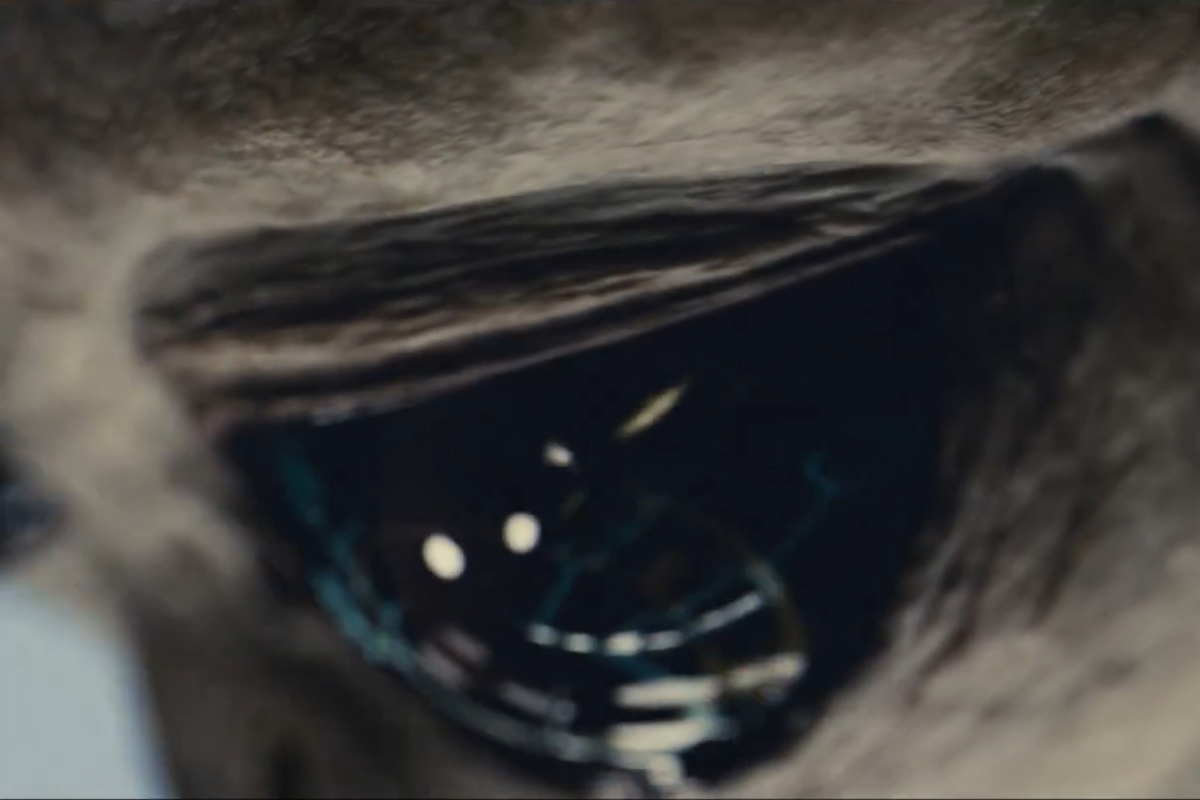
There is a deeply resonant, almost childlike magic that Steven Spielberg has always managed to pull down from the stars, casting a warm light over our collective dread of the unknown and turning it into a profound sense of wonder. For decades, he has been cinema’s chief cosmic dreamer, teaching us to look up at the night sky not with terror, but with a heart full of hope. Now, with the highly anticipated arrival of his newest cinematic outing, Disclosure Day, Spielberg seems poised to bridge the gap between our wildest science fiction dreams and the unsettling, electrifying realities of our modern world. The newly released final trailer for the film has sent shockwaves through both cinephile communities and UFO enthusiasts alike, offering a breathtaking glimpse of a world on the brink of an paradigm-shifting realization. At the heart of this thrilling teaser is Spielberg himself, posing a question that is as deeply philosophical as it is provocative: “Wouldn’t it be wonderful for people to know all of this is true?” It is a query that hangs heavy in the air, transforming the upcoming film from a mere summer blockbuster into a deeply personal invitation to believe. The trailer reaches its emotional and visual climax in its final, breathless seconds, stripping away the cinematic illusions to show us a striking, lingering image of an extraterrestrial visitor. This being—a classic grey-skinned alien with an enlarged, bulbous head and deep, obsidian-like, oversized eyes—is at once hauntingly familiar and shockingly lifelike. By invoking this iconic archetype, Spielberg reaches back into the deep well of human folklore and modern mythology, presenting an entity that feels less like a CGI creation and more like a long-lost neighbor from the cosmic neighborhood, waiting to be acknowledged at last. This masterful blend of nostalgic wonder and grounded realism sets the stage for a cinematic experience that promises to stay with us long after the credits roll.
To ground a narrative of such cosmic proportions in raw, relatable human emotion, Spielberg has assembled a powerhouse cast led by the incomparable Emily Blunt and the rapidly rising star Josh O’Connor. Blunt, who has repeatedly proven her ability to navigate both high-stakes tension and profound maternal vulnerability in films like A Quiet Place and Sicario, brings a fierce, intellectual gravity to the screen that is essential for a story about uncovering the ultimate truth. Beside her, O’Connor—heralded for his nuanced, deeply empathetic portrayals in The Crown and Challengers—projects a vulnerable curiosity that perfectly mirrors the audience’s own sense of awe and apprehension. Together, their on-screen chemistry is not just about survival, but about the grueling emotional cost of carrying a secret that could alter the trajectory of human history forever. Spielberg’s choice to focus on these deeply human protagonists ensures that Disclosure Day remains an intimate drama at its core, even as the global sky fills with otherworldly ships. Their characters seem designed to represent the two halves of our collective human psyche: one driven by the cold, analytical need for empirical evidence and political transparency, and the other guided by an innate, existential longing to connect with something larger than ourselves. As they navigate the dangerous, shadowy waters of government cover-ups and shocking scientific discoveries, they serve as our emotional anchors, ensuring that the spectacle of alien life never eclipses the profound human drama of a world realizing it is not alone. In their eyes, we do not just see the reflection of alien lights; we see our own fears, our own hopes, and our terrifying, beautiful capacity to adapt to a reality that is far vaster than we ever dared to imagine.
What makes Disclosure Day feel so incredibly urgent and electrifying is the uncanny way it mirrors the actual events unfolding in our real world today. The film’s highly synchronized marketing campaign and impending June 12 release arrive on the heels of unprecedented developments in the United States, where the government has recently declassified and released two massive batches of previously classified files regarding unidentified flying objects—now officially termed Unidentified Anomalous Phenomena (UAP). For years, the topic of extraterrestrial life was relegated to the fringes of society, discussed primarily by late-night radio hosts and conspiracy theorists tucked away in the darker corners of the internet. Today, however, the conversation has moved into the solemn halls of Congress, the Pentagon, and mainstream news broadcasts, completely transforming how the public views the night sky. Whistleblowers have stepped forward, military pilots have shared unexplainable radar telemetry, and government officials have admitted that there are indeed objects in our skies whose origins and mechanics we do not fully understand. Consequently, the release of Spielberg’s film has sparked a whirlwind of intense speculation, with many wondering if the proximity between these real-life governmental disclosures and the movie’s release is mere coincidence or a reflection of a broader cultural awakening. By tapping into this genuine, collective anxiety and curiosity, Spielberg has created a work of art that doesn’t just entertain us, but actively dialogues with our current historical moment. Disclosure Day capitalizes on this unique cultural headspace, turning our collective whisper of “what if” into a roaring, cinematic shout, and forcing us to confront the possibility that the barrier between fiction and reality may be far thinner than we ever believed. In doing so, the film becomes a cultural mirror, reflecting our transition from denial to an inevitable, albeit terrifying, acceptance of the unknown.
The decision to feature a classic “grey” alien in the trailer’s final moments is a brilliant artistic choice that speaks volumes about Spielberg’s intuitive understanding of human psychology and narrative iconography. In an era dominated by hyper-complex, terrifyingly abstract digital creatures—from the multi-dimensional horrors of modern sci-fi to Lovecraftian visual anomalies—Spielberg’s return to the traditional grey alien feels both radical and deeply grounded. This classic design, characterized by smooth, slate-colored skin, an exaggerated cranium signifying highly advanced intellect, and those vast, glassy, black eyes, is a direct nod to the lore that has defined UFO culture since the mid-20th century. By presenting this specific, culturally ingrained image, Spielberg establishes an immediate connection with the audience; we do not look upon this creature as a foreign monster, but as the very embodiment of the mysteries we have whispered about for decades. The grey alien represents the ultimate “other,” yet its humanoid structure—two eyes, a nose, a mouth, a bipedal stature—retains enough of a reflection of ourselves to evoke empathy rather than pure, unadulterated terror. It forces us to ask what lies behind those silent, obsidian eyes: is it a hostile observer, a paternal protector, or merely another traveler navigating the lonely expanse of the cosmos? Spielberg’s meticulous attention to the creature’s subtle, non-verbal expressions suggests a level of conscious awareness and emotional depth that elevates the being from a mere prop into a fully realized character. This visual familiarity serves to demystify the alien, making the prospect of contact feel less like an apocalyptic invasion and more like a profound, long-awaited family reunion on a cosmic scale, reminding us that truth, however strange, is something to be embraced rather than feared.
At its core, Disclosure Day is not just about the existence of extraterrestrials; it is a profound exploration of the nature of truth itself and how humanity handles the shattering of its most fundamental paradigms. When Spielberg asks, “Wouldn’t it be wonderful for people to know all of this is true?” he is hitting at the center of our collective psychological vulnerability. For generations, governments and institutions have operated under the assumption that the general public is too fragile, too easily panicked, to handle the reality of cosmic neighbors—that such a revelation would cause the immediate collapse of global economies, religions, and social structures. Spielberg’s question boldly challenges this paternalistic secrecy, suggesting instead that the truth, no matter how paradigm-shattering, is ultimately a healing, unifying force that humanity deserves to experience. The film explores this delicate tension, contrasting the cold, calculating secrecy of institutional gatekeepers with the raw, untamable human thirst for knowledge and cosmic community. By framing the disclosure of alien life as something that could be inherently “wonderful,” Spielberg infuses the narrative with his trademark optimism, offering a refreshing counter-narrative to the cynical, dystopian sci-fi that has dominated the silver screen in recent years. This perspective suggests that knowing the truth would not destroy us, but rather expand our consciousness, bringing an end to our existential loneliness and forcing us to see ourselves as a single, interconnected global family. The film ultimately challenges the viewer to look inward and ask themselves if they are truly ready to let go of the comfortable lies of isolation and step into a much larger, more complex, and infinitely more beautiful universe, transforming our fear of the dark void into a profound appreciation for our place among the stars.
As we count down the days to the film’s June 12 release, the excitement surrounding Disclosure Day continues to build to a fever pitch, promising to make it one of the most culturally significant cinematic events of the decade. This movie represents a grand homecoming for Steven Spielberg, a legendary storyteller who has spent his entire career gazing up at the stars and asking us to do the same. From the awe-inspiring maternal warmth of Close Encounters of the Third Kind to the heartbreakingly tender friendship of E.T. the Extra-Terrestrial, and even the terrifying, chaotic destruction of War of the Worlds, Spielberg has mapped the entire spectrum of human reaction to the cosmos. With Disclosure Day, he appears to be synthesizing these diverse thematic threads into a mature, urgent masterpiece that speaks directly to a global audience standing on the precipice of its own historic revelation. It is a story designed to make us feel, to make us question, and, most importantly, to make us believe in the possibility of something greater than ourselves. Whether the film’s release will coincide with further real-world revelations remains to be seen, but one thing is certain: Spielberg has once again captured the absolute zeitgeist, giving voice to a universal human longing for connection and understanding that transcends borders and languages. As the lights dim in theaters this June, audiences worldwide will sit together in the dark, watching a screen that may very well be reflecting our own near future. In that shared, breathless silence, as we gaze into the large, knowing eyes of an alien visitor, we will find ourselves remembering Spielberg’s poignant question, hoping with all our hearts that the absolute wonder of the universe is finally ready to be revealed to us all.