





The Dawn of a Tense Morning
In the bustling heart of Washington, D.C., where the air hums with the weight of history and power, a seemingly ordinary day unfolded with an unexpected jolt late Thursday morning. The White House, that iconic symbol of American democracy, stood resolute under a sky painted with soft hues of autumn. Pedestrians hurried along the sidewalks, tourists snapped photos of the wrought-iron fences, and construction crews dotted the landscape with bollards and barriers meant to safeguard the nation’s seat of government. Amid this routine, a lone figure—described as a man in his thirties—made a sudden, startling move that would shatter the calm. Eyewitnesses later recounted the scene: the man sprinting toward a security barrier near the Treasury Building, his face etched with determination. He leapt over a construction bollard, a bright orange barrier designed to funnel crowds, and hurtled toward a pedestrian gate. It was a brazen act, born perhaps from desperation or delusion, but in an instant, the machinery of protection sprang into action.
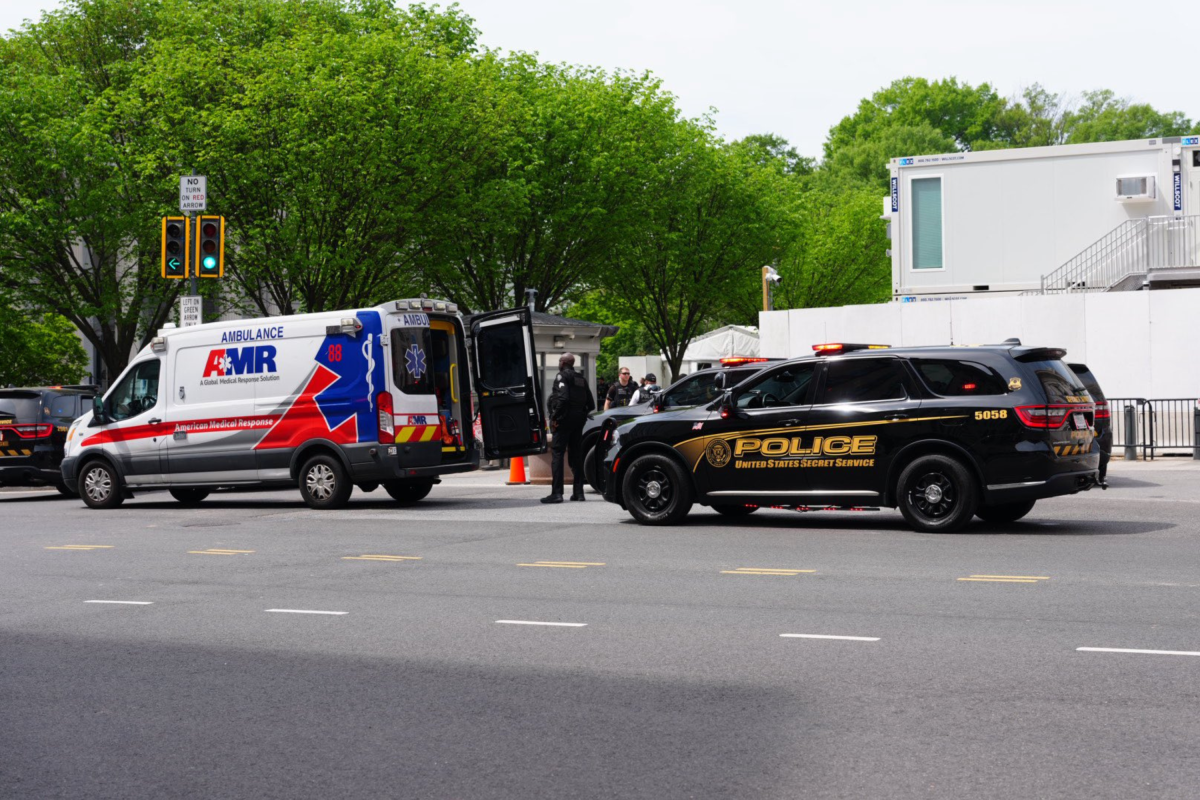
Passersby gasped as U.S. Secret Service officers, ever vigilant guardians of the presidential estate, rushed to intercept. The White House complex is no ordinary street; it’s a fortress pulsating with protocol. These agents, trained for split-second decisions, converged from nearby posts, their uniforms blending seamlessly with the urban gray. The suspect, later identified as having no clear affiliation with terror groups, was cornered at the gate. What followed was not a Hollywood chase but a raw, physical confrontation—a tussle of limbs and resolve. He struggled against the officers, his intentions murky in the fray. Blood was shed, metaphorically speaking, as one officer emerged with a minor laceration, a testament to the immediacy of danger. Ambulances wailed in the distance, and both men—suspect and protector—were whisked away for treatment. The incident underscored the fragility of security in a world where threats lurk in plain sight, reminding everyone that even in the capital’s heart, vulnerability persists. For the man detained, this was a moment of reckoning; for the city, a stark reminder of unseen perils.
The Human Backstory: Motivation Unraveled
As details trickled out, a picture of the detainee began to form, painting him not as a villain straight from a screenplay, but as a person with layers. Authorities revealed preliminary information: no weapons were found on him, and his actions appeared impulsive rather than part of a grand scheme. Social media buzzed with speculation—what drove this individual to test the bounds of power? Whispers on forums and news sites suggested he might have been protesting, driven by personal grievances or mental strife. Imagine him as someone frustrated by life’s injustices, perhaps jobless or heartbroken, seeking a dramatic outlet. In a society where voices are often muffled, standing at the White House gates offered a megaphone. Yet, these were early conjectures; investigations were underway to delve deeper. Officers involved shared untold stories of encounters like this, each one a microcosm of human behavior. One veteran agent, speaking anonymously, described the adrenaline rush mixed with pity: “You never know what you’re facing—a hero, a fool, or someone in pain.” The laceration on the officer’s hand symbolized not just physical harm but the emotional toll of such duty. Families of those in blue waited anxiously, while the public pondered the man’s fate. In humanizing this event, we see echoes of our own vulnerabilities, where one person’s breaking point collides with another’s unwavering vigilance.
The Immediate Aftermath: Chaos and Compassion
In the hours that followed, the scene transformed from a hotspot of conflict to a hive of organized response. Yellow crime scene tape fluttered in the breeze, cordoning off the area while forensic teams combed for clues. Tourists, initially stalled, were diverted; school groups planned for the day felt the ripple of disruption. But compassion was evident too—local cafes offered free coffee to shaken onlookers, and volunteers checked on those nearby. The Secret Service issued a brief statement, emphasizing no broader threat to public safety, yet urging caution. The minor injuries reported underscored the swift medical response: antiseptic wipes, bandages, and a quick hospital check-up ensured both men recovered quickly. For the officer, a father of two, this was just another scar in a careerful of close calls—a badge of honor earned in the line of duty. Community forums lit up with support for the agent, notes like “Thank you for keeping us safe” flooding in. Meanwhile, the detainee faced isolation in custody, his perspective drifting from defiance to reflection. Psychologists might note how such incidents reveal societal stresses, from economic woes to political polarization. As the sun climbed higher, the episode became a parable of resilience, where quick actions prevented escalation, and empathy bridged divides in a fractured world.
Broader Implications: Security in an Uncertain Era
Zooming out, this breach near the White House illuminated nationwide concerns about security protocols in an era rife with unpredictability. Experts weighed in on the ease with which the man navigated the barriers—could improved technology, like advanced scanners or AI surveillance, mitigate such risks? The Treasury Building sits adjacent to the White House, a stone’s throw from history, and yet, this vulnerability highlighted gaps. Lawmakers promised reviews, echoing past incidents like the 2001 attempt on President George W. Bush or the 2017 shootings in the area. But beyond the policy debates, it exposed human elements: the dedication of agents who train relentlessly, and the complexities of mental health. Advocates called for destigmatizing help-seeking, suggesting the man might have needed intervention rather than confrontation. Stories emerged of similar “lone wolf” attempts thwarted elsewhere, each a testament to overburdened systems. In human terms, it raised questions about inclusivity—was protest now synonymous with peril? Neighbors shared anecdotes of living under the shadow of power, where every helicopter whir is a reminder of fragility. Society grappled with balance: freedom versus safety. As updates trickled in, experts cautioned against overreaction, urging empathy to understand the roots of such acts.
Personal Reflections: Lives Touched
Beneath the headlines beat human hearts. Maria, a nearby receptionist, recounted watching the scuffle unfold from her office window: “It was terrifying, yet I couldn’t look away.” She thought of her own family, safe at home, and pondered how close calamity had come. The officer’s wife, interviewed anonymously, spoke of sleepless nights: “Every call could be the last.” For the detainee, friends pieced together his story—a man struggling with addiction, unemployment, and isolation. One former colleague remembered him as kind but troubled, now rallying for his defense. Psychiatrists speculated on underlying issues like untreated trauma, drawing parallels to countless others navigating crisis alone. Social workers emphasized support networks, sharing successes where early intervention averted tragedy. In quiet moments, the city reflected on unity: vigils held at community centers, where strangers bonded over shared fears. This incident wasn’t just an arrest; it was a mirror showing society’s fractures and strengths. Lives intertwined in unexpected ways, urging everyone to confront their parts in the broader narrative of security and humanity.
Looking Forward: Hope Amid Uncertainty
As the dust settled late Thursday, the breaking news cycle promised updates, but for many, it marked a pivot toward healing. Investigations continued, with hopes for a full debriefing to prevent future incidents. The Secret Service redoubled efforts, conducting drills and community outreach to foster trust. Tech innovators pitched ideas for smarter barriers, while policymakers debated funding for mental health initiatives. In personal spheres, families prioritized open dialogues, turning fear into action. The detainee’s fate remained pending, but advocates pushed for rehabilitation over retribution. Ultimately, this episode humanized the stark realities of protection in a free society—it wasn’t just about a man and a barrier, but about people striving for safety and understanding. In the days ahead, Washington buzzed with renewed focus, a testament to resilience. With vigilance and compassion, the city stood ready to face whatever came next, embodying the enduring spirit of a nation built on guarded yet hopeful grounds. Updates would come, but for now, the message was clear: in chaos, humanity prevails.