







With national political battles growing increasingly tense, despondent Republicans can find a powerful silver lining in the concrete economic realities playing out across the United States. A new, comprehensive study we coauthored for the pro-growth policy group Unleash Prosperity reveals a striking, undeniable trend: since the turn of the century, economic growth has been substantially more robust in conservative “Red” states compared to their progressive “Blue” counterparts. Focusing closely on the pivotal years between 2020 and 2024, our research utilizes modern, sophisticated statistical modeling to isolate political policy from other external economic drivers. Even when we fully accounted for uncontrollable variables like regional climate, urbanization, and a state’s reliance on manufacturing or oil production, the Republican-led states consistently outpaced Democratic ones. In fact, after controlling for these diverse competing factors, solidly Red states averaged over 25 percent greater growth in personal income during the first half of this decade than Blue states, demonstrating that conservative economic strategies are yielding tangible, prosperity-building results.
This dramatic divergence in economic performance fundamentally traces back to contrasting governing philosophies regarding the role of government in daily life. Conservative policymakers generally place deep trust in free markets to efficiently allocate resources, generate wealth, and spark innovation, while remaining highly skeptical of the heavy taxation required to fund expansive social safety nets. Decades of economic research suggest that excessively high tax rates and overly generous public benefits wind up dampening individual work ethic and stifling crucial business investment. The real-world impact of these opposing philosophies is starkly visible in the tax bills of everyday citizens. For instance, high earners in heavily progressive New York City can face state and local income tax rates exceeding 14 percent on their hard-earned income. Meanwhile, professionals living in conservative, business-friendly cities like Miami or Dallas pay zero percent in local income tax, and all eight states that completely eschew state income taxes are either safely Red or, like New Hampshire, possess a strong, independent libertarian streak.
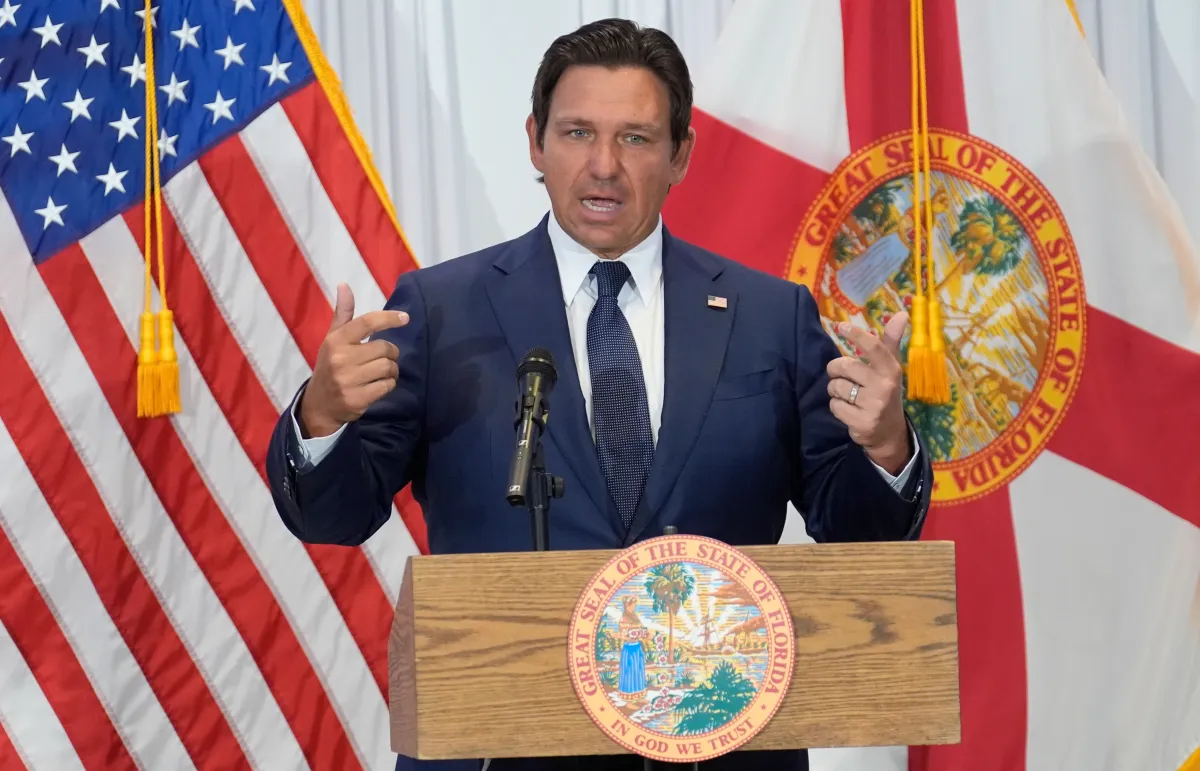
Our detailed statistical analysis confirms that the primary engine driving this dramatic income growth in Red states is a massive, historic internal migration of highly productive, ambitious individuals fleeing high-tax Blue states in search of economic freedom. This is not just a statistical abstraction; it is a movement led by some of the most prominent, wealth-generating minds of our time. The world’s wealthiest entrepreneur, Elon Musk, famously relocated from deep-blue California to business-friendly Texas, while financial giant Ken Griffin moved his massive enterprise from Illinois to Florida. According to recent Census Bureau data, between 2020 and 2025 Florida welcomed a net influx of over two million new residents, split evenly between international immigrants and native-born Americans. Conversely, California suffered a staggering loss of nearly 1.7 million residents during this same window. These findings directly challenge subjective “quality-of-life” assessments, such as CNBC’s widely criticized rankings that labeled several conservative states as the worst places to live—a claim Florida Governor Ron DeSantis rightly dismissed as “nonsense” given that millions of Americans are actively choosing these states.
Crucially, our study highlights that this massive migration involves far more than just individual workers and their families; immense financial capital and corporate resources are moving alongside them. Corporations and entrepreneurs are effectively voting with their feet, actively escaping bloated, inefficient local governments in favor of lean, supportive fiscal environments. To illustrate this powerful corporate shift, Texas recently surpassed California as the state hosting the absolute highest number of Fortune 500 corporate headquarters. While skeptics often try to dismiss this massive southward migration as nothing more than a quest for warmer weather and sunny beaches, our data systematically refutes this simplistic narrative. Historically, climatically beautiful but aggressively progressive Hawaii has suffered from some of the nation’s worst out-migration. At the exact same time, deeply conservative winter states like Montana and South Dakota—which experience fiercely cold weather—enjoyed massive in-migration as fed-up families willingly traded mild coastal winters for political and financial freedom.
To be fair, state-level public policy is not the solitary factor dictating these shifting economic fortunes across the American landscape. Older, manufacturing-heavy states like Pennsylvania, Ohio, and Michigan have faced deep, structural headwinds resulting from the rise of global manufacturing hubs in emerging nations like China and India, which offer much lower labor costs. Furthermore, our model found that high levels of unionization—which are heavily concentrated in Blue states—were statistically associated with lower economic growth. On the other hand, population growth and economic dynamism were significantly boosted by a strong presence of immigrants. This aligns perfectly with a wealth of existing research showing that immigrants boast exceptionally high rates of labor force participation and frequently possess highly specialized, elite skills. This group includes transformational economic superstars like South African-born Elon Musk, Nvidia’s Jensen Huang, and Microsoft CEO Satya Nadella. Additionally, highly urbanized areas generally experienced slower growth, likely due in part to the restrictive regulations of far-left municipal governments.
Ultimately, our study arrives at a beautiful and highly symbolic moment as our nation prepares to celebrate its 250th birthday, highlighting the sheer brilliance of the system of government designed by the American Founders. By establishing a robust federalist system, they created a vast, open continent free of internal passports, state borders, or restrictive work permits, allowing citizens to move seamlessly toward opportunity. As the legendary Supreme Court Justice Louis Brandeis famously observed, the American federal system ensures that a single courageous state can act as a laboratory of democracy, trialing novel social and economic experiments without risking the stability of the entire nation. Today, the geographic sorting of the American population shows us exactly which of these state-level experiments are succeeding and which are failing. Rather than trying to impose top-down, one-size-fits-all mandates from Washington, D.C., our federal government would be incredibly wise to step back and study the successful policies currently flourishing within these fifty laboratories of freedom.