


Paragraph 1: A Defining Vote for Harris County
In a decision that has sent ripples of concern through the Houston metropolitan area, officials in Texas’ Harris County have taken a historic step that will directly impact the wallets of over five million residents. On a Tuesday marked by deep political division, the county commissioners’ court voted 3-2 to approve a property tax rate that stands as the highest in the county’s modern history. This move is not just a bureaucratic adjustment of numbers; it is a direct response to a daunting financial reality—a budget gap that yawns to more than $180 million. For the average homeowner, this translates to a tangible increase in their annual expenses, a new pressure point in an already strained economy. The vote represents a fundamental choice about how the county will fund its essential services, pitting the need for robust public infrastructure against the growing cry for affordability from its constituents. As the third-largest county in the nation, the decision made here is being watched closely by local governments across the country who are grappling with similar fiscal crises. The choice was not made lightly, and the debate that preceded it laid bare the philosophical chasm between fiscal conservatism and the necessity of funding public services.
The proposed increase is substantial, representing a 7.6 percent jump for the upcoming fiscal year. For residents, this means their property tax bill will rise to 67 cents for every $100 of taxable value, a noticeable leap from the current rate of 62 cents. While this may sound like a small fraction, the cumulative effect for homeowners is significant, adding an estimated $198 to the average annual tax bill. This financial burden is being shouldered at a time when many families are already feeling the pinch of inflation and rising living costs. The county’s leadership, however, argues that this increase is not a matter of choice but of necessity. They frame it as an investment in the very fabric of the community—from public safety and healthcare to the legal system that upholds the rights of the accused. The decision is a high-stakes gamble, betting that the value of these services will outweigh the financial strain on the electorate, and it sets a precedent for how the county intends to navigate its financial future in the years to come.
Paragraph 2: Unpacking the Fiscal Crisis
At the heart of this momentous decision lies a complex web of financial pressures that have been building for years. County officials point to a trio of primary cost drivers that have collectively pushed the budget into the red. First and foremost are the significant pay raises for law enforcement, a necessary investment to attract and retain officers in a competitive market, but one that comes with a hefty price tag. Alongside this, the county is grappling with rapidly escalating healthcare costs, both for its own employees and for the provision of public health services. Finally, there are the mounting fees paid to court-appointed attorneys who represent defendants who cannot afford legal counsel. This last point underscores a fundamental principle of justice—that everyone deserves a defense—but it is a principle that carries a growing financial weight. These are not frivolous expenses, but the core functions of a county government, and their costs are rising at a pace that outruns the growth of traditional revenue streams.
This fiscal strain is not unique to Harris County; it is a challenge echoing across local governments nationwide. However, given the sheer size of Harris County, the scale of these pressures is amplified. Judge Lina Hidalgo, who surprisingly voted against the increase, framed her dissent not as a rejection of these services but as a critique of fiscal management. She argued that the county has been irresponsible in its spending, asserting, “I have never funded a program when I knew there was no money for it.” This points to a deeper ideological battle over the root of the problem: is the county spending too much, or is it failing to generate enough revenue? The county’s Health President and CEO, Dr. Esmaeil Porsa, framed the increase as a continuation of progress, a way to maintain infrastructure expansion and technology upgrades. This contrast in perspectives—one of prudent management versus one of vital investment—is the central conflict that will define the county’s political landscape leading up to the final vote.
Paragraph 3: The Political Battlefield and the Vote
The 3-2 vote was not a clean endorsement of the tax increase but rather the product of intense negotiation and political maneuvering. It saw Democratic Commissioner Adrian Garcia propose a lower rate before ultimately casting his vote in favor of the higher 67-cent rate, indicating a pragmatic acceptance of the fiscal reality. The two dissenting votes came from an unlikely alliance: Republican Commissioner Tom Ramsey and Democratic County Judge Lina Hidalgo. Their shared opposition, however, was rooted in vastly different ideologies. Commissioner Ramsey’s amendment to keep the rate unchanged was a clear articulation of the conservative principle of limited government and tax relief. His attempt to strike down the increase was defeated, paving the way for the proposal to advance. Judge Hidalgo’s opposition, on the other hand, was a more nuanced critique of the county’s spending habits, suggesting that a lack of fiscal foresight, rather than a lack of revenue, is the core issue. Her statement that she has never funded a program without knowing where the money would come from is a direct indictment of her colleagues’ approach.
This political divide mirrors a broader national debate about how to fund government. On one side is the belief that tax increases stifle economic growth and place an unfair burden on citizens, especially in a state like Texas that prides itself on having no personal income tax. On the other is the conviction that a civilized society requires well-funded public services, and that the burden must be shared to ensure the safety, health, and justice for all residents. The vote also comes in the wake of years of Republican-led efforts at the state level to rein in property taxes, a platform championed by Governor Greg Abbott. These state initiatives, which have included billions in relief and increased homestead exemptions, represent a clear policy direction. The decision by Harris County to raise its rate directly challenges this narrative, highlighting a growing tension between state-level priorities and the on-the-ground financial needs of its largest county.
Paragraph 4: The Broader Context of Texas Homeownership
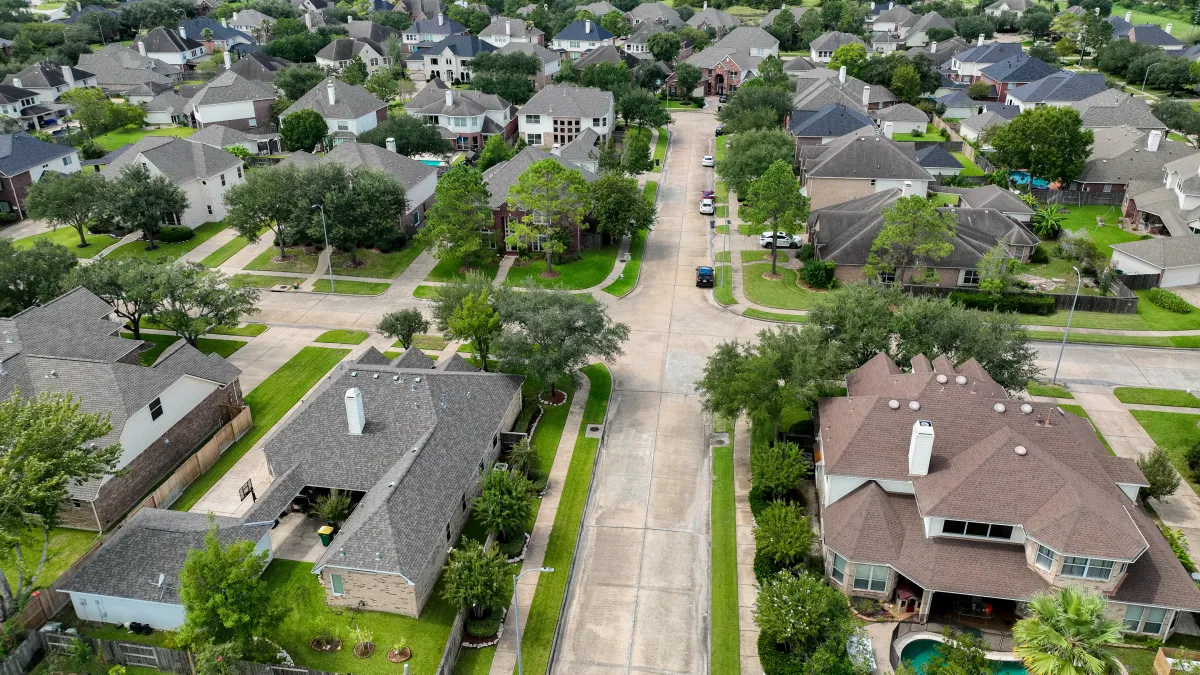
The vote in Harris County cannot be viewed in a vacuum; it lands with a heavy thud on the already-burdened shoulders of Texas homeowners. The state is a national leader in property tax burden, a fact that is often touted as a trade-off for the absence of a state income tax. This trade-off is becoming increasingly difficult to accept for many families who have watched their property values, and consequently their tax assessments, skyrocket in recent years. The post-pandemic housing boom sent home values soaring, and while that has cooled slightly, the tax bills that were based on those peak values remain. According to data cited by the advocacy group Texans for Fiscal Responsibility, the direct property tax burden in the state has increased by a staggering $40.7 billion since 2015. This staggering number puts the county’s increase into perspective, showing it is part of a systemic, statewide trend.
For a typical family in Harris County, this new increase is just one more line item in a growing list of expenses associated with homeownership. The median sale price of a home in Houston was around $359,720 as of July, a significant jump from $250,000 just five years earlier. Alongside these higher prices, homeowners have been battered by a surge in insurance premiums. A report from Rice University’s Kinder Institute for Urban Research found that premiums surged 30 percent between 2019 and 2024, and other data suggests the average annual cost is now well over $4,000. When you combine a higher mortgage, skyrocketing insurance, and now a higher property tax rate, the simple dream of owning a home in the Houston area is becoming financially unattainable for many. This confluence of pressures creates a perfect storm of affordability, and Tuesday’s vote threatens to push some residents over the edge.
Paragraph 5: The Human Cost of the Tax Hike
Behind the statistics and policy debates are the human stories of residents who are trying to make ends meet in an increasingly expensive world. The extra $198 a year on an average home might not seem catastrophic in isolation, but for a family already stretching their budget to cover a higher mortgage payment and a massive insurance bill, it can be the straw that breaks the camel’s back. It could mean the difference between saving for a child’s education, fixing a broken car, or simply having a small financial cushion for emergencies. This vote represents a difficult choice made by the county to balance its own books, but it does so by asking its citizens—many of whom are already struggling—to pay more. The increase feels particularly punitive to long-time residents on fixed incomes who have watched their property values, and thus their tax bills, rise dramatically even though they have no plans to sell their homes and realize those gains.
Moreover, the increase is seen by some as a punishment for responsible homeownership. The county is asking residents to pay more for the same level of service, or in some cases, a level of service that they may feel is already inadequate. The public hearing scheduled for September 17 will be the forum where these frustrations will be aired. It will be a chance for the public to look county officials in the eye and voice their anger and anxiety about their financial future. The commissioners will have to listen to stories of families being priced out of their neighborhoods, of elderly residents choosing between their medication and their property tax bill, and of young people questioning whether they can ever afford to put down roots in the community where they grew up. This is the human reality of a budget vote, a reality that is often lost in the abstract language of fiscal policy and millage rates.
Paragraph 6: The Road Ahead and Unanswered Questions
The vote on Tuesday is not the final chapter in this story. It was merely the first procedural step to allow the proposal to move forward. The next, and perhaps most critical, date is September 17, when a public hearing will be held to give residents a chance to voice their opinions. Following this hearing, the commissioners have the opportunity to approve a lower rate, but they must do so before October 1, when the new fiscal year begins. This leaves a narrow window for last-minute negotiations and pressure from the public. The pressure on the commissioners is immense. They are caught between the need to fund the county’s operations and the clear desire of many of their constituents for tax relief. The final vote will be a true test of their political courage and their ability to balance the long-term health of the county with the immediate needs of its taxpayers.
The ramifications of this decision extend far beyond a single tax bill. It signals a shift in how Harris County intends to fund its government in an era of rising costs and limited resources. It raises fundamental questions about the future of public services, the definition of fiscal responsibility, and the social contract between the government and the governed. Is it more fiscally responsible to cut services to keep taxes low, or to raise taxes to maintain a robust social safety net and public infrastructure? There is no easy answer, and the debate in Harris County is a microcosm of a struggle taking place in communities across the nation. As the county moves toward its final decision, the eyes of the state and the country are watching. The outcome will set a precedent, not just for the residents of Harris County, but for how other large, diverse, and dynamic communities choose to navigate their own complex financial futures. The decision will undoubtedly shape the political landscape for years to come, as voters will ultimately have the final say on the ballot box.