

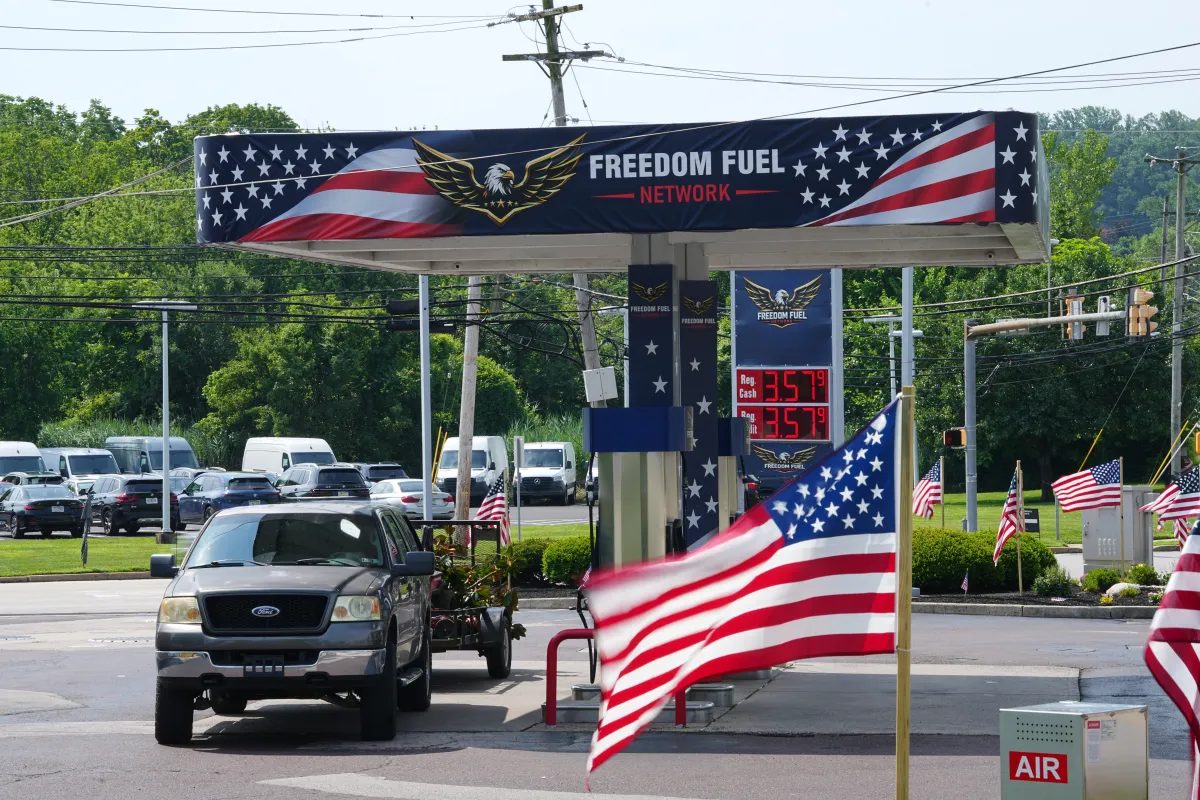
Imagine pulling into a gas station and seeing a price that makes you blink: $3.47 a gallon, while the station down the road is charging $3.91. That was the promise of Freedom Fuel, a bright, new, privately owned chain of gas stations in New Jersey and Pennsylvania that President Donald Trump publicly celebrated as patriotic and smart. For a few weeks this summer, it felt like a rare bit of good news for drivers tired of watching prices climb. A small retailer, the story went, was stepping up to give Americans a break at the pump, and the White House was cheering it on. But behind the gleaming storefronts and presidential shout-outs, a legal storm was brewing. On August 19, Mansfield Oil Company, a fuel supplier based in Gainesville, Georgia, filed a federal lawsuit in the U.S. District Court in eastern Pennsylvania. The suit alleged that KRSM, the company that bought fuel to be sold at Freedom Fuel stations, did not pay for $4 million worth of gasoline purchased the previous month. The lawsuit does not name Freedom Fuel itself as a defendant, but it targets KRSM and its president, Syed Kazmi. If the supplier’s allegations are true, the lawsuit would answer a question that had left many people puzzled: How could Freedom Fuel sell gas so far below the market at a time when fuel prices were spiking across the country because of the Iran war? The uncomfortable answer, the lawsuit suggests, is that the fuel may not have been paid for at all. KRSM’s attorney, however, has denied the claim, describing the situation as “an accounting dispute over fuel invoices mis-priced by Mansfield Oil.” The case is far from resolved, but the feel-good narrative has already been badly dented.
The details of the lawsuit paint a stark picture. According to court documents, Mansfield Oil delivered at least 1.12 million gallons of gasoline to at least 10 Freedom Fuel stations, but never received a single dollar in payment. Urs Broderick Furrer, an attorney for Mansfield Oil, told CNN that despite the fact that the last delivery was made more than five weeks ago, KRSM has not paid anything toward the $4 million it owes. That is a lot of fuel and a lot of money, and the supplier is clearly frustrated. Mauro Tucci, an attorney for KRSM, responded by saying the issue is simply a billing disagreement, not fraud or theft. “An accounting dispute over fuel invoices mis-priced by Mansfield Oil,” he called it. The legal fight is now in the hands of the courts, but the damage to Freedom Fuel’s reputation may already be done. The company’s ownership structure has also drawn scrutiny. Freedom Fuel is controlled by companies linked to brothers Shamikh and Syed Kazmi, who have been dogged by legal issues in the past, along with two other individuals. According to reports from Politico and Newsground, documents forming the company in June were signed by Randy Brown, a senior special teams coach with the Baltimore Ravens, and Yoni Gontownik, a former investment director at Mercuria, a Swiss-owned commodities trading firm. None of this makes the company guilty of anything, but it does make the story more complicated than a simple tale of a patriotic retailer trying to help American drivers. The Trump administration has confirmed that it is not involved in the Freedom Fuel network and has not given the company any funding, so the praise was political and symbolic rather than financial.
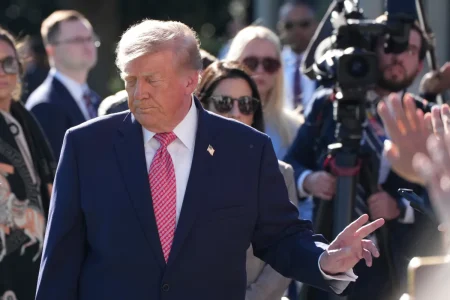
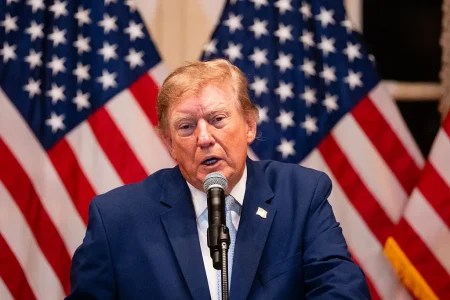
To understand how Freedom Fuel became a national talking point, you have to go back to early July. The company launched with 25 stations: five in New Jersey and 20 in Pennsylvania. Since then, it has added two more in each state, bringing the total to 29. On July 2, ahead of the nation’s 250th anniversary, Trump took to his social media platform, Truth Social, to celebrate the chain. “A VERY smart Retailer, located throughout the Northeast, is stepping up, and wishing the People of Philadelphia a ‘Happy Birthday!’” he wrote. He said the retailer was “taking the lead” in offering lower gas prices “because they love the USA,” and he encouraged others to follow. A few days later, the White House posted on X that the first Freedom Fuel gas station had opened in Philadelphia, “lowering the price at the pump to $3.47 for our 47th President.” That price was genuinely striking. On July 7, the national average for a gallon of regular gas was $3.79, according to the American Automobile Association. In Philadelphia, the average was $3.91, and across Pennsylvania it was $3.97. So Freedom Fuel was not just a little cheaper; it was significantly cheaper, by as much as 50 cents in some places. For drivers already feeling squeezed, that kind of savings was a big deal. It also made for great political optics. A gas station with the president’s backing, offering fuel below the going rate, looked like proof that the administration was doing something to fight high prices. But the low prices were too good to last.
Indeed, Freedom Fuel itself appears to have struggled with the dilemma it created. Since last month, it has abandoned the prices that had received national attention. According to data tracking from GasBuddy, Freedom Fuel stations in New Jersey and Pennsylvania did not boast the cheapest gas in either state as of Tuesday morning. In Pennsylvania, Freedom Fuel stations were selling a gallon of regular gas for $3.99 on Tuesday. That is not terrible, but it is far from the bargain it once was. The lowest price in the state was $3.64, and the statewide average was $4.25. In New Jersey, Freedom Fuel stations were charging $3.89 per gallon, while the lowest price in the state was $3.59 and the average was $4.16. The station that once symbolized a bold effort to undercut the market had quietly fallen in line with the rest of the industry. What happened? The obvious answer is that selling gas below cost is not a sustainable business model, especially when you are not paying your supplier. If the lawsuit’s allegations are correct, Freedom Fuel was never really offering a bargain at all; it was offering a discount paid for by someone else. If the accounting dispute explanation is correct, then the pricing was based on invoices that were simply wrong. Either way, the result is the same: drivers who flocked to Freedom Fuel for cheap gas are now paying closer to the going rate, and the mystery of how the chain managed to undercut everyone else has been replaced by a much less flattering question: who is going to end up paying for all that fuel?
The broader context makes this story even more urgent. Gas prices across the United States have risen by more than 30 percent since February 28, when the U.S. and Israel launched strikes against Iran. The conflict has caused the effective closure of the Strait of Hormuz, a narrow waterway through which about one-fifth of the world’s oil normally travels. That disruption has sent shockwaves through global energy markets, and American drivers have felt the pain at the pump. Talks between the U.S. and Iran to end the war and reopen the strait have dragged on for months, and attacks between the nations have reignited in recent days, suggesting that relief may not come anytime soon. Patrick De Haan, GasBuddy’s head of petroleum analysis, estimated that by mid-August, Americans were spending about $338 million more on gasoline per day than they did a year earlier, or roughly $2.35 billion more every week. As of Tuesday, the national average price for a gallon of regular gas was $4.095, up from $3.190 a year earlier. Drivers in California are paying the most, with a statewide average of $5.703 per gallon. Washington and Hawaii are also above $5, at $5.371 and $5.419, respectively. At the other end of the spectrum, drivers in Indiana are paying the least, with an average of $3.394 per gallon. For most Americans, every trip to the gas station is now a small financial event, and the promise of a station selling fuel below the market is incredibly tempting.
In the end, the Freedom Fuel saga is a reminder that when something seems too good to be true, it often is. The lawsuit against KRSM is not proof of wrongdoing, and the company deserves its day in court. But the story has already changed the way many people look at the cheerful red, white, and blue stations that popped up across the Northeast. The president’s endorsement gave Freedom Fuel a kind of patriotic halo, but the White House has made clear it has no financial stake in the company. The people who pumped discounted gas into their cars over the summer may have gotten a genuine bargain, but somebody, somewhere, is expected to pay for it. If the court rules against KRSM, that somebody could be the fuel supplier, the company’s owners, or ultimately the creditors and customers left to sort out the mess. If the dispute is truly just an accounting error, then the company may emerge with its reputation intact, and drivers may see those low prices return. But for now, the cheapest gas in Pennsylvania and New Jersey is being sold by other stations, and the Freedom Fuel experiment has become a cautionary tale about the difference between a real bargain and a debt that has not come due yet. The lawsuit will take months to resolve, and the truth may be complicated. But for ordinary drivers, the lesson is simple: when prices at the pump seem too good to be true, it is worth asking not just how much the gas costs, but who is actually paying for it.