



The French Open has always been a theater of high drama, but few matches in recent memory have captured the raw, exhaustively human essence of professional tennis quite like the third-round clash between Novak Djokovic and Joao Fonseca on the punishing red clay of Roland-Garros. For over five grueling hours, the court became a battlefield where time itself seemed to hang in the balance, pitting one of the greatest athletes in sports history against an opponent half his age who possessed the fearless, unburdened energy of youth. Djokovic, a seasoned warrior carrying the weight of twenty-four Grand Slam titles and the cumulative physiological toll of a decades-long career, found himself locked in a grueling physical and psychological chess match with a rising star who refused to be intimidated by the legend standing across the net. The contrast was stark and poetic: the master of endurance, whose career has been defined by his ability to outlast and break his opponents, was forced to dig deep into his physical reserves to counter the explosive, relentless power of a teenager playing with nothing to lose. As the Parisian sun beat down and the hours slipped away, the match transformed from a standard athletic contest into a profound exhibition of human limitation and willpower. The first two sets went to Djokovic, showcasing his typical tactical brilliance and clutch positioning, but the momentum shifted as Fonseca began to find his rhythm, dictating play with heavy groundstrokes and an infectious, youthful enthusiasm that gradually wore down the Serbian icon. By the time the match reached its dramatic fifth-set climax, the physical toll on Djokovic was visible in every heavy breath, every labored slide on the clay, and every moment of introspection between points, culminating in a narrow, thrilling defeat that sent shockwaves through the tennis world and reminded everyone that even the most formidable giants of the sport are ultimately bound by the laws of biology, fatigue, and time.
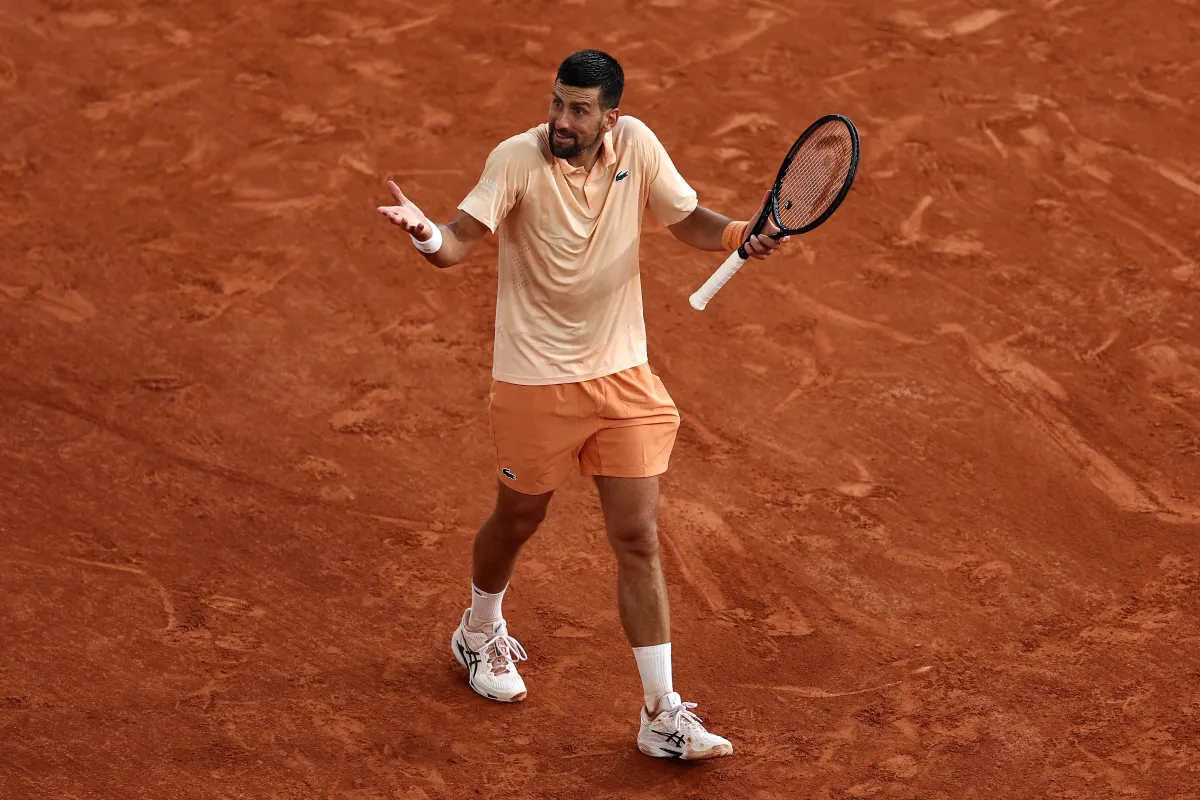
In the competitive, fishbowl environment of professional tennis, the emotional pressure on elite athletes is immense, occasionally bubbling over in moments of raw, unedited vulnerability that humanize these sporting icons to an adoring yet highly critical public. This pressure-cooker dynamic was starkly illustrated during a tense moment in the match when Djokovic, having just secured the first two sets and attempting to find a brief moment of peace to pack his gear and gather his thoughts, found his personal boundary crossed by an overly eager broadcaster. As he went to put his racket away and prepare for the next phase of the grueling encounter, a cameraman pressed in closer, aiming the lens directly into the exhausted champion’s face in an attempt to capture an intimate, high-definition glimpse of his fatigue. The intrusion proved to be the breaking point for Djokovic, who broke the fourth wall with a mixture of exasperation and disbelief, demanding, “Can you come more in my face? For God’s sake, make some space.” This candid flash of frustration quickly went viral across the globe, racking up over 1.2 million views on social media platforms like X, as fans and commentators alike debated the boundaries of sports journalism and player consent. Far from being a mere outburst of petulance, the incident highlighted the intense, zoom-lens scrutiny under which modern athletes operate, where even their briefest moments of quiet transition are treated as public property. It revealed the quiet isolation of the tennis court, where players have no coaches on the bench to shield them, stripping away their basic dignity in the name of broadcast entertainment and reminding audiences that behind the superhuman statistics lies a human being who simply needs a moment of physical space to think, breathe, and survive.
Behind Djokovic’s struggle on the Parisian clay lay a quiet battle with his own physical limitations, a reality he candidly addressed during his post-match press conference while reflecting on his journey back to the court. Prior to arriving at Roland-Garros, the legendary champion had been sidelined for three months due to an injury, a lengthy layoff that severely disrupted his competitive momentum and prevented him from building up the necessary match fitness for the grueling clay-court season. Stepping directly into a best-of-five Grand Slam tournament without the benefit of a warm-up tournament is an incredibly daunting prospect for any player, but it is particularly challenging on red clay, a surface that Djokovic noted is physically demanding, unforgiving on the joints, and requires a prolonged period of adaptation. The relentless sliding, the unpredictable bounces of the ball, and the heavy clay all demand a level of muscular elasticity and cardiovascular endurance that can only be built through competitive match play. Unlike hard courts or grass, clay requires players to constantly decelerate and slide, putting immense strain on the knees, lower back, and ankles—a daunting task for a twenty-four-time major champion returning from rehab. “I think I was playing good tennis, really good level, considering I was injured for three months and trying to come back and going pretty much straight into Grand Slam on this surface that is very demanding and, for me, takes more time to get used to,” he shared with the gathered media. This candid admission shed light on the immense mental and physical fortitude required to compete at the highest level of professional sports, illustrating that even a player of his extraordinary caliber cannot bypass the natural timeline of human healing and physical conditioning, and that his performance, though falling short of victory, was a testament to his sheer determination to push past his body’s warning signs.
The psychological aftermath of a high-profile defeat is often as grueling as the physical match itself, as exhausted players are thrust directly from the emotional battlefield of the court into the critical spotlight of the press room. This transition was particularly challenging for Djokovic following his loss, as reporters eagerly sought to construct a monumental narrative around his historic chase for a 25th Grand Slam title rather than addressing the immediate, raw reality of his physical and emotional exhaustion. When a journalist attempted to ask if he had allowed himself to dream of hoisting the trophy following the unexpected, shocking departure of the top-seeded Jannik Sinner the previous day, Djokovic firmly but politely shut the line of questioning down before it could even begin. “I’ll stop you right there,” he interrupted with quiet assertiveness. “I just lost in the third round. Let’s just talk about something else. Thank you.” This moment of direct boundary-setting was a powerful reminder of the human need to process disappointment in the present moment rather than being forced to engage in speculative, media-driven fantasies about future triumphs. By refusing to entertain hypotheticals about a tournament he was no longer a part of, Djokovic protected his own mental well-being, demanding respect for the harsh reality of his defeat and demonstrating that even a sports legend has the right to step off the continuous treadmill of expectations and simply exist in the quiet space of his own disappointment. The burden of chasing history can be a suffocating weight, and by cutting off the reporter, he reclaimed his agency, proving that his worth as a person is not solely tied to his next record-breaking milestone. It was a refreshing display of honesty in an era of highly sanitized, media-coached answers, revealing an athlete who was hurting, tired, and resolutely human, refusing to let his authentic feelings be commodified for a dramatic headline.
The premature departure of Novak Djokovic, occurring in tandem with other dramatic shifts in the tournament draw, has signaled a profound transformation at this year’s Roland-Garros, marking what many analysts view as a historic turning point for the sport of modern tennis. With the early, unexpected exit of the top-ranked Jannik Sinner on Thursday and the pre-tournament withdrawal of Carlos Alcaraz due to a persistent and nagging wrist injury, the traditional hierarchy that has dominated men’s tennis for nearly two decades has been completely upended in the span of just forty-eight hours. The physical demands of the sport have clearly taken a toll on old and young alike; Alcaraz’s wrist issues and Sinner’s sudden vulnerability show that even the young guns are not immune to the bruising nature of the tour. For years, the Grand Slam stages have been dominated by a select group of legendary figures who routinely captured the sport’s biggest prizes, rarely leaving room for outsiders to claim their share of tennis glory. Now, with the dominant legends sidelined by injuries, age, or upset defeats, the draw has been flung wide open, setting the stage for an unpredictable, highly charged final week in Paris where a brand-new Grand Slam champion is guaranteed to be crowned on June 7. This sudden power vacuum has injected a palpable sense of excitement, anxiety, and urgency into the tournament, as a hungry new generation of players recognizes a rare, golden opportunity to etch their names into the clay of tennis history. The absence of the sport’s reigning titans has democratized the court, transforming the final rounds into a chaotic, thrilling survival of the fittest where no outcome is guaranteed. This shift proves that the long-anticipated changing of the guard is no longer a distant projection or a media talking point, but an active, thrilling reality unfolding before our eyes, ushering in an era where the future of tennis is beautifully unwritten.
Despite the intense frustration of the camera incident and the profound disappointment of an early exit, the true character of Novak Djokovic shone brightest in the immediate aftermath of his defeat, as he demonstrated the profound grace and sportsmanship that defines a true champion of the game. After five hours of relentless, exhausting battle, he met his young opponent at the net not with bitterness or resentment, but with a warm, genuine embrace and heartfelt words of congratulations, recognizing the extraordinary achievement of the young Joao Fonseca and validating the rising star’s talent on the world stage. This display of humility in the face of defeat served as a poignant reminder that Djokovic’s legacy is built on far more than just his astonishing trophies; it is rooted in his deep respect for the game itself and his willingness to lift up the next generation of athletes even as they challenge his supremacy. Fans often connect more deeply with an athlete in moments of defeat, as seeing an icon crash out of a tournament and handle it with grace makes them far more relatable than when they are simply winning effortlessly. As he departs Paris to focus on his physical recovery and prepare for the challenges that lie ahead on the grass courts of Wimbledon, his journey continues to serve as an inspiring narrative of resilience, vulnerability, and humanity, proving that even in the twilight of an unparalleled career, the qualities that make a sporting icon truly legendary are often revealed not in the moments of triumphant celebration, but in the dignified, human way they navigate the painful sting of defeat. It is this human complexity—the fiery competitor who demands his personal space, the vulnerable athlete recovering from injury, and the gracious loser who embraces the future—that ensures his place in sports history will always transcend mere statistics and leave an indelible mark on the hearts of sports lovers worldwide.