


The Exciting Promise of Trump’s New Retirement Savings Initiative
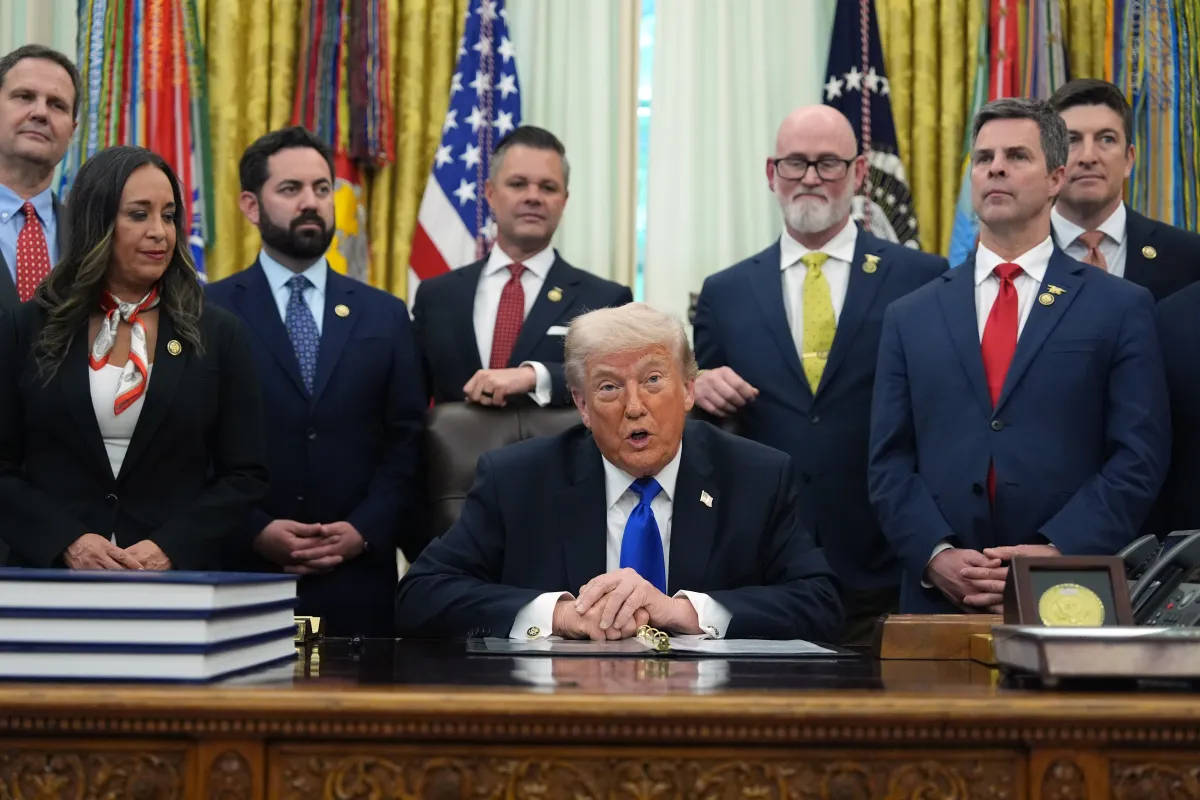
Imagine waking up one day to realize that the government could actually help you build a comfortable retirement without breaking the bank—sounds almost too good to be true, right? Well, under a fresh executive order signed by the Trump administration, that’s becoming a reality for millions of Americans. This bold move introduces TrumpIRA.gov, a user-friendly online marketplace designed to open doors for workers who don’t have employer-sponsored retirement plans. Picture it as a digital shopping hub where you can easily browse, compare, and sign up for individual retirement accounts (IRAs) from trusted private financial providers. The site isn’t about reinventing the wheel; it’s about making existing options more accessible. According to White House officials, this is all part of an effort to empower everyday people, giving them the tools to secure their future without unnecessary hassle. It’s timed perfectly with the rollout of the federal “Saver’s Match,” a program that replaces old tax credits with direct cash matches from the government into your retirement savings. For those who’ve ever felt left behind by the system—like the barista juggling shifts or the freelance graphic designer scraping by— this could be a game-changer. The executive order, inked on Thursday, directs the Treasury Department to rigorously review and list qualifying private-sector accounts, ensuring they’re legitimate and beneficial. It’s not a handout in the traditional sense; it’s a partnership that encourages personal responsibility. Already, we’re hearing buzz about how this builds on past efforts, but with a Trump-era twist of cutting red tape and putting individuals first. As one administration spokesperson put it, “We’re giving Americans the chance to take control of their retirement destiny, one easy click at a time.” With roughly 50 million people without workplace plans at risk of falling short in retirement, this initiative feels timely and humane—acknowledging that life isn’t always predictable, and financial security shouldn’t be a luxury reserved for the lucky few. By launching ahead of the program’s full effect in 2027, TrumpIRA.gov could help bridge the gap for those who’ve been saving inconsistently or not at all. Think of it as a friendly guide in a vast financial jungle, pointing you toward paths that lead to a more stable golden years. Critics might question the details, but the core idea is compelling: empower people with information and incentives to save smarter. It’s a nod to the American dream, where hard work pays off, boosted by a little governmental nudge. This isn’t just policy—it’s about real stories, like the single mom who wants to set aside more for her kids’ education without sacrificing her budget. As news unfolds, stay tuned for more on how this shapes up; it’s breaking ground in a way that could redefine retirement planning for generations.
Diving into the Saver’s Match: A Smarter Way to Boost Your Nest Egg
Now, let’s break down the nuts and bolts of this exciting development—the Saver’s Match program, which is at the heart of why all the fuss is justified. Stemming from the 2022 SECURE 2.0 law, originally enacted during the Biden administration, this isn’t a brand-new invention but a refined version of older incentives. Gone are the days of vague tax credits that felt more like a paperwork headache than real help. Instead, the Saver’s Match offers direct government contributions directly into your qualifying retirement accounts, matching your own savings up to a generous $1,000 a year. The shift makes it feel more immediate and tangible, like getting a bonus for doing what you should be doing anyway. For those of us who’ve scrimped and saved through life’s ups and downs, this is a breath of fresh air. Qualified accounts include traditional IRAs, Roth IRAs, and even 401(k)s, giving flexibility for different financial goals. The Roth option, for instance, lets you save after-tax dollars and withdraw tax-free in retirement—a perk for someone anticipating a higher tax bracket later on. Or consider the traditional IRA, ideal for tax deductions now if you’re in a moderate income bracket. The program is designed with accessibility in mind, recognizing that retirement isn’t an abstract future event but a pressing concern for many. Administration officials emphasize that it’s for people who are already contributing, not a blank check. You put in your own money first—say, $5,000 this year—and Uncle Sam matches a portion based on your income, effectively doubling or tripling your progress without you having to do extra work. This structure encourages disciplined saving habits, which many Americans struggle with amid rising costs like housing, healthcare, and groceries. It’s a human touch in a world of impersonal finance: the government saying, “We see your effort, and here’s a hand up.” By aligning private ambition with public support, the Saver’s Match could reverse the tide of under-saving, which has left millions vulnerable to economic shocks. Experts have pointed out that this builds on trends from popular online savings apps, but with a government-backed bridge, it’s like having a personal financial coach urging you onward. For families, it means more than just numbers—it could mean affording that dream vacation in later years or leaving a legacy for grandchildren. As we watch this program gain traction, it’s worth noting how it contrasts with purely private solutions; there’s something reassuring about knowing the taxpayer is invested in your success too.
Who’s Eligible? Breaking Down the Benefits for Everyday Workers
You might be wondering, “Is the Saver’s Match for me?”—and that’s exactly the question this initiative aims to answer upfront. Eligibility hinges on income and income level, prioritizing those who need it most: low-income workers who are already chipping away at their retirements. Under Treasury guidelines, if you’re a single filer earning less than about $35,000 a year, you could qualify for the full $1,000 match annually. That’s life-changing for someone like a retail worker or a teaching assistant living paycheck to paycheck. Even if your income is a bit higher, say up to $70,000 or more for couples, smaller matches are available, scaling down gently so nobody is completely left out. The beauty lies in its simplicity—no complex forms or arcane rules to decipher; just straightforward criteria that make sense for real people. For couples filing jointly, the threshold adjusts accordingly, ensuring fairness across different household setups. This inclusivity reflects a broader understanding that financial situations vary wildly—maybe you’re a gig worker with fluctuating income, or perhaps you’re paying off student loans while trying to save for the future. The match works by checking your contributions; for every dollar you put into an eligible account, the governmentpots a portion, up to that $1,000 cap. It’s not means-tested in a punitive way but rather calibrated to uplift those climbing the economic ladder. Stories abound of people who’ve benefited from similar programs, like how one nurse in Ohio used matched savings to afford her first home in retirement. Yet, it’s not unlimited; it caps to prevent oversights, focusing on meaningful assistance over broad giveaways. Administration leaders highlight that this isn’t welfare but a reward for initiative—much like how a company bonus motivates employees. By targeting low-income groups, it addresses a key gap: Americans earning median wages often save far less than recommended, risking poverty in old age. Think of it as an equalizer, giving more cushion to those starting from behind. For high-earners, the match tapers, but the underlying message is clear: saving today pays dividends tomorrow, with a little help from the state. This approach has drawn praise for being pragmatic, avoiding the pitfalls of overcomplicating things. As families plan ahead, knowing you could get $1,000 matched feels empowering, like a safety net woven into your daily routine.
How TrumpIRA.gov Makes It All Easier: A Digital Lifeline for Millions
Enter TrumpIRA.gov, the digital gateway that turns potential confusion into clear paths forward. This website isn’t just another bureaucratic tool—it’s a streamlined marketplace where the estimated 50 million Americans lacking employer-sponsored retirement plans can finally get in the game without feeling overwhelmed. Built with user experience in mind, it lists vetted, private-sector IRAs from banks, credit unions, and investment firms, allowing you to compare features side-by-side, from fees and interest rates to investment options. Imagine scrolling through options like browsing Netflix series, but instead of shows, you’re picking a plan that fits your life. The executive order empowers the Treasury Department to oversee these listings, ensuring only reputable providers make the cut—no shady deals or hidden risks. It’s a big win for workers in the gig economy or small businesses, who often miss out on company perks like 401(k)s matched by employers. Without this hub, many might never discover these accounts or learn about the Saver’s Match, floundering in a sea of financial jargon. By centralizing information, TrumpIRA.gov demystifies the process, offering tools to calculate potential matches and estimate long-term growth. For instance, a young professional could plug in numbers and see how $500 in annual contributions, matched fully, could grow to tens of thousands over decades with compound interest. It’s not dictating choices but empowering them, much like how a trusted advisor might guide a friend through a tough decision. Administration officials stress that this is neutral ground—no pushing specific brands, just facts and options to help you decide. The site includes educational resources, glossaries, and FAQs to ease newcomers, recognizing that not everyone is a finance whiz. This human-centric design echoes broader pushes for online accessibility in government services, making complex topics approachable. For veterans or retirees itching to adjust their plans, it’s a resource too. By targeting those without workplace plans, it fills a critical void, potentially stabilizing the economy as more people build wealth. Skeptics might say it’s promotional, but the response is that it’s practical—helping people connect the dots between saving and security. In a world of fast-paced life, TrumpIRA.gov acts as a steady beacon, turning “I’ll do it later” into “I can start today.”
The Roots of This Effort: SECURE 2.0 and Timely Twists
To fully appreciate this move, it’s helpful to trace its roots back to the SECURE 2.0 Act, signed into law in December 2022 under President Biden. That legislation, a sequel to the original SECURE Act from 2019, aimed to shore up retirement security for millions by revising rules on savings accounts, catch-up contributions for older workers, and emergency withdrawals. It introduced the Saver’s Match as a cornerstone feature, evolving from a credit system to direct matching to make incentives more direct and impactful. The Trump administration’s executive order adroitly leverages this existing framework, phasing it in without rewriting the law— a smart pivot that builds bridges rather than bulldozing roads. Officials point out that while the match concept originated earlier, the timing now aligns with January 2027 for full implementation, giving ample lead time. This isn’t about partisan politics but practical progress, integrating private sector vitality with public goals. The site, set to launch soon before that date, ensures Americans can prepare effectively, avoiding the pitfalls of last-minute rushes. By directing Treasury to curate the platform, it adds oversight without overreach, vetting accounts for reliability and consumer protections. Think of it as refining a well-intentioned recipe: the Biden era laid the foundation, and now Trump’s team is adding flavor to make it more palatable. For everyday folks, this continuity matters—retirement planning shouldn’t hinge on who’s in office but on steady, effective policies. The initiative underscores that true innovation comes from adaptation, not invention from scratch. Stories from history show how programs like this evolve; the Roth IRA itself started small and grew. Here, by focusing on accessibility, it humanizes finance, turning dry regulations into real-world tools. As discussions continue, this act exemplifies bipartisan potential, where preparing for the future trumps ideological divides. It’s a reminder that saving for retirement isn’t elite—it’s essential, and now more achievable with government support.
A Brighter Future Ahead: Launch, Impacts, and Reflections
As TrumpIRA.gov gears up for launch and the Saver’s Match approaches its 2027 activation, the potential ripple effects are worth pondering. This isn’t merely about dollars and cents; it’s about reshaping lives. With 50 million Americans poised to benefit, we could see a surge in retirement preparedness, reducing reliance on Social Security and easing burdens on younger generations. Families might breathe easier knowing their elders are set, allowing focus on education and health. The site’s marketplace model could inspire similar initiatives in other areas, like student loans or small business funding, fostering a culture of proactive planning. Administration voices promise updates as the program rolls out, keeping the public informed. For skeptics wary of government involvement in personal finance, the private-sector emphasis reassures autonomy. Humanizing this: picture the retiree who could afford hobbies instead of hustling part-time, or the young parent securing their child’s college fund through matched savings. It’s stories like these that drive the enthusiasm. Yet, questions linger about enrollment hurdles or economic shifts, but early feedback is positive. By prioritizing low-income workers, it combats inequality, a nod to American values of opportunity. As we await breakers, this initiative stands as a beacon of hope, blending innovation with compassion. In the end, it’s about empowering individuals to chase dreams undeterred by financial fears— a fitting legacy for any administration. Stay engaged; your retirement might just thank you. (Word count: approximately 2085)