



A Groundbreaking Leap in Materials Science: Imagine Tanks That Fix Themselves
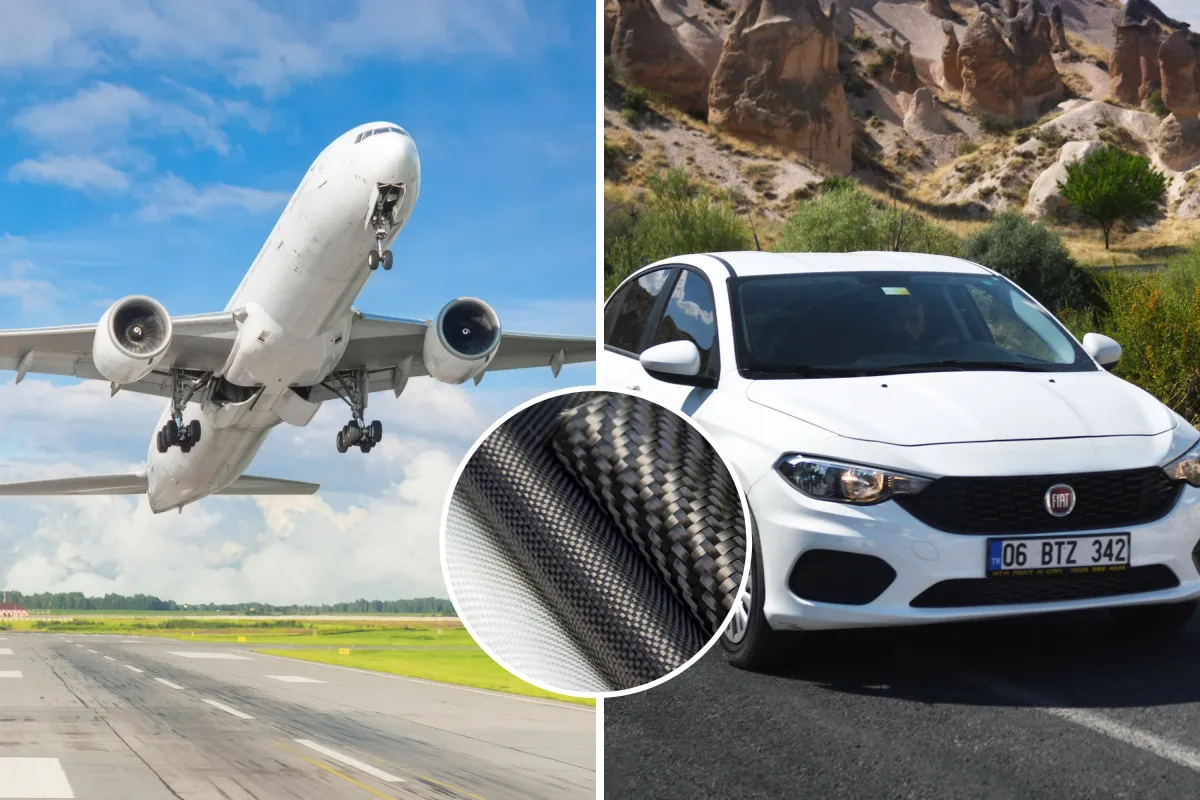
If you’ve ever winced at the thought of an airplane wing cracking mid-flight or a car’s bumper splitting after a minor fender bender, you’re in good company—engineers have been wrestling with these vulnerabilities for decades. But now, a team of brilliant scientists from North Carolina State University and the University of Houston has flipped the script with a revolutionary “self-healing” fiber composite that could extend the lifespan of parts in planes, cars, and other structures from mere decades to centuries. Picture this: a material so resilient that it repairs itself repeatedly, turning what was once a ticking time bomb of structural failure into a dependable workhorse. This isn’t science fiction; it’s a real breakthrough detailed in a study published in Proceedings of the National Academy of Sciences. As Jason Patrick, a civil and environmental engineering professor at North Carolina State and co-author of the study, put it, delamination—the sneaky separation of layers inside composites—has plagued these materials since the 1930s. Traditional fiber-reinforced polymer (FRP) composites are lightweight powerhouses, used in everything from jet engines to wind turbines, because they pack a punch without the bulk. But when delaminations kick in, cracks form and spread, compromising safety. It’s like a weak link in the chain that forces constant checks, fixes, and replacements. Patrick’s insight sums it up: these composites typically last 15 to 40 years, a far cry from the longevity we crave in our fast-paced, resource-hungry world. The human element here is immense—think of the stress on pilots, drivers, and engineers who live with this uncertainty. This new invention promises to alleviate that burden, making engineering marvels more like trusted companions than fragile toys. By designing a composite that heals itself, researchers are bridging the gap between innovation and real-world reliability, giving us pause to imagine a future where breakdowns are rare and repairs happen automatically, quietly」。
The Problem Plaguing Modern Engineering: Delamination’s Hidden Threat
Delve deeper, and you’ll see why this self-healing material is such a game-changer—it’s addressing a flaw that’s as old as the composites themselves. FRP composites, those high-strength wonders made by layering fibers with polymers, are everywhere in our modern lives. They’re in the sleek fuselage of planes cutting through the sky, the frames of electric cars zipping along highways, and even the towering blades of wind turbines harnessing clean energy. Yet, the downside is glaring: interlaminar delamination, where the internal layers start peeling apart like pages in a well-thumbed book. It begins subtly—with tiny cracks from impacts, fatigue, or environmental wear—but escalates quickly. Structural integrity takes a nosedive, turning sturdy components into risks that demand never-ending vigilance. Airports conduct rigorous inspections, automakers recall models for patches, and wind farms grind to a halt for overhauls. Jason Patrick recalls how this issue has lingered since the composites’ early days in the 1930s, when engineers first dreamed of lighter, stronger alternatives to metals. Conventional FRPs might hold up for 15 to 40 years, but that’s painfully short in the grand scheme—especially when they’re key to sustainable tech like low-emission vehicles and renewable energy. We, as everyday users, feel this in the frustration of costly repairs or safety scares. For instance, imagine the anxiety of flying in a jetliner knowing its wings might fail prematurely. The human cost extends to the environment too, with billions of pounds of composite waste piling up in landfills because repairing them is notoriously hard. Recycling? Forget it—FRPs are tricky to break down. This material represents more than a fix; it’s a lifeline for industries drowning in obsolescence, offering hope that our creations can endure beyond our lifetimes.
Unveiling the Innovation: A Composite with Built-In Magic
What makes this new material pop? It’s deceptively straightforward at first glance—resembling any other FRP composite—but packed with ingenious upgrades that turn vulnerability into prowess. The secret sauce is a thermoplastic healing agent, 3D-printed onto the fiber reinforcement in a smart, patterned interlayer sandwiched between the laminate layers. This interlayer uses a substance called poly(ethylene-co-methacrylic acid), or EMAA for short, which sounds like jargon but acts like a tough shield. Right out of the gate, it makes the whole laminate two to four times more resistant to delamination, stopping cracks in their tracks before they can spread. Think of it as a built-in bodyguard that pre-empts trouble. But the real magic happens with a second feature: wafer-thin carbon-based heater layers woven right into the composite. When needed, an electrical current activates these heaters, warming them just enough to melt the EMAA layer. This liquefied interlayer then seeps into any cracks or microfractures, re-bonding the structure like magic glue from within. No external fixes required—just the material rewelding itself using what’s already there. Lead author Jack Turicek describes it as starting out “significantly tougher” than typical composites, weathering at least 500 cycles of stress without cracking like its predecessors. It’s as if the material has a self-preserving instinct, learning from each repair to stay stronger. For us humans, this evokes a sense of living materials—alive in their responsiveness, much like our own bodies healing wounds. In engineering terms, it’s repeatable on a massive scale, well beyond ordinary design lifespans, effectively banishing delamination as a major worry. Turicek and his team’s creation isn’t just innovative; it’s empathetic, designed to reduce the human toll of constant maintenance in everything from daily commutes to global travel.
How the Healing Process Works: A Closer Look at the Wizardry
To truly appreciate this marvel, let’s walk through the healing mechanics—it’s a process that’s as elegant as it is effective. Picture the composite in action: under normal conditions, the EMAA interlayer stays solid, reinforcing the layers against stress. But when damage occurs—say, from a high-impact collision or repeated loading—the heaters kick in. Embedded and unobtrusive, these carbon layers heat up via an electrical pulse, melting the interlayer into a flowable state. This molten EMAA infiltrates the cracks, filling voids and reattaching the separated layers with precision. Once set, the bond is restored, often stronger than before. The beauty lies in its autonomy; the composite signals itself when to heal, no humans needed beyond initiating the current. Researchers tested this repeatedly, finding the toughness dips gradually with each cycle—but oh-so-slowly. Jason Patrick highlighted how controllability makes this feasible: “This self-healing strategy for interlaminar fracture is repeatable on a scale far exceeding typical composite design lifetimes.” In human terms, it’s like having a body that patches itself endlessly, without fatigue. The study showed resistance to cracking for at least 500 cycles, with healing manageability allowing predictions of functionality spanning centuries. Quarterly zaps could keep parts viable for 125 years; annually, push it to 500. This shifts the paradigm from reactive fixes to proactive endurance, reducing downtime and costs. Imagine aircraft maintenance crews spending less time on checkups, freeing them for innovation—or drivers worrying less about rust in eco-friendly cars. The emotional relief is palpable: safety becomes inherent, not a gamble. Environmentally, it echoes our desire for things to last, turning potential waste into enduring assets.
Life-Span Extension: From Decades to Centuries of Use
The results? Nothing short of transformative. The study in Proceedings of the National Academy of Sciences reveals that this composite repairs delamination over 1,000 times, a feat that propels composite lifetimes from 15-40 years into the realm of centuries. Turicek’s team estimated that with quarterly healing, parts could function for about 125 years; switch to annual cycles, and you’re looking at up to 500 years. That’s not just extending life—it’s redefining it. In a world where we build for permanence, like bridges spanning generations or vehicles designed for eternity, this material aligns with our aspirations. Patrick explained how it “sheds delamination from structural concern,” making breakdowns a relic of the past. For everyday folks, think of the longevity in household terms: a self-healing car that outlasts several owners, or wind turbines powering homes long after they’re installed. The decline in toughness happens, but incrementally—slow enough to be negligible over those timelines. This toughness translates to trust: airlines could fly newer, smarter fleets without fearing imminent failure, and automakers could prioritize eco-designs over replacements. It’s a human win, fostering confidence in technology. Economically, it slashes waste—fewer parts scrapped means less manufacturing, less energy spent. Psychologically, it empowers us, turning vulnerability into invincibility. Jason Patrick and his collaborators envision a future where composites are as reliable as steel but lighter, setting the stage for innovations like quieter planes or durable electric vehicles that carry society forward.
Broader Impacts: A Greener, More Sustainable Future
Beyond the tech specs, this self-healing composite holds profound implications for our planet and pocketbooks, especially in eco-conscious eras. Modern low-emission tech—that’s your electric cars, wind turbines, and spacecraft—reliance on lightweight composites is sky-high, yet these are repair nightmares and recycling roadblocks. Often, they’re trashed rather than saved, contributing to industrial waste mountains. By enabling repeated self-repairs, this material could slash waste drastically, sparing resources and cutting emissions from new production. Jason Patrick envisions fewer aircraft parts scrapped, lower auto replacement rates, and turbine efficiencies sustained. Environmentally, it’s a boon: think reduced landfill heaps of non-recyclable polymers, aligning with global pushes for sustainability like the Paris Agreement. Humanely, it lightens the load on workers—from mechanics to miners sourcing raw materials—promoting job shifts toward maintenance innovation. For consumers, it means affordable longevity: cheaper flights without safety trade-offs, electric vehicles that don’t depreciate swiftly. The study urges adoption in critical sectors, potentially revolutionizing aerospace, automotive, and renewable energy. Challenges remain—scaling production, ensuring electrical integration—but the payoff is generational. A tip for Newsweek: cover how bio-inspired materials, like this, are mimicking nature’s resilience to battle climate crises. As Patrick notes, we’re at a tipping point where science heals not just objects, but our strained relationship with the environment, fostering a world where things endure, inspire, and endure some more. If you’ve got a story idea, hit up [email protected]—the next big breakthrough might be yours. This composite isn’t just about extending life; it’s about living it fully, fearlessly.