


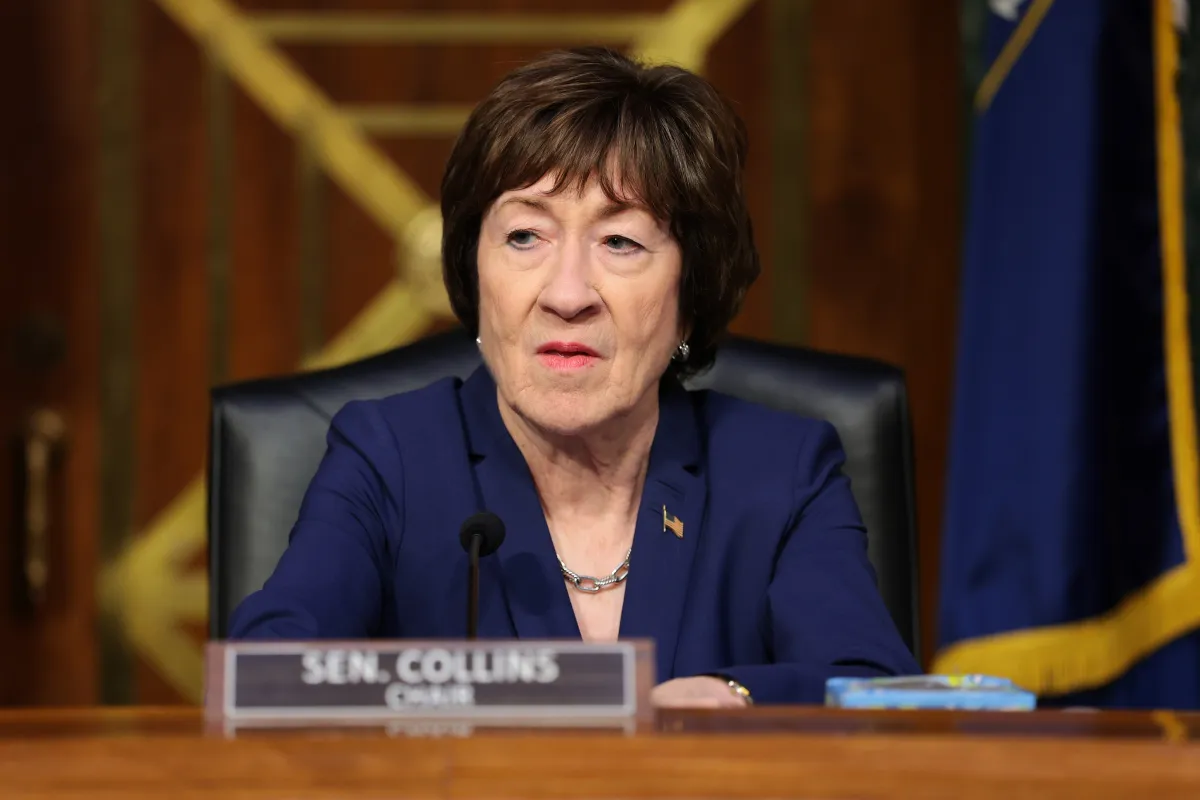
For decades, the political landscape of Maine has been defined by a sense of sturdy, pragmatic independence, a quality embodied by its senior senator, Susan Collins. She has navigated the treacherous waters of Washington with a folksy charm, a moderate streak, and a knack for surviving electoral waves that have swept away other Republicans in the Northeast. Yet, as the summer of 2026 stretches toward an unpredictable November, the old certainties are dissolving like fog over the Atlantic. A brand-new Fox News poll, conducted in the oppressive heat of early August, has sent seismic tremors through the political establishment, revealing that Troy Jackson—a fifth-generation logger with calloused hands and a deep-seated populist fury—is leading the seemingly unassailable Collins by a razor-thin margin of 48 to 46 percent. That two-point advantage is a statistical whisper, existing entirely within the poll’s three-point margin of error, yet it screams volumes about the shifting tectonic plates beneath the Pine Tree State. For the first time in her storied career, Collins is not the unflappable titan of Maine politics; she is a wounded figurehead, fighting for her political life against a genuine cultural force.
The path to this knife-edge has been paved with the rubble of an unexpected collapse, one that reshaped the entire contest in a matter of weeks. Just a few months prior, in June, Collins appeared to be cruising to another comfortable victory, leading her then-opponent, Democrat Graham Platner, by a solid 50 to 47 percent. Platner was a rising star, but a dark cloud had been following him—a series of serious allegations involving past conduct, including accusations of inappropriate behavior and alleged sexual assault, which he categorically denied. The pressure became unbearable, and in a gut-wrenching decision that echoed throughout the state, Platner stepped aside, leaving the Democratic ticket in sudden, chaotic disarray. It was a moment of crisis that could have easily crippled the party’s chances. But out of that wreckage, a formidable new force emerged, born not of a strategic masterstroke but of a serendipitous twist of fate. Troy Jackson, who had been quietly wielding power as the president of the Maine Senate, seized the nomination with the urgency of a man who had been waiting his whole life for this chance. His rise to the national stage feels less like a calculated political launch and more like the return of a native son, one who understands the primal grievances and quiet hopes of the people who live beyond the interstate highways—a stark, visceral contrast to the polished, perennial Washington figure of Collins.
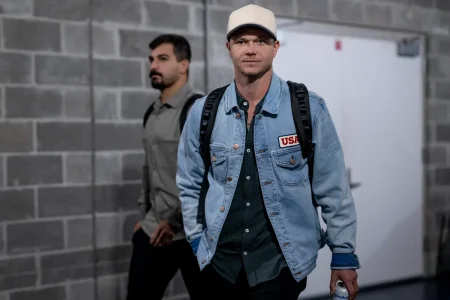
Jackson is not merely a politician; he is a walking embodiment of rural Maine’s working-class identity, a living rebuke to the coastal elitism that many voters feel has abandoned them. A fifth-generation lumberjack from the northern reaches of the state, Jackson carries himself with the sturdy gait of a man accustomed to uneven terrain, his lanyard and safety gear as authentic to his being as Collins’s trademark cardigans are to hers. His brief tenure as Senate President allowed him to sharpen his legislative acumen, but his true appeal lies in his authentic narrative—a stark rejection of the polished careerism that defines so much of American politics. He speaks the language of the disenfranchised: the skyrocketing price of heating oil, the collapse of the paper mills that once sustained entire families, and the existential dread of watching young people flee to the cities in search of work. In a state that has gradually drifted leftward on social issues but remains deeply skeptical of cosmopolitan condescension, Jackson offers a bridge. He gives rural voters a Democratic candidate who does not look down on their firearms, their hunting traditions, or their reliance on the land. This genuine connection explains why the new polls show him surging among younger voters, union households, and even reclaiming the male vote which Collins had previously dominated. The race has transformed from a predictable re-election into a genuine cultural duel for the very soul of Maine’s middle class, where authenticity has become the most valuable currency.
For Susan Collins, the statistics present a terrifying portrait of erosion, a slow but relentless fading of the carefully nurtured persona she has so meticulously built. For decades, she has managed to soothe moderates and independents by occasionally throwing a rhetorical grenade into her own party’s ranks, famously voting against the repeal of the Affordable Care Act and rejecting the Supreme Court nomination of Brett Kavanaugh. However, the mood in 2026 has shifted into one of deep, entrenched suspicion. The Fox News poll highlights a devastating finding: a staggering 55 percent of Maine voters are “extremely or very concerned” that Collins votes too often with former President Donald Trump. This is the dagger buried deep in her side. Her carefully manufactured independent brand has been tested to the breaking point by the immense gravitational pull of the MAGA base. She finds herself caught in a brutal political vice. If she pivots further right to shore up her Republican base, she risks alienating the suburban women and college-educated moderates who have formed the bedrock of her electoral support for years. If she gestures leftward, she invites a formidable, well-funded primary challenge from the party’s more extreme Trump loyalists. The poll exposes this fracture with clinical precision: while nearly all self-identified MAGA Republicans stand firmly behind her, support among non-MAGA Republicans has cratered, with over one in five of that crucial bloc whimsically backing Jackson. The election is no longer simply a referendum on her pork barrel projects or her committee seniority; it is a profound question of whether she represents the past or the future of her own party, and whether there is any longer a home in Maine for her particular breed of fiscal prudence mixed with social tolerance.
The emerging electoral map of this battle is a stark study in social and economic schisms. Jackson’s emerging coalition is a coalition of change—liberals, the vibrant under-45 demographic, college-degree holders, and organized labor—the very demographic engines that power modern Democratic victories across the nation. On the other side of the divide, Collins clings to a formidable but steadily shrinking fortress of conservatives, white evangelical Christians, voters without college degrees, and deeply rooted rural dwellers. Yet, even this bastion is starting to show visible cracks. While the MAGA contingent remains fiercely loyal, the erosion of her previous double-digit advantage among men is a telling indicator of shifting tides. Collins had always enjoyed a strong following among old-school, independent-minded male voters who appreciated her folksy demeanor and moderate stands on environmental conservation. That advantage has now been completely erased, a loss of confidence that cannot be easily rebuilt. The anxiety on the ground is palpable; people walking into town fairs and coffee shops are expressing a raw, visceral distrust of Washington institutions, and in that swirling suspicion, Collins is increasingly seen as too embedded, too comfortable with the status quo that they feel has left them behind. Conversely, Jackson, with virtually nothing to lose, can position himself as the ultimate outsider, the man who will crack heads in Washington just as he breaks logs in the forest—a visceral image that resonates with a populace tired of gridlock. The independents, those pivotal swing voters who have decided nearly every Maine statewide race for the past half-century, are currently split, and their final verdict will likely hinge less on dry policy details and more on which candidate feels more authentically aligned with their own anxieties about the future.
This is not a fleeting blip on the radar; the Fox News findings are strikingly corroborated by independent surveys from across the ideological spectrum. The University of New Hampshire’s Pine Tree State Poll showed Jackson leading at 49 percent to Collins’s 46 percent, while a Hart Research poll commissioned by the Senate Majority PAC mirrored those numbers almost exactly, giving Jackson a 49 to 45 edge. This remarkable consistency across multiple polls suggests that Collins has fallen behind the fundamental trajectory of her state, her decades of service being outweighed by a national political environment that has become deeply toxic for her brand. As the November 3rd election looms ever closer, the stakes have grown to monumental proportions. For Collins, this campaign is a last stand for the old Republican order, a chance to prove that a senator can still defy the gravitational pull of partisan extremism and win on the strength of personal relationships and constituent services. For Jackson, it is a once-in-a-lifetime opportunity to electrify a state weary of partisan warfare by proving that a blue-collar logger from the backwoods can topple a political dynasty. The race has been officially designated a toss-up, a moniker that would have seemed absurd just a year ago, and both campaigns are now entering a brutal phase of endurance, media stamina, and raw human connection. Collins will lean on her vast financial war chest and the faint hope that her long institutional memory will overcome the lingering aroma of Trumpism. Jackson will lean on his authenticity, his swagger, and his profound, unbreakable connection to the land. In a state known for its fierce independence and stubborn pride, the outcome will ultimately hinge on a profoundly human metric: which candidate can convince a weary voter, standing in the cold November wind, that they truly understand their life, their fears, and their dreams. The answer delivered on election night will not only define the future of Maine politics for a generation but will also serve as a national barometer on the enduring power of identity and authenticity in a deeply divided America.