





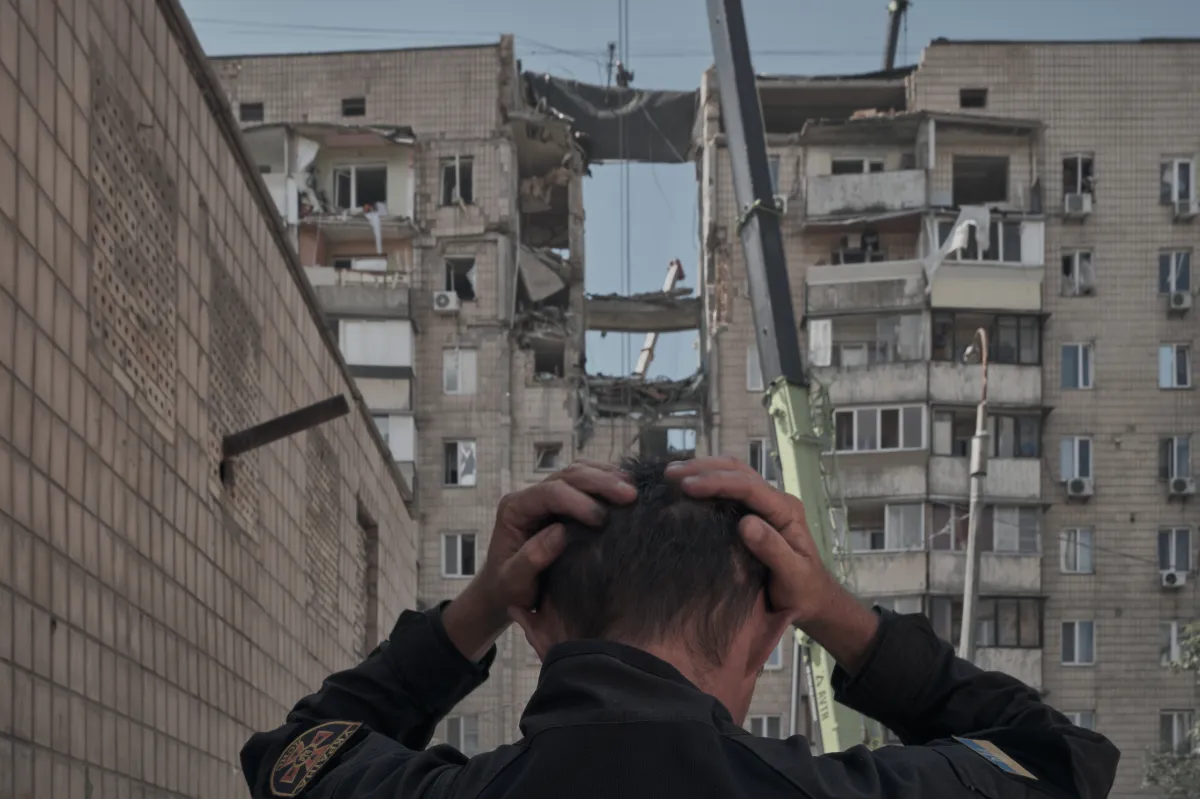
The human cost of the war in Ukraine has reached another devastating peak following a series of relentless Russian airstrikes on Kyiv. These latest bombardments, which claimed dozens of lives in a matter of days, have highlighted a critical vulnerability that Ukrainian President Volodymyr Zelensky has long warned against: a desperate shortage of air defense interceptors, specifically the American-made Patriot missile systems. As the physical and psychological toll on the Ukrainian population mounts, Zelensky has traveled to the Ankara NATO summit to plead with international allies—including the new NATO Secretary General, Mark Rutte—for “strong decisions” and immediate military support. However, his urgent requests come at a time when Western stockpiles are severely depleted, leaving Ukraine’s defensive shield dangerously fractured and exposing its cities to an increasingly lethal mix of Russian drones and ballistic missiles.
The root cause of this supply bottleneck stretches far beyond the borders of Europe, tracing back to recent heavy military engagements in the Middle East. According to military analysts and frontline humanitarian organizations, the United States expended a massive portion of its critical munitions—including roughly 45 percent of its Patriot interceptors and over half of its THAAD defense systems—during the intensive air campaign of the Iran War. For frontline communities in Ukraine, this logistical reality has had immediate and catastrophic consequences. Russian forces, well aware of the depleted Western inventories, have adapted their strategy to exploit the shortage. They now launch waves of cheap drones designed to trick Ukrainian forces into burning through their remaining expensive interceptor missiles, immediately followed by high-speed ballistic and hypersonic strikes that slice through the depleted defenses.
This severe strain on American munitions has shifted the geopolitical calculus for Washington, forcing a reevaluation of how it resources its allies. Reportedly, the U.S. used more Patriot missiles in a three-day span of the Iran conflict than Ukraine has received throughout the entire post-2022 invasion. Because replenishing these highly sophisticated systems to pre-war levels can take anywhere from one to four years, the U.S. has already delayed or canceled scheduled arms deliveries to Europe, including crucial air defense assets and mobile rocket artillery. This conservation of remaining stockpiles has understandably made NATO allies more protective of their own dwindling reserves. As a result, the flow of life-saving defensive weaponry to Kyiv has slowed to a trickle, leaving Ukrainian commanders with the agonizing task of choosing which cities, power plants, and civilian populations to protect and which to leave exposed.
Against the backdrop of American hesitation and shifting priorities under President Donald Trump, the NATO summit in Ankara has thrust Turkey into the spotlight as a pivotal regional power. Boasting the alliance’s second-largest military, Turkey holds immense strategic leverage, particularly through its control of the Bosphorus and Dardanelles straits under the Montreux Convention, which it used to block Russia from reinforcing its Black Sea fleet. With Trump frequently criticizing European defense spending and threatening to scale back America’s commitments to NATO, Turkey’s President Recep Tayyip Erdoğan is positioning his nation as the indispensable bridge capable of plugging the massive security gap that a U.S. withdrawal would create. Proponents of Turkey’s role argue that no other European actor possesses the sheer manpower, strategic geography, and industrial capacity to manufacture defense equipment at the speed and volume required to counter Russian aggression.
However, Turkey’s bid to position itself as NATO’s ultimate stabilizer is met with deep skepticism and concern by many Western defense experts and policymakers. Critics point out that despite Erdoğan’s public displays of allyship, Ankara continues to maintain close ties with Moscow and Beijing, refusing to divest from the Russian-made S-400 missile system that caused them to be ejected from the U.S. F-35 fighter jet program in the first place. Behind closed doors, many NATO members whisper doubts about Turkey’s true reliability, questioning whether its formidable military assets would ever actually be deployed to defend European security interests in a direct clash with Russia. Some policy analysts have even testified before U.S. lawmakers that Turkey behaves more like an escalating threat to the alliance’s southeastern flank than a stabilizing partner, warning against the sale of advanced aviation technology and jet engines to Ankara.
Despite these internal frictions, the Ankara summit represents a historic turning point where NATO allies are actively reshuffling their mutual responsibilities in a rapidly changing world order. As Mark Rutte teases major upcoming military agreements and Donald Trump hints at potential defense concessions to Turkey, the ultimate fate of Ukraine hangs in the balance of these high-stakes negotiations. For Zelensky and the millions of Ukrainians enduring daily bombardments, the political maneuvering in Turkey is not just a diplomatic exercise, but a matter of absolute survival. The decisions made in the coming days will dictate whether the international community can overcome its depleted stockpiles and political divisions to piece Ukraine’s fractured shield back together, or if the skies over Kyiv will remain tragically vulnerable to the next wave of Russian missiles.