






The Day Everything Changed: One Woman’s Battle With a Mysterious Illness
A Terrifying Moment on the Road
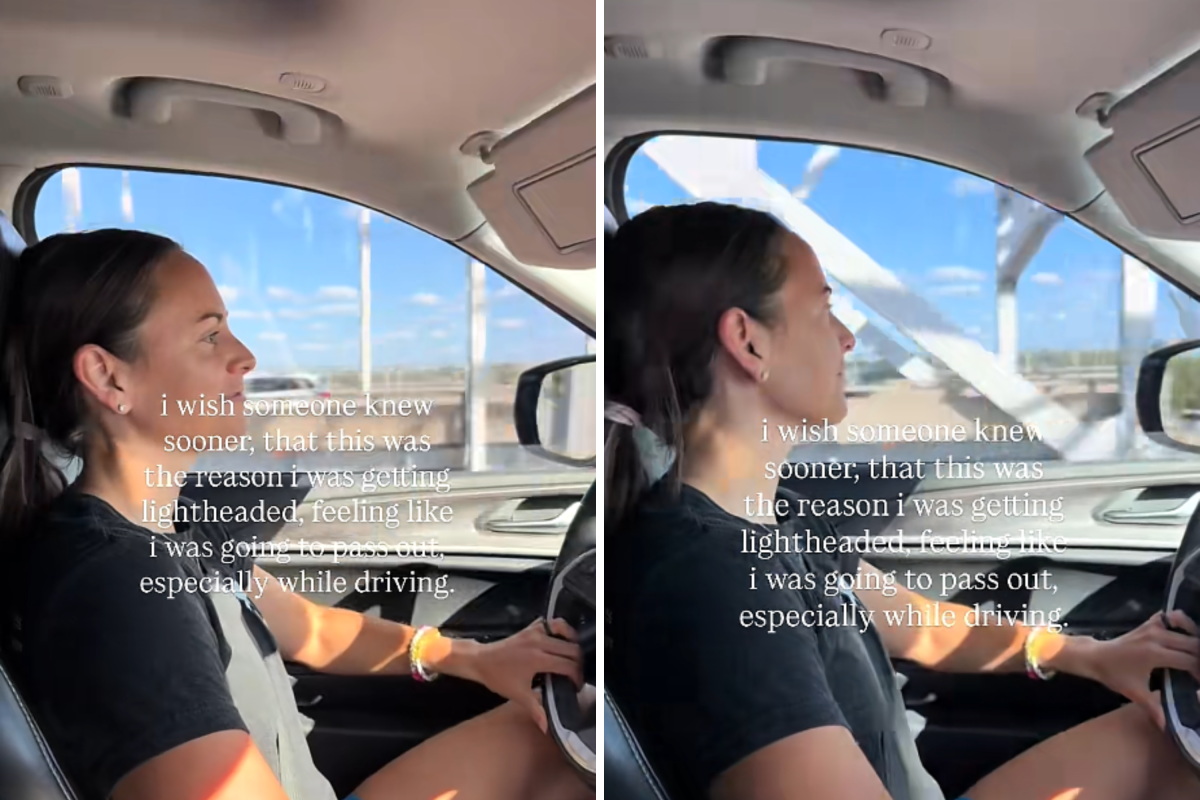
For Cayla Kranz, a 35-year-old fitness and nutrition coach from St. Louis, Missouri, October 2025 started like any other day. She was driving with her two young children, ages three and one, when suddenly her world turned upside down in a way she never expected. What she describes as a “day I’ll never forget” began with an overwhelming sensation that something was terribly wrong. Her vision began to darken, her head felt impossibly heavy, and a wave of lightheadedness washed over her so powerfully that she feared she might lose consciousness at any moment. The terror of that experience was magnified by the presence of her two small children in the car, and her maternal instincts kicked in immediately. With tremendous presence of mind despite her frightening symptoms, she managed to guide her vehicle safely off the road, ensuring her children were out of harm’s way before calling for help. Looking back, Kranz identifies this as “the big episode” that would fundamentally alter the course of her life, marking the moment when everything she knew about her health and daily existence would be challenged and transformed.
A Pattern of Unexplained Symptoms
What made this particular incident so significant was that it wasn’t actually the first time Kranz had experienced such troubling symptoms, though it was certainly the most severe. In the months leading up to that terrifying day, she had noticed herself feeling “off” and lightheaded with increasing frequency, though these earlier episodes had been much milder and easier to dismiss or explain away. She found herself rationalizing these strange sensations, attributing them to something as simple as an issue with her contact lenses or perhaps the result of a particularly intense workout session. As someone who had built her career around fitness and nutrition, she was accustomed to pushing her body and understanding its signals, so these persistent feelings of unease were both confusing and concerning. When the symptoms became persistent enough to warrant medical attention, she did what any responsible person would do: she sought help. She visited urgent care facilities and underwent a battery of tests, including cardiac evaluations and EKGs, hoping for answers that would explain what was happening to her body. Time after time, however, she received the same frustrating news: everything appeared completely normal, and medical professionals had no explanation for the symptoms she was experiencing. The lack of answers only added to her growing anxiety and confusion.
When Life Flips Upside Down
The episode while driving marked a dramatic turning point in Kranz’s experience, as her symptoms transformed from occasional and manageable to constant and debilitating. Following that frightening day, she found herself trapped in a nightmare of persistent health issues that refused to subside. She experienced constant shaky and floaty vision that made the world seem unstable and unreal, accompanied by perpetual lightheadedness that left her feeling disconnected from her own body. She developed derealization, a disturbing sensation that the world around her wasn’t real, along with heart palpitations that would race unexpectedly, and perhaps most troubling of all, she experienced anxiety for the first time in her life. Her body became trapped in what she describes as “fight or flight” mode, a state of constant physiological alert that was both exhausting and terrifying. Determined to find answers, she underwent even more extensive testing, including an MRI scan, but the results continued to show nothing unusual. She consulted with an impressive array of medical specialists, including her primary care doctor, multiple ear, nose, and throat doctors, cardiologists, an optometrist, and an ophthalmologist, yet none of them could provide her with any answers or explanations for what she was experiencing. The isolation and frustration of being sick without a diagnosis was overwhelming.
A Chance Conversation Changes Everything
The breakthrough in Kranz’s medical mystery came from an unexpected source: a conversation with a client who worked as a physical therapist. When Kranz described her symptoms to this client, something clicked immediately in the therapist’s mind. She recognized that Kranz’s experiences “sounded like a vestibular issue she remembered learning about in school.” This offhand comment would prove to be the key that unlocked everything. Intrigued and hopeful, Kranz began researching vestibular migraines, and as she read about the condition, everything suddenly made sense. Vestibular migraines are a specific type of migraine that can cause a complex array of symptoms including balance issues, nausea and vomiting, vertigo that can persist for days, sensitivity to light, smell, and noise, and severe headaches. What makes this condition particularly challenging to diagnose is that not everyone experiences every symptom, and the dizziness and other symptoms may not occur simultaneously with headache painaging. According to experts at Johns Hopkins University, the condition is notoriously difficult to identify because the onset of dizziness often doesn’t coincide with other symptoms, making it easy for both patients and doctors to miss the connection. The exact causes of vestibular migraines remain not fully understood by medical science, adding another layer of complexity to diagnosis and treatment.
Finding Answers and Moving Forward
Kranz expressed profound gratitude toward her client who recognized her symptoms, acknowledging that she might have continued searching for answers indefinitely without that crucial intervention. Looking back on her experience, she describes the period of having debilitating symptoms without any explanation as “the most difficult time in my life.” The experience has fundamentally changed her perspective, teaching her to appreciate every single day and recognize how quickly life can change in an instant. Throughout her ordeal, Kranz drew strength from a quote that had always been part of her professional philosophy: “You can do hard things.” This simple yet powerful mantra helped her persevere through her darkest moments, along with the unwavering support of her family and support system who stood by her during the most challenging days. While vestibular migraines cannot be cured, Kranz emphasizes that they are treatable, and she has found hope in the fact that she’s recently been experiencing more good days than bad ones. She maintains optimism about continuing to progress on her journey toward better health and stability, though she acknowledges that this will likely be an ongoing process of management and adaptation. Her story serves as both a testament to the importance of persistence in seeking medical answers and a reminder that sometimes the most unexpected sources can provide the breakthrough we need.
A Message of Hope for Others
In sharing her experience, Kranz hopes to reach others who might be struggling with similar mysterious symptoms and feeling alone in their journey. She wants them to know that they’re never truly alone in their struggle and that better days are indeed possible, even when it might not feel that way during the darkest moments of uncertainty and fear. Her story highlights the importance of advocating for oneself in the medical system, of seeking second opinions, and of being open to insights from unexpected sources. It also serves as a reminder that the medical community still has much to learn about complex conditions like vestibular migraines, and that patients often become the experts on their own bodies through their experiences. Kranz’s journey from confusion and fear to understanding and hope demonstrates the resilience of the human spirit and the importance of community support in navigating health challenges. Her ability to find meaning and purpose in her struggles, and to use her experience to potentially help others, speaks to her strength of character and her commitment to turning her adversity into something positive. As she continues to navigate life with vestibular migraines, she does so with a newfound appreciation for health, a deeper understanding of her own resilience, and a message of hope for anyone else walking a similar path.