


Imagine the moment when a phone rings in the middle of the night and a dispatcher hears the words “opioid overdose.” In Austin, Texas, those calls are coming more often—and each one is harder to reverse than the last. In late September, Austin-Travis County EMS told KXAN-TV that it had responded to 98 opioid overdose calls in a single 30-day stretch, up from 73 during the same period a year earlier. More troubling: nine of those patients required more than two doses of Narcan, the nasal spray that can temporarily reverse an opioid overdose. One or two doses is usually enough to bring someone back. When three, four, or five are needed, first responders know they are facing something different. “When we compare that to September of last year, we had 73 opioid overdoses, and only two of them required more than two doses of Narcan,” said Captain Christa Stedman of the Austin-Travis County EMS. The culprit, experts believe, is cychlorphine—a synthetic opioid often described as roughly ten times stronger than fentanyl. It is not just an Austin problem. Texas is not the only state facing increased cychlorphine-related overdoses. Deaths linked to the drug are on the rise across the country, with Tennessee reporting the highest number of fatal overdoses where cychlorphine was confirmed to have played a role. ATCEMS does not test for different types of opioids while treating patients, but cychlorphine-related overdoses have consistently required multiple doses of Narcan to reverse. For families, the surge is terrifying. For emergency responders, it means every call is now a race against a drug that can stop breathing in seconds, even in tiny amounts. And because the drug is often mixed with other substances, no one who buys a pill or powder on the street can be sure what they are holding.
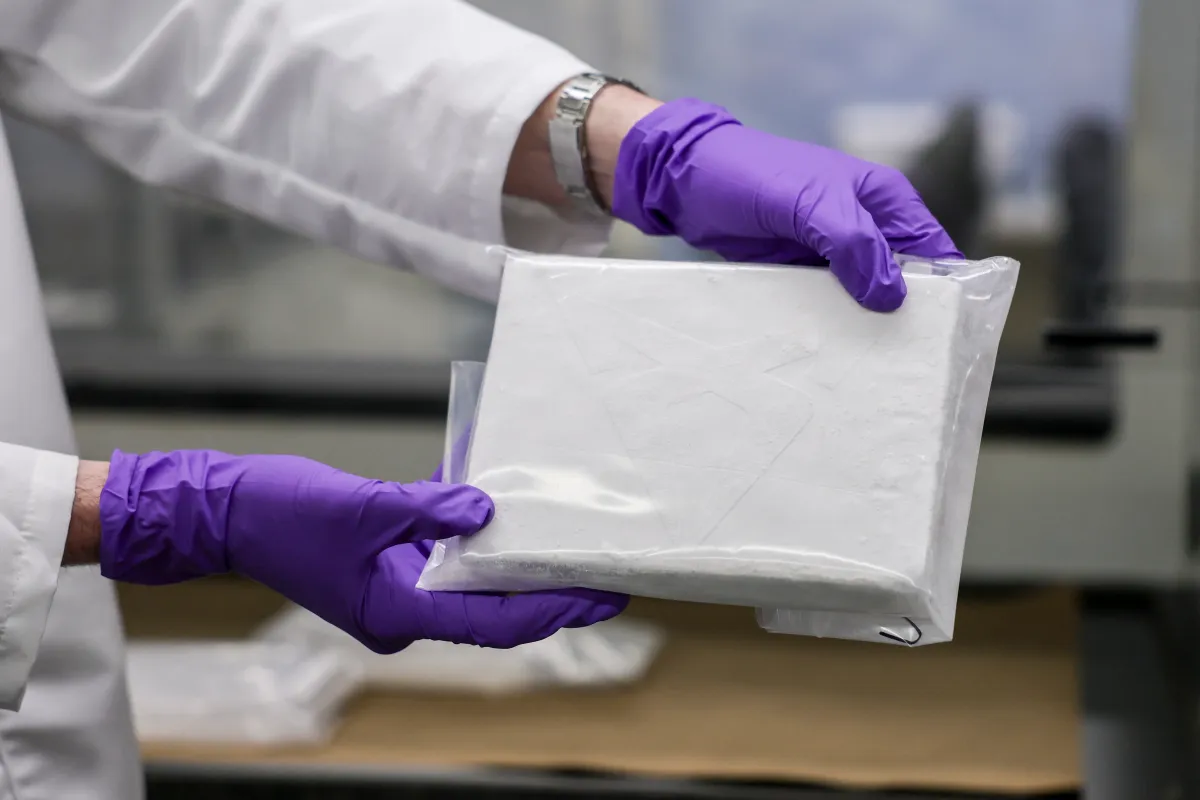
To understand why cychlorphine is so frightening, it helps to know where it came from and how it works. Chemically known as N-propionitrile chlorphine, it belongs to a class of synthetic opioids called “orphines” or benzimidazol-2-ones, first synthesized in a Belgian laboratory in the 1960s. Scientists were exploring these compounds as potential pain relievers, but cychlorphine was never approved for medical use and never marketed. For decades, it remained largely obscure—except in academic journals, where the recipe for making it was published. That research is now available online, and according to Keith Humphreys, a Stanford psychiatry professor and former senior drug policy adviser in the Obama administration, that is exactly how a forgotten lab chemical turned into a street-level threat. “People can produce it,” Humphreys told The New York Times. The drug is not technically new, but it has become more prevalent in illicit drug trafficking only in recent years. It has appeared in Europe, Canada, and the U.S. over the past couple of years, often not on its own. The Drug Enforcement Administration has warned that cychlorphine is increasingly being mixed into fentanyl and counterfeit pills, making it almost impossible for users to know what they are taking. Standard fentanyl test strips, which many people rely on to check their drugs, have proved ineffective at detecting cychlorphine. Man-made orphines are considered far more potent than fentanyl, and cychlorphine may be up to ten times stronger. That potency means a dose small enough to fit on the head of a pin can be lethal. It also explains why Narcan sometimes struggles to work: the more powerful the opioid, the more naloxone it takes to knock it off the brain’s receptors and pull someone back from the edge. For someone who takes what they think is a familiar drug, the result can be immediate and fatal.
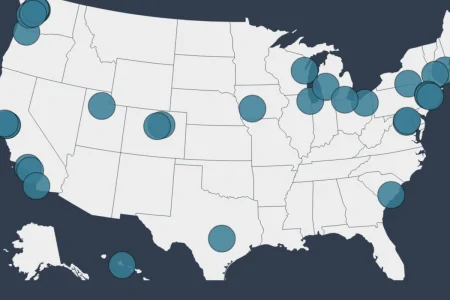
Cychlorphine’s spread has been rapid and quiet. The Drug Enforcement Administration first detected it in Florida in April 2024. Within a short time, it had moved across the country. In an April update, the Office of National Drug Control Policy reported that cychlorphine had been detected in 106 instances across 10 states, in all four U.S. regions, with the most concentrated detection in the South, Midwest, and Northeast. The same update counted at least 55 deaths nationwide linked to the drug between 2025 and early 2026. Since then, the numbers have continued to climb. Tennessee’s Knox County Regional Forensic Center said the state alone had seen 64 deaths tied to cychlorphine between July 2025 and September. But Chris Thomas, the center’s chief administrative officer and director, does not believe Tennessee is necessarily being hit harder than other states. “We just have more surveillance,” he told Newsweek. “In total, drug-related deaths are down 16 percent in Knox County for the first half of 2026. We believe this drug is in a lot more states, just undetected. Once we caught it and started bringing awareness to it, it slowly began leaving our market. I’ve not seen but three cases since July.” In July, Alex Krotulski, director of toxicology and chemistry at the Center for Forensic Science Research and Education, told SciLine that cychlorphine-related deaths had reached 140 across almost 20 U.S. states and Canada. The official national toll is difficult to pin down because states use different tracking methods, and many jurisdictions do not routinely test for cychlorphine. That gap means the drug can be present in a community long before officials realize it. By the time a cluster of overdoses is identified, the drug has already moved somewhere else. The geography of cychlorphine is not fixed; it is constantly shifting, following the same supply chains that have long distributed fentanyl and counterfeit oxycodone. The next community to see it could be a rural county with one hospital, a suburb with no harm-reduction services, or a city that has spent years trying to recover from the last wave of opioid deaths.
Behind these figures are real people: a college student who bought a pill at a party, a construction worker who thought he was taking oxycodone, a grandmother who had been in recovery for years and relapsed one weekend. Officials are raising the alarm because cychlorphine has the potential to ignite a new opioid epidemic—perhaps even more lethal than the fentanyl crisis. “As deadly as this drug is, it could have a significant impact on the rate of drug-related deaths. It is deadly in the smallest quantities,” Thomas said. “It’s never been more deadly to take street-level drugs than it has been in 2026.” The warning is not abstract. In Knox County, the forensic center has spent months spreading awareness about cychlorphine, both locally and nationally, partnering with substance abuse clinical providers to share stories of caution with people in treatment. Thomas said those partnerships are meant to encourage people to stay in programs that can help prevent further abuse. His office also connects local, state, and federal authorities on drug-related fatality trends, trying to trace the drugs back to their source. The hope is that by shining a light on the drug, communities can stop it before it takes hold. But the speed of the drug’s spread has made that difficult. A drug that appears on one coast can be on the other within months, moving through networks that are already skilled at distributing fentanyl. For people who use drugs, the risk has changed: a dose that once got them high could now kill them, because the supply is no longer what it appears to be. The uncertainty is a kind of terror that cannot be quantified. It lives in the hesitation before a person decides whether to use, in the fear of a parent watching a child struggle with addiction, and in the eyes of a paramedic who has already administered two doses of Narcan and is waiting to see if the third will work. The overdose crisis is often discussed in terms of statistics, but for the people on the ground, it is measured in breaths, minutes, and prayers.
The fear is not limited to places where cychlorphine has already been confirmed. In Mississippi, two University of Mississippi students died last month, and kratom—a packaged herbal supplement—was found near both bodies. Investigations are ongoing, and no official connection has been established between the students’ deaths and the drug, but police urged the public to avoid kratom and any other medication or substance that was not prescribed by a trusted, regulated source. Dr. Dan Edney, the state health officer, told the Mississippi Free Press on September 23 that while cychlorphine had not yet been detected in Mississippi, that did not mean it was not coming—or already there. “We tend to get things last. That’s why I’ve been advocating at the Legislature: allow us to watch what’s coming from the West Coast and the Northeast and go ahead and schedule these things ahead of time, you know, and alert the public—which, you know, we try to do—and then support us in our surveillance to see when it does get here,” he said. His words capture the broader challenge facing the country. Cychlorphine does not respect state lines, and by the time it is formally identified, it may have already left a trail of overdoses. The drug’s ability to hide in counterfeit pills and its resistance to standard test strips make it especially dangerous. Public health agencies are scrambling to update their testing protocols and warn communities, but they are often doing so after the drug has already arrived. The Mississippi case is also a reminder that the conversation about synthetic drugs is not just about cychlorphine. Kratom, which is legal in many places, is now being scrutinized as well. The line between what is regulated and what is not has become dangerously blurred, and the people most at risk are those who do not know what they are actually putting into their bodies. There is also a deeper social dimension. The communities that have been most devastated by the fentanyl crisis—often poor, rural, and underserved—are the same ones that lack the forensic laboratories and public health infrastructure to detect a new drug quickly. That means cychlorphine could be present in places where it will not be counted until it is too late. Surveillance, early warning systems, and accessible treatment are not luxuries; they are lifelines.
On a global scale, cychlorphine is no longer an isolated American problem. The United Nations Office on Drugs and Crime reported in May that the drug had been identified in 10 countries and 182 drug seizures, with 78 postmortem cases linked to it. In an email to Newsweek, UNODC confirmed that, as of September 1, cychlorphine had been reported in 17 countries since initial reports in 2024, all of them in Europe and North America. The numbers are still small compared with the devastation caused by fentanyl, but the trend is unmistakable: a drug that barely existed on the street a few years ago is now showing up in labs, morgues, and emergency rooms across the world. The rise of cychlorphine is a story about science, technology, and the unregulated internet. A molecule synthesized in the 1960s, published in academic journals, and never intended for human consumption has been repurposed by drug traffickers and made more powerful than anything most users have encountered. It is also a story about inequality: the communities that struggle most with addiction are often the last to receive public health warnings and the first to suffer from new drug trends. But it is also a story about resilience. First responders in Austin are tracking overdoses more carefully. Forensic centers in Tennessee are sharing data with national and international agencies. Doctors and researchers are studying cychlorphine so they can better understand how to treat it. And harm-reduction organizations are working to make sure that people who use drugs know that the supply has changed and that Narcan should be carried at all times. None of these efforts will erase the pain caused by the overdoses that have already happened. But they may save lives. For anyone struggling with substance abuse, help is available: the Substance Abuse and Mental Health Services Administration (SAMHSA) National Helpline can be reached at 1-800-662-HELP (4357). The call is free, confidential, and available 24/7. In the middle of a crisis, a human voice on the other end of the line can be as important as any dose of Narcan. The drug is strong, but so is the determination to fight it. The next phone call could be a story of loss—or a story of survival. The difference often depends on awareness, resources, and the willingness of a community to look at the crisis with clear eyes and an open heart.