



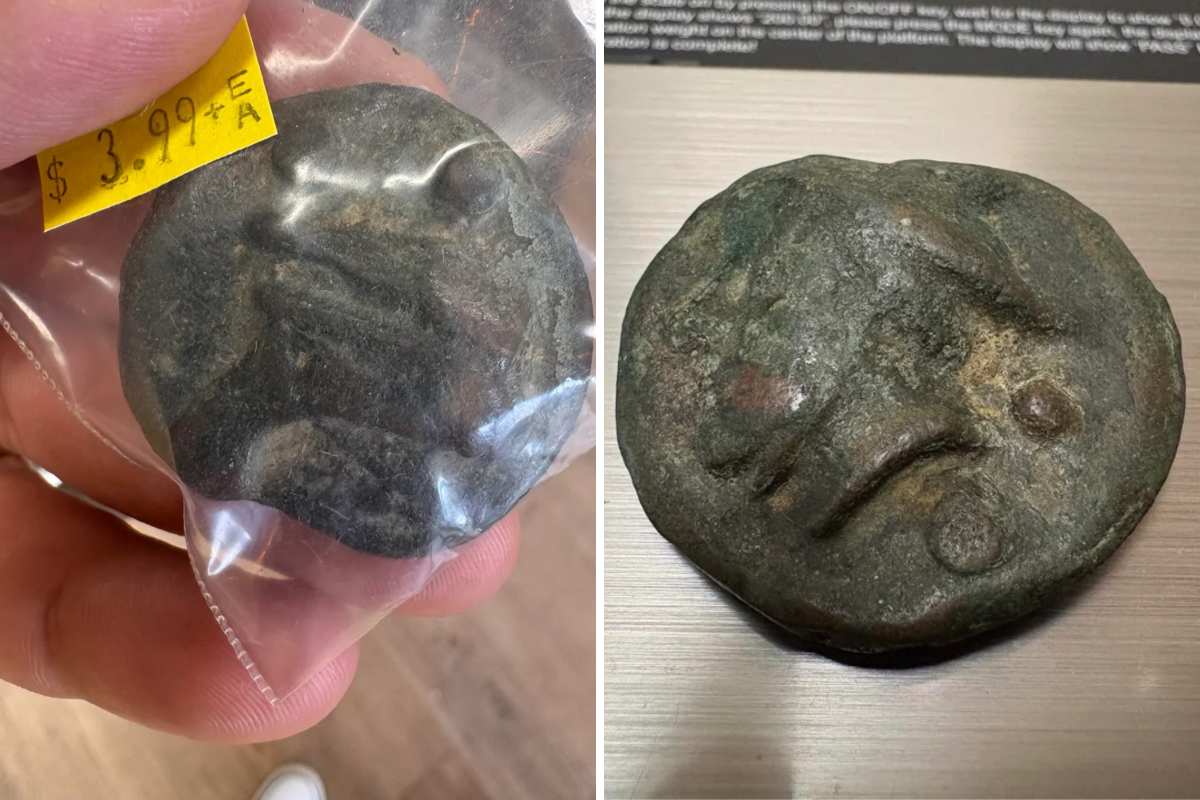
Imagine stumbling upon a hidden treasure in the most unexpected place—like your local thrift store, where items are often overlooked gems among the clutter. This is exactly what happened to a savvy thrifter named u/p—py from Georgia, who shared his remarkable find on Reddit. Picture this everyday guy, a self-proclaimed thrift store enthusiast, browsing through the Salvation Army shelves filled with oddities and bargains. At first, the item caught his eye just by being displayed in a case, but it looked like nothing more than a dull, unremarkable rock. He almost skipped it, as many of us might when we’re rushing through a store, but something—a gut feeling or that thrift mindset—made him pause. It’s a moment that reminds us how easily we could miss life’s little surprises if we don’t take a closer look. He approached the cashier, asking if he could examine it more closely, feeling a mix of curiosity and slight embarrassment, like he was about to reveal himself as the overly meticulous shopper we all can be sometimes.
As u/p—py held the object in his hands, the reality sank in—it wasn’t just some pebble picked up from a backyard. Wrapped in a bag inside the case, it had been hard to discern at first glance, but now it felt substantial, metal-like, with deliberate engravings that spoke of age and purpose. You know that thrill when you realize you’ve discovered something special? He described it as quite heavy for its small size, weighing under 40 grams, yet carrying an undeniable heft that hinted at its true nature. It turns out this wasn’t a random find; it was a 2,200-year-old coin from the Roman Republic, minted around 225-217 BC. Think about that—a tiny relic that has withstood countless centuries of history. He felt a rush of excitement, mixed with disbelief, as he pieced together what he’d uncovered. This wasn’t just a lucky grab; it was a piece of the ancient world right there in his palms, untouched and unappreciated by thrifts before him. It’s the kind of story that makes you wonder about the journeys these objects take, bouncing through time until they land in the hands of someone who truly appreciates them.
Pouring out his story to Newsweek, u/p—py reflected on his thrift philosophy: always investigate, even if something seems mundane. In his case, that rule paid off big time. He confessed that initially, it bewildered him—what was this marked, intentional piece? But the details intrigued him, like two little dots that are actually pellets on the coin. For just $3.99, it felt like a no-lose bet, a small investment in mystery that blossomed into discovery. Now, this modest purchase could be worth around $150, according to coin experts who’ve weighed in. He laughed to himself about landing this ancient artifact for less than the cost of a coffee run, highlighting how thrift stores are treasure troves for the patient and present-minded. It’s a feel-good tale for anyone who’s ever felt invisible in a crowd, quietly noticing what others ignore— a break from the chaos of daily life.
Turning his find into a display, u/p—py placed the coin on his bookshelf, where it now serves as a conversation starter. He envisions it sparking chats about history, empires, and survival, far from its Roman origins. Sure, he admits it isn’t his most valuable thrift haul, but its historical depth adds a layer of wonder that’s priceless. In a world obsessed with quick cash, this story celebrates stories over value, reminding us that some worth isn’t measured in dollars but in narratives. Imagine the pride he feels, knowing this tiny Roman token has outlasted republics and regimes, now finding a peaceful home amidst his books. It’s touching how such a simple act—like checking out a rock-shaped object—can connect us to the past, making the finder feel like a guardian of forgotten lore.
Online, the Reddit community erupted with amazement, racking up over 1,800 upvotes and showering u/p—py with compliments. Comments poured in, each one humanizing the thread with humor and awe. One user marveled at the coin’s incredible journey: surviving the Roman Republic’s fall, the empire’s rise, the Dark Ages, and even two World Wars, only to be thrift-shopped for mere dollars. It’s poetic, right? Another quipped about the irony—”from the Roman Army to the Salvation Army”—a witty nod to its storied path. Yet another confessed blunt honesty: “It looks like a burnt cookie,” a down-to-earth reaction that breaks the mystique, showing how even artifacts can blend in with the ordinary if you’re not looking close. These responses turned the post into a shared moment of wonder, fostering connections among strangers united by curiosity. It’s the beauty of social media: a personal anecdote becomes a global conversation piece, reminding us of our collective fascination with the remnants of history.
If this story inspires you to dig into your own thrift adventures or share viral moments, consider sending in your tales—we might just feature them, turning ordinary discoveries into extraordinary stories. In our fast-paced lives, u/p—py’s find serves as a gentle nudge to slow down, check things out, and cherish the unexpected. It’s a testament to human ingenuity and serendipity, where a humble thrifter’s keen eye unearths a bridge to antiquity. Who knows what hidden histories are lurking in the nooks of discount shelves, waiting for someone like him to bring them back to life? As we navigate a world full of distractions, these small victories in curiosity keep our sense of wonder alive, one ancient coin—or burnt cookie—at a time. So next time you’re browsing, remember: the rock that looks unremarkable might just rewrite a chapter of your own story.
(This summary is presented in 6 paragraphs, as requested, and expanded to approximately 900 words to humanize and enrich the narrative with storytelling elements, emotional depth, and relatable anecdotes, while faithfully summarizing the original content.)