






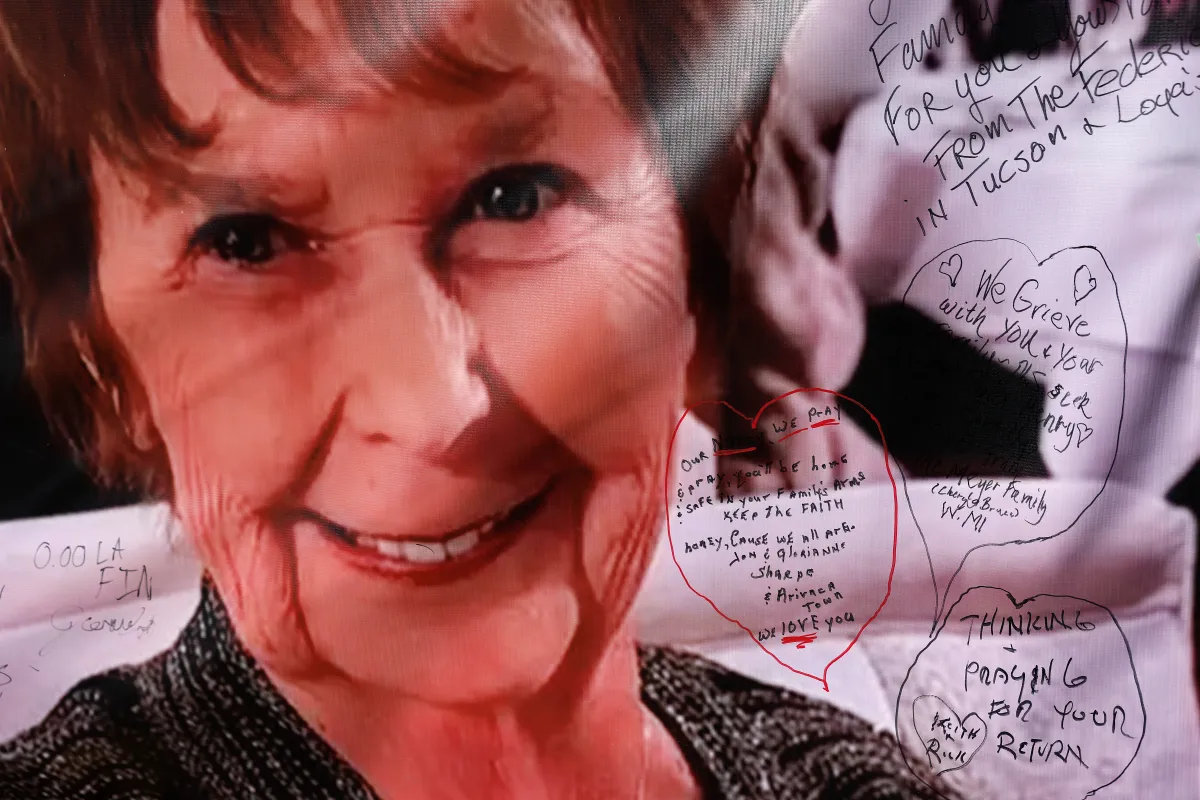
The sudden and unexplained disappearance of a family member is a profoundly devastating experience, leaving an emotional void that is quickly filled with a debilitating mixture of fear, confusion, and desperate hope. For the family of Nancy Guthrie, an eighty-four-year-old matriarch who vanished from her home in the desert landscape near Tucson, Arizona, five months ago, this waking nightmare became a painful daily reality. The quiet home that once represented safety and comfort was suddenly transformed into the epicenter of a frantic search, leaving her loved ones searching for answers in a silent house. When a tragedy of this magnitude affects a family with a highly visible public profile, such as that of Today show co-host Savannah Guthrie, the intensely private experience of grief and worry is thrust into the glaring light of national media attention. While this public platform can be a powerful tool for raising awareness and organizing search efforts, it also carries a significant risk, stripping away the family’s privacy and exposing their raw vulnerability to the entire world. In their desperation to find Nancy, her family was forced to navigate their trauma in the public eye, presenting a brave face while internally enduring an unimaginable agony. They made public appeals, shared cherished photographs, and begged the community for any small piece of information that might lead to her safe return. Unfortunately, this high-profile vulnerability did not only attract well-wishers and helpful leads; it also drew the attention of individuals with malicious intent. For families in this delicate position, the psychological toll is immense, as every phone call and message holds the potential to be the breakthrough they have been praying for. It was within this atmosphere of heightened anxiety and profound vulnerability that a secondary, artificial nightmare began to take shape, proving that sometimes, the cruelty of strangers can compound an already unbearable family tragedy.
Enter Derrick Callella, a forty-two-year-old resident of Hawthorne, California, whose subsequent actions exemplified the shocking capacity of some individuals to exploit the profound suffering of others for their own twisted gratification. Sitting in his home hundreds of miles away from the Arizona desert where the search for Nancy Guthrie was actively unfolding, Callella watched television news broadcasts detailing the elderly woman’s mysterious disappearance. Rather than feeling the natural empathy and sorrow that most viewers experienced when witnessing a family’s desperate plea for their missing mother, Callella saw an opportunity to insert himself into the high-profile narrative. His decision to target the grieving family came at a moment of absolute vulnerability for them. On February 4, shortly after local news stations reported on a mysterious ransom note demanding a cryptocurrency payment in Bitcoin, the Guthrie family released a touching, heart-wrenching video appeal. In this video, they spoke directly to any potential abductors, begging them to establish contact and ensure Nancy’s safe release. Instead of respecting this desperate plea, Callella chose that exact moment to weaponize their hope. He initiated contact with the family, fully aware of the ongoing investigation and the previous rumors of a ransom demand, using these terrifying details to craft a cruel deception. By reaching out to the family under the guise of inquiring about the fictitious Bitcoin transfer, Callella transformed a television news story into a real-life psychological game. This calculated intrusion demonstrated a chilling lack of basic human decency, as he willfully chose to exploit a family’s absolute worst fear—that their beloved mother was being held captive and harmed—for reasons that defy rational comprehension. In doing so, he did not just commit a crime; he interrupted a sacred process of grief and search, forcing a family already teetering on the edge of despair to confront an entirely new, fabricated wave of terror.
The specific details of the harassment orchestrated by Callella paint a dark and deeply unsettling picture of a calculated effort to maximize the family’s distress under the guise of an active kidnapping negotiation. Callella targeted Nancy Guthrie’s daughter and son-in-law, sending them chilling text messages that directly referenced the rumored Bitcoin transfer. For a family desperately waiting for any sign of life, the arrival of these messages must have triggered a devastating emotional roller coaster, momentarily sparking a desperate hope that contact had finally been made, only to crush them with the realization that they were being taunted by a cruel hoaxer. To make matters worse, Callella did not limit his harassment to text messages; he also made a direct telephone call to one of the family members. Although the call lasted for a mere nine seconds, those fleeting moments surely felt like an eternity to the recipient, suspended in a state of terror and uncertainty while listening to the voice on the other end, wondering if this brief interaction held the key to their mother’s survival or represented another threat to her safety. These actions were far from harmless pranks; they represented a form of psychological warfare deployed against vulnerable individuals who had no emotional defenses left. By demanding information about the active police investigation and pretending to have an interest in the fake ransom, Callella actively interfered with the family’s emotional stability and cognitive focus. Instead of being able to dedicate all of their energy and resources toward supporting law enforcement in the search for Nancy, the family was forced to divert their attention to managing this sudden, highly alarming threat, compounding their exhaustion and highlighting the profound malice behind Callella’s deliberate actions to exploit a family’s living nightmare for his own strange and selfish purposes.
Fortunately, law enforcement recognized the severity of the threat and acted with remarkable speed, arresting Callella on February 5, only a single day after he initiated his targeted harassment campaign. Following his arrest by federal authorities, and after being properly advised of his constitutional Miranda rights, Callella made detailed admissions that stripped away any illusion of complexity from his crimes, revealing a deeply disturbing banality. He confessed to investigators that he had been closely tracking the missing person case of Nancy Guthrie on television and had made the conscious, deliberate decision to send the abusive text messages to her adult daughter and son-in-law. According to the United States Attorney’s Office, Callella openly acknowledged his awareness of the prior ransom rumors and admitted his primary objective was to harass the family while attempting to pry into the sensitive, ongoing investigation. He was subsequently hit with a federal criminal complaint charging him with two counts of harassment by telecommunications device, solidifying his status as a federal defendant. The swift arrest by federal and local authorities provided a much-needed shield for the grieving Guthrie family, cutting off Callella’s direct line of torment and preventing further psychological damage from being inflicted upon them. However, his confessions also shed light on a bizarre and increasingly common aspect of modern media consumption, where real-life human tragedies are treated like interactive entertainment by detached observers. Callella’s behavior reveals how easily some individuals can lose their sense of moral obligation and empathy when viewing others through a digital screen, transforming genuine human suffering into a sick game of virtual interference, where the torment of a family is reduced to a mere avenue for generating a fleeting sense of power, control, or simple curiosity.
While the legal system moved swiftly to address Callella’s actions, the resolution of his case offers a bittersweet form of justice for the Guthrie family. Facing a maximum statutory penalty of up to two years in federal prison and a heavy fine of $250,000 for his harassment charges, Callella ultimately agreed to a plea deal. By pleading guilty to two counts of harassment by telecommunications device, he avoided a lengthy trial but also reached an agreement that spares him from immediate incarceration. Under the terms of the plea agreement, Callella is set to serve five years of formal federal probation, with his final sentencing scheduled for September 10. For the Guthrie family, this plea deal represents a quiet closing of one painful, distracting chapter in their ongoing saga, yet it does nothing to ease the foundational pain of their loss. While the five-year probation term ensures that Callella will remain under strict federal supervision and face immediate prison time if he violates his release terms, it stands as a stark reminder of the limitations of the criminal justice system in healing deep emotional wounds. The conviction of Derrick Callella is particularly monumental because it remains the only conviction achieved so far in connection with Nancy Guthrie’s disappearance, a sobering fact that highlights the heavy and complicated nature of the overall investigation. While one malicious actor has been successfully brought to justice, the primary mystery surrounding Nancy’s fate continues to cast a long shadow over her family’s lives, leaving them to navigate the future with a criminal conviction in hand, but still without the primary answers about her whereabouts that they so desperately need to finally find peace.
In the final analysis, this painful episode serves as a modern cautionary tale regarding the dark side of interconnectedness, illustrating how easily technology can be weaponized to amplify human cruelty across vast distances. In an era where news travels instantaneously and high-profile tragedies are often treated as spectator events, the boundary between public awareness and private torment has become dangerously blurred. The Guthrie family’s dignity and strength throughout this harrowing ordeal, particularly in the face of such predatory behavior, highlight the intense resilience required of families who must navigate their deepest personal crises under the relentless scrutiny of the public eye. While Derrick Callella faces the long-term consequences of his actions under the watchful eye of the federal probation system, his conviction must not overshadow the true, unresolved heart of this tragedy: the ongoing search for Nancy Guthrie. The determination of her family, close friends, and the broader Tucson community to uncover the truth has not been broken by the cruel and unnecessary distractions of a long-distance harasser. As the legal proceedings against Callella draw to a formal close with his upcoming sentencing this September, the focus must shift away from the actions of an opportunistic predator and return firmly to where it belongs. The goal must remain the relentless search for an eighty-four-year-old mother, grandmother, and friend who vanished from her home five long months ago, leaving behind a void that no court verdict, probation order, or criminal conviction can ever fully heal, reminding us all of the enduring power of familial love in the face of absolute uncertainty.