





The allure of the Los Angeles Lakers is a legendary and powerful force in the grand theater of the NBA, often turning casual trade whispers into full-blown narratives of star-studded acquisitions. For months, the rumor mill spun with exciting, vivid tales of Jonathan Kuminga heading to Southern California, a pairing that promised to inject explosive youth and raw, jaw-dropping athleticism into a veteran roster perpetually trying to balance the present-day championship demands of LeBron James with the inevitable, looming reality of a post-LeBron future. The front office in Los Angeles, led by general manager Rob Pelinka, had reportedly been tracking the versatile, high-flying forward since late June, eyeing him as the missing puzzle piece who could bridge the gap between immediate Western Conference contention and long-term rebuilding. However, the initial euphoria and fan excitement surrounding these trade talks have slowly given way to the cold, hard, pragmatic realities of NBA salary negotiations and asset valuation. According to seasoned league insider Dan Woike of The Athletic, the Lakers and Kuminga’s representatives currently find themselves “far apart” on the fundamental terms of a potential sign-and-trade deal. The primary obstacle stalling this highly anticipated transaction is a familiar and frustrating one in modern basketball: draft capital. The Lakers, deeply mindful of their future flexibility under the league’s increasingly punitive collective bargaining agreement, are highly reluctant to surrender the premium, unprotected future draft picks required to execute a complex sign-and-trade. In an era where future draft choices are valued like gold doubloons, LA is refusing to mortgage its distant future for an unproven, albeit highly talented, young player, causing the once-heated pursuit to cool down dramatically as both sides retreat to their respective corners to play a quiet, calculated, and incredibly tense waiting game.
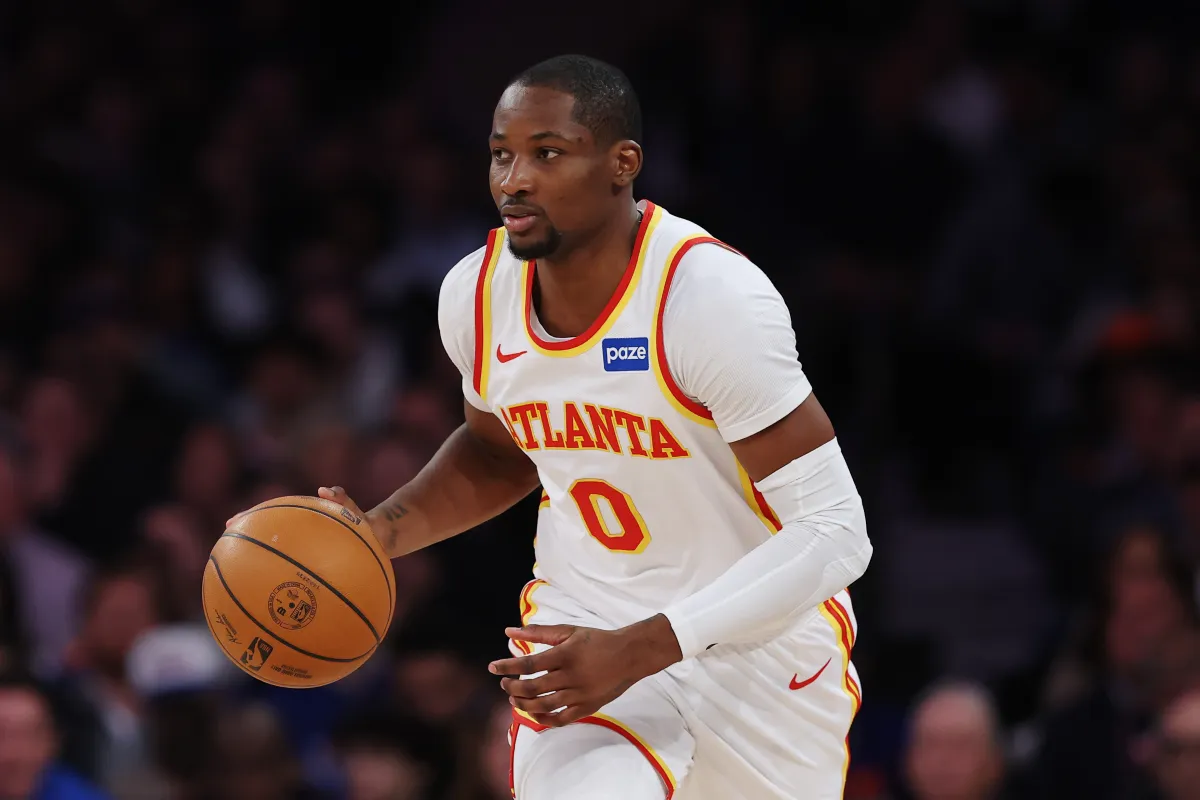
Despite the current stalemate and the pessimistic whispers surrounding the negotiations, Kuminga remains arguably the most tantalizing, high-upside young player left on the open market, representing the kind of raw physical canvas that NBA trainers and visionary coaches dream of working with. Still only 23 years old, the young forward boasts a physical profile that reads like a perfect prototype constructed in a laboratory for the modern positionless wing: he stands a roaring 6-foot-8, features a sweeping wingspan hovering near the seven-foot mark, and possesses an explosive first step and leaping ability that makes him nearly impossible to guard in open-court transition. His recent 2025-26 campaign was a fascinating showcase of this burgeoning potential, especially as he managed to navigate the tricky, emotionally taxing waters of a mid-season trade, splitting his court time between the Golden State Warriors and the Atlanta Hawks. Despite the inherent lack of stability, personal stress, and disruption that comes with changing franchises, cities, and playbook systems mid-year, Kuminga produced highly respectable, eye-opening numbers, averaging 12.2 points, 5.6 rebounds, and 2.3 assists in just over 23 minutes of action per contest. His efficiency was equally promising for a player still developing his raw basketball IQ, as he connected on 46.3% of his field-goal attempts and knocked down a respectable, highly encouraging 33.3% of his three-point shots. When talent evaluators look at Kuminga, they do not just see the raw statistics on a spreadsheet; they see a young athlete who is just beginning to scratch the surface of his phenomenal talent and understand how to leverage his world-class physical tools within a structured team concept. This unique blend of youth, length, defensive potential, and scoring upside is exactly why Kuminga’s camp is holding out for a premium contract, confident that his ceiling as a legitimate, two-way superstar justifies a major financial and developmental commitment from any franchise willing to take the gamble.
As the Lakers hesitate, playing a cautious game of asset preservation, the vacuum of inaction has invited other ambitious franchises to explore the possibility of swooping in to steal the young prize, with the Cleveland Cavaliers emerging as the loudest and most intriguing voice in the room. League sources have indicated that outside of Southern California, the Cavaliers are the team most intimately and seriously connected to Kuminga, a development that makes immense operational and cultural sense for the rising Eastern Conference contender. Cleveland has spent the last few seasons building a formidable, highly competitive core, but they remain a piece or two away from truly threatening the elite tier of the league, especially with persistent, nagging uncertainties surrounding whether they can ever secure a superstar of LeBron James’ caliber to return home to Ohio. Adding a high-flying, versatile forward like Kuminga would give the Cavaliers a dynamic, multi-dimensional weapon who fits perfectly into their timeline of sustainable, long-term success alongside their existing young stars. For Cleveland’s front office, the appeal of Kuminga lies in his ability to play multiple positions, defend opposing star wings, and provide an injection of transition scoring and rim pressure that could take the playmaking pressure off their smaller backcourt. The Cavaliers have shown a distinct willingness to be aggressive when they smell an opportunity to upgrade their roster, and Kuminga’s combination of youth, athleticism, and pedigree aligns perfectly with their desire to build a robust, athletic rotation capable of surviving the grueling physical toll of a deep postseason run in a crowded Eastern Conference.
While the high-stakes Kuminga sweepstakes continue to simmer and dominate the headlines in the background, the Lakers have not been completely idle, recently making a tactical roster move that strongly suggests they are prepared for a scenario in which the young forward never wears the iconic purple and gold. Los Angeles shocked many around the league by quietly and swiftly securing the services of veteran wing Matisse Thybulle on a highly economical, team-friendly one-year, $3.3 million contract. On the surface, this signing might seem like a minor, low-key transaction designed to fill out the end of the bench, but in the intricate chess game of NBA roster construction, it represents a brilliant insurance policy and a highly pragmatic pivot. By securing Thybulle, the Lakers have directly addressed one of their most glaring, fatal deficiencies—perimeter defensive intensity and veteran wing depth—at a mere fraction of the financial and asset cost that acquiring Kuminga would have ultimately demanded. Thybulle brings a wealth of postseason experience, a stellar reputation as a relentless, pesky point-of-attack defender, and multiple All-Defensive Team accolades to a Lakers squad that desperately needed a lock-down specialist to guard the Western Conference’s most lethal perimeter scorers. While he may not possess Kuminga’s offensive firepower, star player aura, or explosive vertical athleticism, Thybulle provides a highly predictable, high-floor defensive presence that newly minted head coach JJ Redick can immediately plug into his defensive schemes, giving the Lakers the luxury of patience and leverage as they navigate the volatile, unpredictable trade market.
This smart pivot to Thybulle highlights a fascinating philosophical debate that often keeps NBA executives, scouts, and passionate fanbases awake at night: the ultimate balance between a high-floor veteran and a high-ceiling prospect. Thybulle, though older and largely limited on the offensive end, is a proven, battle-tested commodity whose defensive metrics are elite; you know exactly what you are getting on a nightly basis, and at a meager $3.3 million, he represents one of the best value-for-money acquisitions of the entire off-season. Kuminga, by stark contrast, represents the spectacular, thrilling unknown, a player whose ceiling could easily see him become a perennial All-Star and a franchise cornerstone, but whose floor is still dictated by development, learning curves, consistency, and shot selection on both ends of the floor. The Lakers’ shrewd decision to secure Thybulle does not entirely close the door on a potential deal for Kuminga, but it significantly alters the leverage and negotiating dynamics between the two negotiating parties. It signals clearly to Kuminga’s camp that Los Angeles is comfortable walking away from the negotiating table if the asking price remains too steep, refusing to be held hostage by the alluring dream of future potential when there are tangible, cost-effective, championship-ready alternatives available on the market. This brand of financial and tactical pragmatism is incredibly essential for front offices operating under the strict, punitive new rules of the NBA’s luxury tax aprons, where overpaying for unproven potential can completely paralyze a franchise’s ability to make roster adjustments and sign key role players for years to come.
Ultimately, the unfolding drama surrounding Jonathan Kuminga, the Los Angeles Lakers, and the lurking Cleveland Cavaliers represents a high-stakes, dramatic game of chicken that is highly emblematic of the modern NBA offseason. For Kuminga and his representatives, Cleveland’s lurking presence in the shadows provides crucial, invaluable leverage, allowing them to remain patient and steadfast in their demands, hoping that either LA yields on its strict draft pick stance or the Cavaliers construct a compelling, irresistible trade package of their own. For the Lakers, the strategy seems to be one of calculated discipline, executive composure, and emotional restraint, content to let the market settle while trusting that their recent defensive additions will keep them highly competitive in the cutthroat Western Conference. As the summer progresses, the weather turns, and training camp rosters across the league begin to solidify, the pressure will inevitably mount on all sides to make a definitive, landscape-altering decision before the season begins. Whether Kuminga ends up showcasing his explosive, rim-rocking dunks under the bright lights of Crypto.com Arena, bolstering a rising powerhouse along the shores of Lake Erie, or finding a completely unexpected home in another market, this captivating saga serves as a vivid reminder of a fundamental truth in professional sports. In the modern, high-intensity world of the NBA, the strategic moves and gambles a franchise chooses not to make are often just as defining, consequential, and historic as the blockbuster trades they actually pull off.