





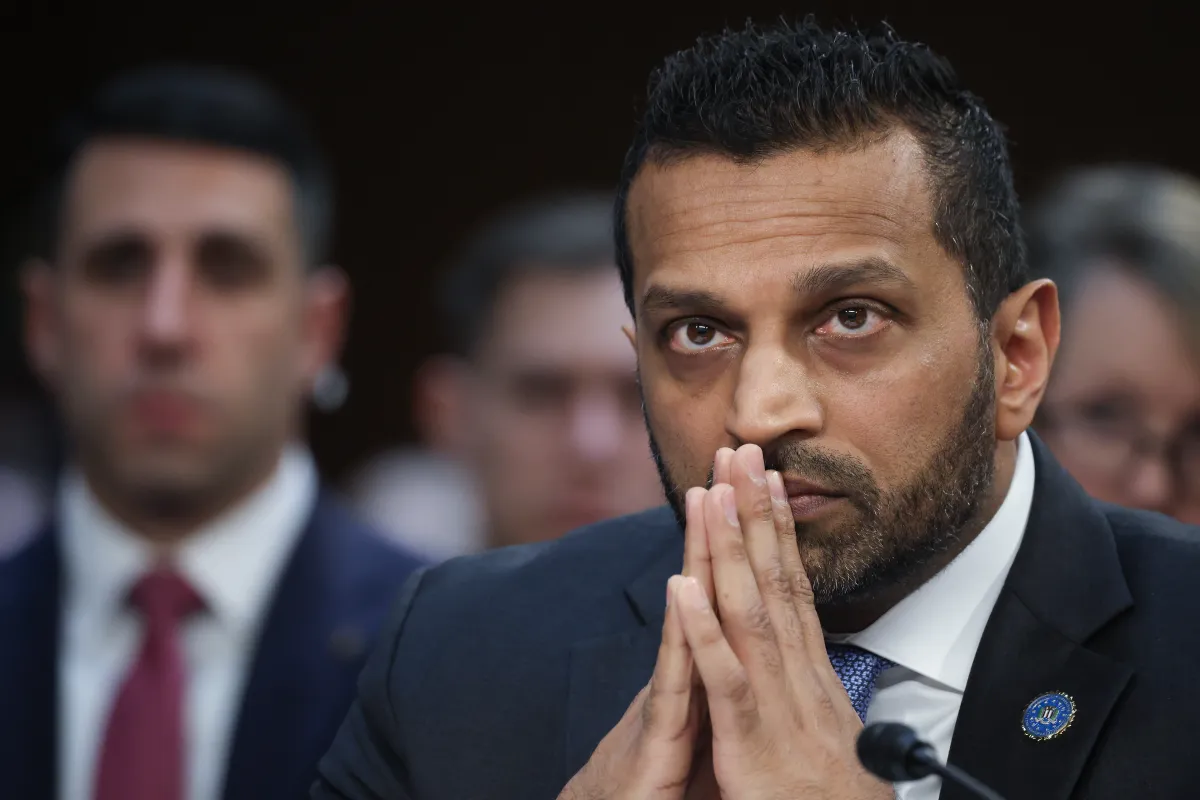
In the bustling world of Washington DC politics, where scandals brew like coffee in the endless corridors of power, Kash Patel found himself at the center of a storm that threatened to shatter his hard-won reputation. It was a Sunday morning, and the FBI Director, a man known for his intense drive and unyielding loyalty to former President Trump, sat down with Fox News host Maria Bartiromo on her show “Sunday Morning Futures.” With a steely gaze and a voice edged with defiance, Patel announced his next move: he would slap The Atlantic with a lawsuit as early as Monday, responding to a scathing piece published just two days prior that accused him of a drinking problem allegedly crippling his leadership at the bureau. “It’s coming tomorrow,” he declared, his words carrying the weight of a seasoned warrior ready for battle. Patel wasn’t backing down; instead, he leaned into the fight, his posture radiating the kind of grit that had propelled him through years of political firefights. “You want to attack my character, come at me. Bring it on. I’ll see you in court,” he added, embodying the raw emotion of a man feeling deeply wronged, his eyes flashing with a mix of anger and resolve that made viewers feel the human side of public scrutiny—the vulnerability beneath the tough exterior.
The heart of the conflict lay in The Atlantic’s investigative report, meticulously woven from interviews with over two dozen current and former officials who painted Patel as unpredictable and erratic. These sources, many speaking on condition of anonymity to avoid the bureau’s ire, described instances where Patel appeared intoxicated on the job, his demeanor shifting from sharp and commanding to sluggish and disjointed. It was a portrait that humanized the pressures of high-stakes leadership, showing how even the most ambitious could falter under the relentless glare of the spotlight. Readers could almost picture Patel stumbling through meetings, his usual charisma dulled by inebriation, turning what should have been productive strategy sessions into awkward spectacles. The magazine didn’t pull punches, arguing that this behavior wasn’t just a personal failing but a systemic risk to the FBI’s integrity. For Patel, a devoted family man and patriot, these allegations cut deep, evoking feelings of betrayal by those who should understand the grind of serving the nation—long hours, high stress, and the temptation to seek relief in a bottle.
Diving deeper, The Atlantic revealed troubling anecdotes that added layers of human drama to the narrative. Patel’s own security detail, tasked with ensuring his safety in a dangerous world, faced unprecedented challenges. On multiple occasions, they struggled to rouse him from sleep, banging on doors that stubbornly refused to yield. In one particularly alarming incident, they resorted to requesting “breaching equipment”—tools typically reserved for high-risk interventions—to forcefully gain access, painting a vivid picture of isolation and helplessness. It wasn’t just a boss oversleeping; it felt like a cry for help from a man buried under the weight of expectations. Whispers among senior Trump administration figures further amplified the tension, with insiders privately floating names of potential replacements, sparking debates about loyalty and competence in a polarized political landscape. These discussions underscored the emotional toll, where friends and allies grappled with tough decisions, weighing personal relationships against the greater good of the nation’s security apparatus.
Before the lawsuit bombshell, Patel had fired a salvo in response to the original publication. His statement to The Atlantic was direct and unapologetic: “Print it, all false, I’ll see you in court—bring your checkbook.” These words resonated with a sense of righteous indignation, echoing the exasperation of countless individuals who’ve faced false accusations in the public eye. His lawyer, Jesse Binnall, amplified this on X (formerly Twitter), revealing that a legal warning had been sent to the outlet before the article hit press. “They were on notice that the claims were categorically false and defamatory. They published anyway,” Binnall wrote, highlighting the indignation of defending a client’s honor against what they saw as reckless journalism. It was a moment that humanized the legal battles, showing the personal stakes involved—the fear of irreparable damage to one’s career and legacy, the sleepless nights spent strategizing counters, and the deep-seated belief in being wronged by a system that often prioritizes headlines over truth.
Adding another layer of complexity, Acting Attorney General Matthew Whitaker stepped into the fray with a staunch defense of Patel. In a pointed statement, Whitaker praised Patel’s accomplishments, claiming he had achieved more in just 14 months than the previous administration had in four years—a testament to the Director’s prodigious work ethic and vision. “Anonymously sourced hit pieces do not constitute journalism,” Whitaker declared, his words dripping with disdain for what he viewed as cowardly attacks shielded by shadows. This endorsement from a fellow Trump ally painted a picture of camaraderie and support in turbulent times, where loyalty could mean standing firm against media storms, evoking the warmth of brotherhood among those who’ve shared the trenches of political warfare.
As the week unfolded, the impending lawsuit loomed like a gathering thundercloud over the nation’s capital, promising courtroom drama ripe with emotional highs and lows. Patel’s decision to fight back wasn’t just about vindication; it was a personal crusade to reclaim his narrative, to humanize himself beyond the tabloid labels of an “erratic” leader. For observers, it raised questions about the fragility of public trust in institutions, the power of free speech balanced against personal destruction, and the enduring impact of media narratives on real lives. In this tale of ambition, accusation, and resilience, Kash Patel stood as a symbol of the human cost of power—prepared to lay it all on the line in court, his story a reminder that behind every headline is a person grappling with flaws, fears, and an unyielding fight for justice.