





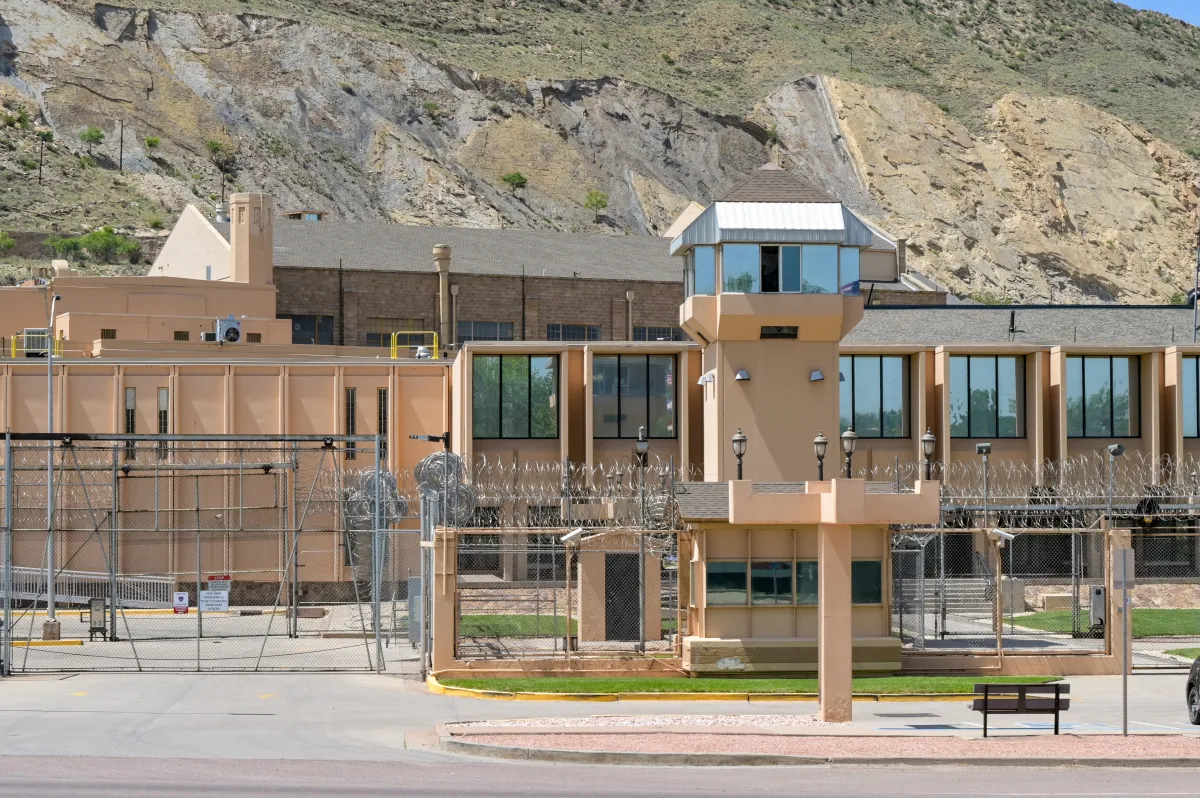
For decades, the United States has argued about prisons as if they were abstract policy problems—debating sentencing guidelines, budget line items, staffing ratios, and reentry programs. But in all those conversations, almost nobody stops to ask the question that may decide whether a person walks out of prison better than they went in, or worse: what does the building itself do to a human being? I have spent years working with correctional facilities across the country, walking their yards, sitting in their common areas, and watching how staff and incarcerated people interact with the spaces around them. I have seen facilities shaped by fear, where every design choice is about control and punishment. I have also seen places where people seem to stand a little taller, where the air feels less heavy, where there is natural light and room to move. The difference is not cosmetic. It is physiological, psychological, and ultimately practical. A cell is not just a room. It is a world. When someone spends years inside that world, it reshapes their moods, their habits, their sense of worth, and their ability to function in society. We accept this principle in every other area of life. We know that children learn better in bright, safe schools; that workers are more productive in healthy offices; that patients recover faster in healing environments. Yet at the prison door, we suddenly pretend that space does not matter. That pretense is failing.
The numbers should force us to take this seriously. America has one of the highest incarceration rates on Earth, with about 1.8 million people held in state prisons, federal prisons, and local jails. This is not a small or distant problem; it is a vast network of human beings living inside concrete and steel. And we know that the system is not working. Sixty-six percent of released state prisoners are arrested again within three years, and 82 percent are arrested at least once within ten years. Policymakers keep searching for the magic fix—shorter sentences, more programs, better reentry services—but the recidivism rate stays stubbornly high. Why? Because these numbers cannot be solved by sentencing policy alone. The environment matters. A person locked in a small, dim cell for hours every day does not simply emerge unchanged. Prolonged confinement and sensory deprivation can intensify depression, anxiety, and aggression. In Alabama, formerly incarcerated people have described drug use, assaults, and even murders happening inside facilities, conditions that warn us about a system that can compound the very problems it is supposed to contain. This is not a matter of political opinion. It is basic human physiology. Every person is shaped, at least in part, by the environments they inhabit. If we accept that principle in schools, workplaces, hospitals, and homes, why would we abandon it at the prison door? The person who leaves prison is the product of the place they lived in. If that place is cruel and degrading, they will bring that cruelty back into the community. If it is calm and structured, they have a much better chance of returning with some stability.
The good news is that some institutions are starting to understand this. Since the First Step Act was signed into law in 2018, federal policymakers have placed greater emphasis on education, behavioral health support, and programs that build skills for life after release. States are investing in specialized behavioral health units and alternative approaches that separate people with significant mental health needs from environments that may intensify their struggles. And architects and corrections leaders are beginning to see facility design as a tool rather than merely a security feature. Purposeful recreation areas, improved living spaces, natural lighting, technology, and meaningful programs can create conditions that support better decisions and safer facilities. For example, regular physical activity can support better outcomes. Exercise lowers aggression, improves sleep, and gives people a structured way to release the frustration that confinement naturally produces. Sports and fitness can also teach discipline, teamwork, and patience—skills that matter just as much inside prison as they do outside. Incentive-based facilities take this a step further by allowing incarcerated people to earn access to better equipment and living conditions through good behavior. It is a small but powerful shift. Instead of punishment being the only language the institution speaks, effort is rewarded. People begin to see that their choices matter, that they can improve their own circumstances, and that the system is not simply trying to break them. This is not a radical idea. It is a controlled demonstration of a simple principle: people respond differently when they are given a reason to try.
On the other side, environments defined by concrete, isolation, and deprivation can leave people less prepared for society than when they arrived. That is a hard truth, but it is the truth. If we send people into a warehouse designed solely to confine them, we should not be surprised when the warehouse produces more anger, more despair, and more violence. The alternative is not leniency. I believe in accountability, and I believe that some people need to be removed from society for their own safety and ours. But accountability and rehabilitation can coexist. Some individuals commit serious crimes and remain at significant risk; we need to be honest about that. Others enter the system young, make terrible mistakes, and then spend years demonstrating genuine behavioral change. A correctional system capable of recognizing human capacity for improvement creates more opportunities for safer outcomes. So when taxpayers ask why they should fund better infrastructure or initiatives inside prisons, it is a fair question. Public safety must remain the priority. But so should the cost of failure. What costs more: investing in rehabilitation today or repeatedly incarcerating people tomorrow? The price of a prison bed is tens of thousands of dollars a year, and when people cycle back through the system, the bill keeps growing. We pay for these decisions one way or another. We can pay for decent lighting, clean spaces, exercise equipment, and programs; or we can pay for the emergency rooms, court dates, and new victims that come from a system that refuses to change. Rehabilitating a person does not vindicate their crime. It simply recognizes that most of them will eventually be released, and the question is whether they will be released as neighbors or as threats.
The biggest obstacle may be a mindset built over generations. Corrections have traditionally been defined by containment. The prison was a place to put people out of sight, and the building itself was designed to make that as simple and secure as possible. But modern challenges require that definition to evolve. Staffing shortages are pressuring correctional systems across the country, and technology is changing what is possible. Virtual healthcare can bring doctors into remote facilities. Better programs can fill otherwise empty hours. Smarter facility design can make facilities safer for both staff and incarcerated people, while also making them more humane. We are not going to get there by clinging to the assumptions of the last century. Policymakers and corrections leaders should audit facilities for whether their physical environments actively support rehabilitation. Does the lighting make people more or less anxious? Does the layout give people a safe way to move and exercise? Is there space for learning, therapy, and quiet reflection? Public dollars should follow evidence, not tradition. If a design feature does not improve safety or outcomes, it should be changed. If a program does not reduce violence or recidivism, it should be replaced. But we will never know what works if we keep building the same cold, soulless institutions and calling it tough on crime. Toughness is not measured by how much suffering a place can inflict. Toughness is measured by whether the community is safer because of what happens there.
If America wants safer communities, it must stop measuring prisons by how effectively they hold people and start measuring them by what happens after the doors open. That is not an easy shift. It means admitting that our current approach has created cycles of harm. It means accepting that the building itself is part of the program. But it also means that there is a way forward. We can build facilities that make rehabilitation possible. We can fund the environments that support it. And we can demand outcomes that prove it works. The next generation of prisons should be built around the very idea that public safety improves when rehabilitation has a real place to happen. This is not idealism; it is pragmatism. We are spending enormous sums of money, destroying enormous amounts of human potential, and calling it justice. Instead, we can design places that hold people accountable without stripping away every reason to hope. We can create systems that protect the public in the short term and reduce the number of victims in the long term. I have seen the difference in my own work. I have watched people in better environments become calmer, more cooperative, and more focused on the future. I have seen staff experience less stress and fewer dangerous incidents. The change is not always dramatic, but it is real. The walls we build say something about who we are as a society. They also determine, in ways we are only beginning to understand, who the people inside those walls become when they walk back out. We have a choice. We can keep building places that make people worse, or we can build places that give them a chance to become better. For everyone’s sake, we need to choose the second.